Private Wrist Ultrasound Scan London | £199
Harley Street Medical District · London & St Albans

Private Wrist Ultrasound Scan

A private wrist ultrasound scan at London Private Ultrasound costs £199 for one wrist and £299 for both wrists — all fees inclusive. No GP referral required. Same-day results. The scan assesses De Quervain’s tenosynovitis, carpal tunnel syndrome, TFCC tears, scapholunate ligament injuries, all six extensor tendon compartments, flexor tendons, ganglion cysts, wrist joint effusion, and inflammatory arthritis.

Quick, safe, and pain-free private Wrist Ultrasound to assess the Joints, Tendons, Muscles, Ligaments, Pain & Range of Movement. Scans performed by specialist MSK clinicians — gain peace of mind with Same-Day Results & Tailored Advice.

  • Same-Day Results
  • No GP Referral
  • CQC Registered
  • One Wrist £199
  • Both Wrists £299
  • 7 Days a Week
Wrist Ultrasound

Your Ultrasound Checks For

A comprehensive assessment of your wrist joints, tendons, ligaments, nerves, and soft tissues — all in one appointment. No radiation. Available at Central London and St Albans.

  • Wrist joint space & synovium
  • All six extensor tendon compartments
  • First compartment — De Quervain’s (APL & EPB)
  • Second compartment — ECRL & ECRB
  • Sixth compartment — ECU tendon
  • Flexor carpi radialis & ulnaris
  • Carpal tunnel — median nerve CSA
  • Ulnar nerve — Guyon’s canal
  • TFCC — triangular fibrocartilage complex
  • Scapholunate & lunotriquetral ligaments
  • Intersection syndrome (1st/2nd compartment)
  • Signs of inflammation & synovial fluid
  • Ganglion cysts & soft tissue masses
  • Distal radioulnar joint (DRUJ)
  • Wrist pain & range of movement
  • Lumps, masses & causes of concern

All scans performed by an HCPC-registered MSK consultant clinician. Dynamic assessment during movement included. Available at Central London and St Albans.

Book Your Wrist Scan
£199
One wrist, all inclusive
Both wrists: £299
Common Conditions Assessed

What causes wrist pain — and what ultrasound can find

Wrist injuries can be acute — following falls, direct trauma, or sports impact — or chronic, developing through repetitive strain and overuse. An ultrasound can confirm the extent of tissue damage and guide the choice between surgical and conservative treatment.

Radial & dorsal wrist conditions

  • De Quervain’s tenosynovitis Stenosing inflammation of the first extensor compartment (APL and EPB tendons) at the radial styloid. Causes pain with thumb movement and gripping, especially in new mothers, gardeners, and office workers. Ultrasound confirms tendon sheath thickening and fluid, and guides corticosteroid injection precisely into the sheath — with far greater accuracy than landmark injection alone.
  • Intersection syndrome Crossover impingement between the first extensor compartment (APL/EPB) and second compartment (ECRL/ECRB) tendons at the musculotendinous junction, approximately 4 cm proximal to the wrist. Causes dorsal wrist pain and crepitus in rowers, weightlifters, and canoeists. Ultrasound identifies tenosynovitis and peritendinous oedema at the crossover point.
  • Extensor carpi ulnaris (ECU) tendinopathy & subluxation The ECU (sixth extensor compartment) runs in a groove on the ulnar head and is susceptible to tendinopathy, tenosynovitis, and subluxation — particularly in racket sport players and gymnasts. Dynamic assessment during forearm rotation demonstrates subluxation out of the groove in real time.
  • Scapholunate ligament injury Dorsal wrist pain and instability following a fall on an outstretched hand. Ultrasound assesses the dorsal scapholunate ligament band. Dynamic stress testing under ultrasound can reveal abnormal widening of the scapholunate interval — an important finding before MRI arthrogram assessment.
  • Wrist ganglion cysts Most common dorsal wrist ganglia arise from the scapholunate ligament. Volar ganglia arise from the radiocarpal joint or flexor carpi radialis sheath. Ultrasound confirms cystic nature, measures size, identifies the stalk, and guides aspiration if symptomatic.

Ulnar, volar & nerve conditions

  • Carpal tunnel syndrome (CTS) The most common peripheral nerve entrapment — median nerve compressed under the flexor retinaculum at the wrist. Causes nocturnal numbness and tingling in the thumb, index, middle, and radial ring fingers. Ultrasound measures median nerve cross-sectional area (CSA >10 mm² at the tunnel inlet = compression), identifies structural causes (ganglia, anomalous muscles), and guides injection or surgical planning.
  • TFCC tears (triangular fibrocartilage complex) Ulnar-sided wrist pain after a twisting injury or fall. The TFCC is a complex of fibrocartilage and ligaments stabilising the distal radioulnar joint (DRUJ). Ultrasound assesses the peripheral TFCC and the ulnocarpal ligaments. Central TFCC tears require MRI arthrogram, which your specialist will advise on if appropriate.
  • Ulnar nerve at Guyon’s canal Compression of the ulnar nerve in the Guyon’s canal (ulnar tunnel) at the wrist, causing numbness and weakness in the ring and little fingers. Ultrasound measures ulnar nerve cross-sectional area and identifies compressive lesions — ganglia, lipomas, or hamate hook fractures — that may require surgical decompression.
  • Wrist joint effusion & synovitis Fluid within the radiocarpal or intercarpal joints from inflammation, injury, or inflammatory arthritis. Doppler ultrasound detects active synovial vascularity (pannus) in rheumatoid and psoriatic arthritis — a powerful marker of disease activity guiding treatment decisions.
  • Flexor carpi radialis tendinopathy Radial volar wrist pain from FCR tendon degeneration or tenosynovitis as it crosses the scaphoid tubercle. Ultrasound identifies tendon thickening, sheath fluid, and calcification at this anatomically constrained site.
Every Appointment

What’s Included

Everything you need for a complete wrist assessment — same-day results, written report, and specialist guidance, all in one inclusive fee.

01

One-to-One Specialist Appointment

Feel confident in the care you receive. Your scan is performed and personally interpreted by an HCPC-registered MSK consultant clinician with specialist wrist ultrasound expertise — not outsourced or auto-reported. Direct clinical correlation with your symptoms and exact point of tenderness throughout.

02

No Referral Required

You do not require a referral before booking an appointment — giving you back complete control of your health. Self-refer directly online or by phone and access expert wrist assessment the same day or same week, without waiting for a GP referral and NHS pathway.

03

Same-Day Results

We aim to provide results to you on the day of your visit. Your specialist MSK clinician will explain their findings during and immediately after your ultrasound examination — you leave knowing the structural cause of your wrist pain and the recommended next steps.

04

Full Digital Report

Following your appointment, a complete digital report of your ultrasound examination will be emailed to you directly and securely — the same day or within 24 hours — formatted for sharing with your NHS GP, rheumatologist, hand and wrist surgeon, or physiotherapist.

05

High-Res Digital Images

In addition to the report, high-resolution images of your wrist scan will be sent to you digitally to share with a healthcare specialist of your choice — accessible from any internet-connected device, NHS or private, instantly.

06

Injection Guidance — Same Appointment

If your scan identifies a condition suitable for an injection — corticosteroid into the first extensor compartment for De Quervain’s, carpal tunnel injection for CTS, or wrist joint injection for synovitis — this can often be arranged at the same visit via our ultrasound-guided wrist injection clinic.

Common Questions

Frequently Asked Questions

Everything you need to know about your private wrist ultrasound at London Private Ultrasound.

What is a Wrist Ultrasound?

Wrist injuries and conditions are common in athletes, office workers, musicians, and manual workers, and can affect joint structures including ligaments, joint surfaces, tendons, muscles, and nerves. Injuries can occur acutely — from falls, direct trauma, or forced movements — or develop chronically through repetitive microtrauma and overuse.

An ultrasound can be used to assess or confirm the extent of tissue damage and help choose between surgical or conservative treatment. Common causes of wrist pain that ultrasound can identify include:

  • De Quervain’s tenosynovitis — first extensor compartment inflammation at the radial styloid; pain with thumb and wrist movement
  • Carpal tunnel syndrome — median nerve compression; nocturnal numbness in the thumb and fingers
  • TFCC tears — ulnar-sided wrist pain after twisting or falling
  • Scapholunate ligament injury — dorsal wrist instability following a fall on an outstretched hand
  • Ganglion cysts — the most common soft tissue mass on the wrist, arising from the scapholunate joint or tendon sheaths
  • Intersection syndrome — dorsal wrist pain and crepitus in rowing, weightlifting, and racket sports
  • Arthritis — osteoarthritis, rheumatoid arthritis, or other inflammatory joint disease
  • Tendinopathy and tenosynovitis — overuse injuries in musicians, office workers, and manual workers
What does a wrist ultrasound scan show?

A private wrist ultrasound produces real-time images of all major wrist soft tissue structures, including:

  • All six extensor tendon compartments — tendon thickness, fibrillar architecture, tenosynovitis, and tears
  • Median nerve at the carpal tunnel — cross-sectional area (CSA) measurement to confirm carpal tunnel syndrome; normal <10 mm²
  • TFCC (peripheral) — tears of the triangular fibrocartilage complex and ulnocarpal ligaments
  • Scapholunate ligament — dorsal band assessment and dynamic gap testing under stress
  • Flexor tendons — tenosynovitis, tears, and sheath fluid
  • Wrist joint and DRUJ — effusion, synovitis, Doppler active pannus (RA monitoring)
  • Ganglion cysts — size, location, stalk origin, and aspiration guidance
  • Ulnar nerve at Guyon’s canal — nerve CSA and compressive pathology

Fowler JR et al. Ultrasound as a first-line test in the diagnosis of carpal tunnel syndrome. Clin Orthop Relat Res 2013;471:932–7. | Klauser AS et al. Carpal tunnel syndrome assessment with US: value of additional cross-sectional area measurements. Radiology 2009;250:171–7.

How much does a private wrist ultrasound cost in London?

At London Private Ultrasound, a private wrist ultrasound costs:

  • One wrist: £199 — all fees inclusive with no hidden charges
  • Both wrists: £299 — saving £99 compared to two separate single-wrist scans

Both options include same-day verbal results and a full written report within 24 hours. We accept all major credit and debit cards, cash, and Klarna for flexible payment.

Can ultrasound detect De Quervain’s tenosynovitis?

Yes. Ultrasound is the first-line imaging investigation for De Quervain’s tenosynovitis — stenosing inflammation of the first extensor compartment (abductor pollicis longus and extensor pollicis brevis tendons) at the radial styloid. It identifies:

  • Tendon sheath thickening and fluid: The hallmarks of active tenosynovitis, confirming the diagnosis
  • Septation within the first compartment: Clinically important — patients with a septated first compartment require injection into both sub-sheaths for full efficacy, which blind injection often misses
  • Doppler neovascularity: Active vascularity within the sheath indicating inflammation severity

Ultrasound guidance is essential for De Quervain’s injection — the first compartment is small and septation (present in up to 30% of cases) makes unguided injection unreliable. Guided injection ensures accurate placement into the correct sub-sheath.

Jeyapalan K, Choudhary S. Ultrasound-guided injection of triamcinolone and bupivacaine in the management of De Quervain’s disease. Skeletal Radiol 2009;38:1099–103. | De Maeseneer M et al. First extensor compartment of the wrist: J Ultrasound Med 2009.

Can ultrasound detect carpal tunnel syndrome?

Yes. Ultrasound is a validated first-line investigation for carpal tunnel syndrome (CTS). It measures the cross-sectional area (CSA) of the median nerve at the carpal tunnel inlet — enlargement above 10 mm² is a reliable marker of compression neuropathy, comparable to nerve conduction studies for diagnosis. Ultrasound can also identify structural causes of CTS such as ganglia, lipomas, anomalous muscles, or hypertrophied synovium pressing on the nerve.

For injection therapy, ultrasound guidance significantly improves accuracy of carpal tunnel corticosteroid injection, reducing the risk of inadvertent median nerve injection. If CTS is confirmed and symptoms are persistent, your specialist will discuss the relative merits of injection versus surgical decompression.

Fowler JR et al. Clin Orthop Relat Res 2013. | Klauser AS et al. Radiology 2009;250:171–7.

When should I see a doctor for wrist pain?

Since wrist pain can have so many causes, an ultrasound can be valuable in providing an accurate diagnosis. See a doctor if you experience:

  • Ongoing wrist aches or discomfort that have not improved with rest
  • Pain with thumb movement, gripping, or lifting (possible De Quervain’s)
  • Numbness and tingling in the thumb and fingers, especially at night (possible carpal tunnel syndrome)
  • Ulnar-sided wrist pain after a twisting injury (possible TFCC tear)
  • Dorsal wrist pain and instability after a fall (possible scapholunate ligament injury)
  • A lump or swelling on the wrist
  • Restricted wrist range of movement

Ask to be seen urgently if you have:

  • Wrist swelling and severe pain after trauma — may indicate fracture (requires X-ray first)
  • Numbness and weakness in the hand that is getting worse — may indicate nerve compression or injury
  • Heat, redness, and swelling around the wrist joint — may indicate infection or acute inflammatory flare

In many cases, wrist aches have benign causes and improve with rest and simple pain management. If there is no improvement after a few weeks, book a scan on 020 7101 3377.

What happens during a Wrist Ultrasound?

A wrist ultrasound is a quick and easy way to diagnose many causes of wrist pain. There is no preparation required. We recommend wearing a short-sleeved top or loose clothing so your wrist and forearm are easily accessible. Leave all wrist jewellery, watches, and bracelets at home.

You will sit comfortably on the examination chair. Your specialist applies a clear, water-based gel to the wrist and moves the ultrasound probe gently over the skin surface — entirely painless. During the dynamic assessment, you will be asked to flex, extend, and radially and ulnarly deviate the wrist, and to perform resisted movements to test specific tendons and ligaments. Dynamic stress testing for the scapholunate ligament and DRUJ may also be performed. The scan typically takes 20–30 minutes. Your specialist provides findings verbally immediately afterwards.

What preparation is required before the scan?

No significant preparation is required for a wrist ultrasound scan. You may eat, drink, and take medications normally. Remove all wrist jewellery, watches, fitness trackers, and bracelets before your appointment. Remove any wrist brace or compression bandaging. No fasting, no medication changes, and no topical preparations are required.

What happens after the scan?

There is no particular aftercare required. You may resume your regular diet and daily activities immediately unless your specialist advises otherwise. There are no confirmed adverse biological effects on patients from diagnostic ultrasound.

Your specialist explains findings immediately after the scan. Depending on results, they may recommend physiotherapy, splinting, activity modification, a guided injection, or further imaging. If your scan identifies a finding requiring urgent NHS attention — for example, findings consistent with scapholunate instability requiring MRI arthrogram and surgical review — your specialist generates a formal report the same day.

Should I scan one wrist or both wrists?

One wrist (£199) is appropriate if symptoms affect one wrist only.

Both wrists (£299, saving £99) is recommended if you have:

  • Pain or symptoms in both wrists
  • Bilateral carpal tunnel syndrome — CTS affects both wrists in the majority of patients
  • Bilateral De Quervain’s — common in new mothers, office workers, and musicians
  • Inflammatory arthritis (RA, psoriatic) affecting both wrists — monitoring Doppler synovitis bilaterally for disease activity
  • Pre-surgical or post-treatment comparison requiring bilateral assessment

If you are unsure, call 020 7101 3377 and our team will advise based on your symptoms.

Do I need a GP referral for a private wrist scan in London?

No. You do not require a referral. Book directly online at londonsono.com or call 020 7101 3377. Appointments are available 7 days a week at our Central London clinic (27 Welbeck Street, Harley Street medical district) and our St Albans clinic (54–56 Victoria Street).

Can ultrasound guide wrist injections?

Yes. Ultrasound guidance significantly improves injection accuracy and safety for all wrist injections. At London Private Ultrasound, our joint injection clinic offers ultrasound-guided:

  • First extensor compartment injection — for De Quervain’s tenosynovitis; corticosteroid injected precisely into the tendon sheath, with awareness of any septation
  • Carpal tunnel injection — corticosteroid injection alongside the median nerve for CTS symptom relief
  • Wrist joint injection — for inflammatory arthritis, synovitis, or post-traumatic pain
  • Guyon’s canal injection — for ulnar nerve compression at the wrist
  • Ganglion cyst aspiration — ultrasound-guided needle placement for accurate aspiration
  • DRUJ injection — for distal radioulnar joint synovitis or TFCC-related pain

Injection therapy can often be arranged at the same appointment as your diagnostic scan.

How does London Private Ultrasound work with the National Health Service?

Many of our patients are concerned that if they come to us for an ultrasound, they won’t be able to go back to public health. That simply is not the case. Our goal is to give you answers as quickly as possible and get you on the right treatment path fast — no strings attached.

When you come to us, you will be seen by a qualified MSK specialist who can assess your wrist condition the same day. We don’t want you to wait weeks on end for an appointment. If your scan reveals findings requiring urgent NHS attention — for example, findings consistent with scapholunate dissociation requiring urgent surgical review — our specialist will write a formal report for your GP immediately. We work alongside the NHS, not instead of it.

Accreditations & Registrations

Registered & Regulated

Our team are fully registered and regulated for practice in the United Kingdom. Our patients should expect nothing less.

  • Care Quality Commission
  • General Medical Council
  • HCPC Registered
  • Royal College of Radiologists
  • Society of Radiographers
  • Chartered Society of Physiotherapy
4.8Google Rating
1,200+Verified Reviews
35,000+Patients Served
2012Harley Street Est.
Your MSK Team

Meet Our Musculoskeletal Specialists

A consultant-led team combining surgical expertise, MSK clinical specialism, advanced ultrasound consultancy, and primary care integration.

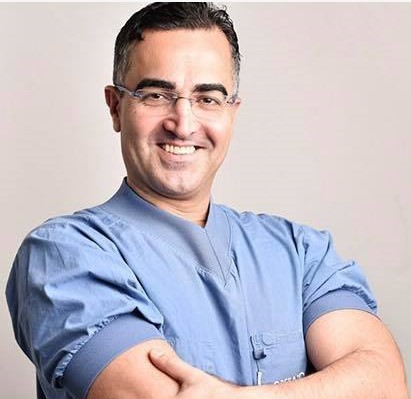
Mr Peyman Bakhshayesh, Consultant Trauma and Orthopaedic Surgeon at London Private Ultrasound
Principal Consultant

Mr Peyman Bakhshayesh

Consultant Trauma & Orthopaedic Surgeon

MD · PhD · MBA · Multi-joint specialist with over 29 years’ national and international experience. Clinical Lead for General Trauma at Leeds General Infirmary. Specialist in regenerative medicine, PRP, BMAC therapy, and ultrasound-guided procedures.

Mr Paul Watson, Lead MSK Consultant Clinician at London Private Ultrasound

Mr Paul Watson

Lead MSK Consultant Clinician

NMP · DipMSK · DFSEM · CSP · PgCert · HCPC: PH105122 · Specialist in MSK ultrasound assessment and ultrasound-guided injection therapy

Mr Pedram M. Aghaei, Ultrasound Consultant at London Private Ultrasound

Mr Pedram M. Aghaei

Ultrasound Consultant

MD · Clinical Vascular Scientist · BMUS: 20702 · SVT: 679 · SOR: 93290 · Medical ultrasound specialist with extensive MSK and Doppler imaging expertise

Dr Reza Salehi, Medical Doctor at London Private Ultrasound

Dr Reza Salehi

Medical Doctor

MD · Medical doctor with special interest in Radiology and musculoskeletal imaging

Dr Adil Naeem, Medical Doctor at London Private Ultrasound

Dr Adil Naeem

Medical Doctor

MD · Medical doctor with special interest in Radiology and musculoskeletal imaging

Dr Babak Soleimanpour, Specialist Doctor at London Private Ultrasound

Dr Babak Soleimanpour

Specialist Doctor

MD · MRCGP · DRCOG · GMC: 6060555 · General medical and ultrasound-guided injection specialist, integrated MSK consultations

Digital Results

Seamless, Secure, At Your Fingertips

We can provide scan images directly to your smartphone, often on the same day following your appointment. Gain the peace of mind and insight you need, without delay.

  1. Same-day verbal results

    Your specialist explains findings in detail immediately after the scan — no waiting for a letter or second appointment. You leave knowing the structural cause of your wrist pain.

  2. Full written report within 24 hours

    A comprehensive diagnostic report securely emailed to you directly, formatted for sharing with your NHS GP, rheumatologist, hand surgeon, or physiotherapist.

  3. High-resolution digital images

    Scan images delivered digitally — forward instantly to any clinician involved in your care, from any internet-connected device, NHS or private.

Musculoskeletal wrist ultrasound scan showing tendon and ligament assessment at London Private Ultrasound
Related Services

Related Muscle & Joint Services

Other musculoskeletal assessments at our Central London and St Albans clinics, 7 days a week.

Wrist

Both Wrists Ultrasound Scan

Full bilateral assessment with left–right comparison. Recommended for bilateral carpal tunnel syndrome, inflammatory arthritis monitoring, or pre-surgical comparison. £299 — saving £99.

View both-wrist scan details and pricing
Hand & Wrist

Combined Hand & Wrist Scan

If symptoms affect both the wrist and hand, our combined scan covers wrist tendons and ligaments together with finger pulleys, MCP/PIP joints, and palmar fascia in one appointment.

View combined hand and wrist scan details
Injection Clinic

Wrist Injection Clinic

Ultrasound-guided corticosteroid injections for De Quervain’s tenosynovitis, carpal tunnel syndrome, wrist joint synovitis, and ganglion cyst aspiration — often at the same appointment.

View ultrasound-guided wrist injection details
Elbow

Elbow & Forearm Ultrasound Scan

Assessment of tennis elbow, golfer’s elbow, distal biceps tears, cubital tunnel syndrome, and elbow ligaments. One or both arms available.

View elbow and forearm ultrasound scan details
Shoulder

Shoulder Ultrasound Scan

Assessment of the rotator cuff tendons, long head of biceps, subacromial bursa, and AC joint for shoulder pain, tendinopathy, and impingement.

View shoulder ultrasound scan details and pricing
Orthopaedic Clinic

Orthopaedic & Hand Surgery Consultation

Consultant hand and wrist surgical opinion for complex conditions including TFCC reconstruction, scapholunate repair, carpal tunnel release, and De Quervain’s surgery.

View orthopaedic consultation details
Book Online

Choose Your Wrist Scan Appointment

Use the secure booking calendar to select your preferred clinic, date, and time. For urgent or same-day availability, call 020 7101 3377 directly.

Live booking calendar Secure online booking
Get In Touch

Here To Help

Three easy ways to book your private wrist ultrasound scan at Central London or St Albans.

Book Online

Book Online

Use our secure booking platform to choose your scan, preferred clinic, and available date. Instant confirmation by email. Available 24 hours, 7 days a week.

Book your wrist scan online Available 24 hours, 7 days a week
Call Us

Give Us a Call

Speak directly to our friendly patient team for advice on scan types, preparation, and same-day or next-day availability at Central London or St Albans.

020 7101 3377 Mon–Sun · 9am–7pm
Email

Send a Message

Have a clinical question before booking, or want to share previous imaging reports? Email our team directly and we’ll respond promptly.

[email protected] We respond within a few hours during clinic hours

Scroll to Top