
Shoulder and upper arm ultrasound · Harley Street, Central London & St Albans · 7 days a week
Private Shoulder Ultrasound Scan in London
A shoulder ultrasound is a painless, radiation-free scan of the rotator cuff, biceps tendon, bursa and soft tissues of your shoulder and upper arm.
It is used to find the cause of shoulder pain, including rotator cuff tears, impingement, bursitis, frozen shoulder and calcific tendinitis.
At London Private Ultrasound a shoulder scan costs £199 for one shoulder and £299 for both, with no GP referral needed and results on the day.
- From £199
- No GP referral
- Same-day appointments
- Results on the day
- Upper arm included
- Open 7 days, 9am–7pm
Book both shoulders for £299, with your two sides compared in one visit. Compare the options.
Shoulder Ultrasound at a Glance
| Price | One shoulder £199 · both shoulders £299 · upper arm included |
|---|---|
| What it checks | Rotator cuff tendons, biceps tendon, bursa, AC joint and upper arm soft tissues |
| Common reasons | Rotator cuff tear, impingement, bursitis, frozen shoulder, calcific tendinitis, lumps |
| Time | About 20–30 minutes per shoulder · no preparation |
| Results | Explained on the day · written report within 24 hours |
| Referral | No GP referral needed |
| Where & when | 27 Welbeck Street, W1G 8EN · 54–56 Victoria Street, St Albans AL1 3HZ · 7 days, 9am–7pm |
One Shoulder or Both: Which Shoulder Scan Do You Need?
Book one shoulder if only one side hurts. Book both if the pain is on both sides, or if comparing your painful shoulder with the other gives a clearer answer.
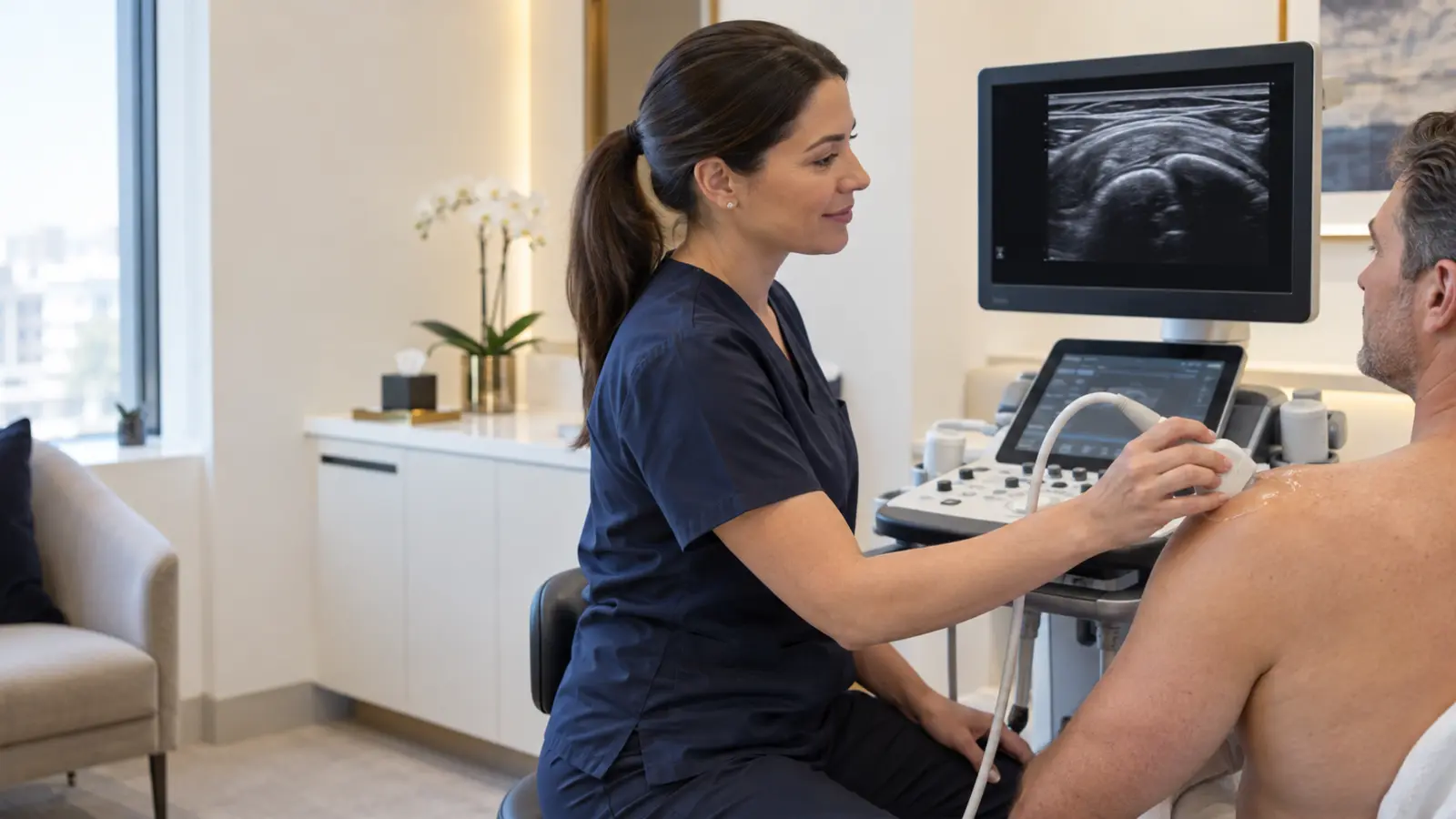
One Shoulder
When one shoulder hurts£199
- Rotator cuff, biceps, bursa and AC joint checked
- Moving (dynamic) assessment included
- Results explained before you leave
- No GP referral, same-day appointments
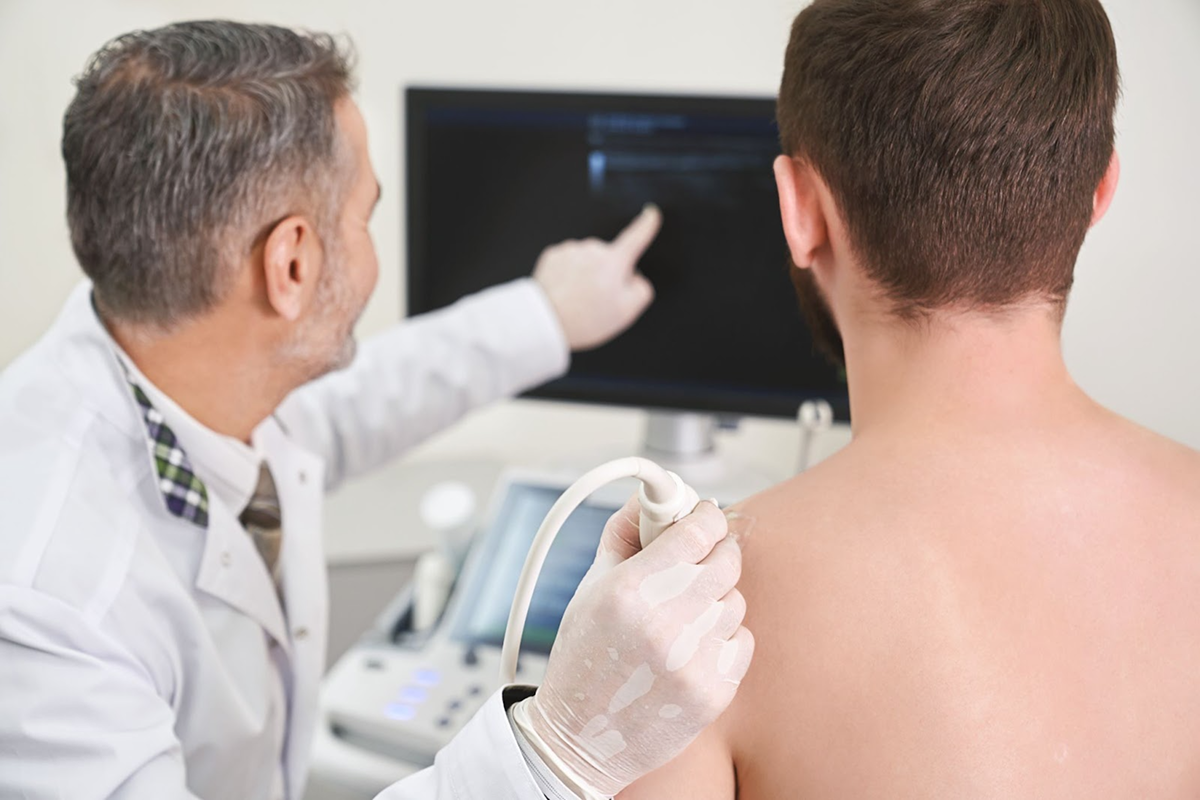
Both Shoulders
Both sides compared in one visit£299
- Everything in the one-shoulder scan, on both sides
- Left-versus-right comparison
- Useful when both shoulders hurt or symptoms are widespread
- One appointment and one report
Book Your Private Shoulder Ultrasound
Pick one shoulder or both, then a clinic and a time. Same-day slots are often available, 7 days a week.
Secure online booking
Book your scan
Choose a time that suits you — we search every eligible specialist and confirm your appointment instantly.
- 1Appointment
- 2Your details
- 3Payment
- 4Confirmed
Choose another date
Select any available day in the next 60 days.
Available times
Choosing a specialist re-draws the calendar to show only their available dates.
Your appointment
- Scan type
- Branch
- Date of scan
- Specialist
- Scan Time
- Price
Your details
All fields are required unless marked optional.
Appointment available
Secure payment
Use the secure Stripe tabs below to select Card, Google Pay, Apple Pay or Klarna when available.
Payment methods shown depend on your device and the options enabled in Semble Pay. Card details are handled securely by Stripe and are not stored by this website.
Your appointment is confirmed
Thank you, — a confirmation email has been sent to .
Your scan is booked. Anything selected below will be attached to the same booking and can be paid for at the clinic.
Booking confirmed
What a Shoulder & Upper Arm Ultrasound Includes
One scan of the whole shoulder and upper arm, with your arm moved so the tendons can be seen working.
Rotator cuff
The four cuff tendons, checked for tears, tendinopathy and calcium.
Biceps tendon
The long head of the biceps in its groove, for tears and slipping.
Bursa
The bursa under the acromion, for fluid and inflammation.
AC joint
The joint at the top of the shoulder, for arthritis and swelling.
Upper arm
The muscles and tendons of the upper arm, and any lump or swelling.
Moving assessment
You move your arm during the scan, so impingement is seen live.
What ultrasound cannot see. The labrum, the bone and the deep joint are better assessed on MRI. If your symptoms point that way, we will tell you on the day.
Who Should Go for a Shoulder Ultrasound?
A shoulder ultrasound can help if you have pain, weakness or a lump that has not settled, or you want a clear answer after an injury. You do not need a GP referral, and you do not need to know what is wrong before you book.
Shoulder pain that will not settle
Pain that has lasted weeks and is not improving. A scan can show what is causing it, so you know what to do next.
Pain lifting your arm
A painful arc, or catching when you reach overhead. Because we watch the shoulder move, we can often see exactly where it gets pinched.
Weakness or clicking
A shoulder that feels weak, or clicks or catches. We check the rotator cuff and biceps tendon to see whether a tear or tendon problem is behind it.
A sports or overuse injury
Throwing, racket, gym or contact-sport injuries. You get a clear picture of what is injured before you return to training.
Pain after a fall
An injury that needs a quick, focused answer. Same-day and next-day appointments are often available, so you do not have to wait.
A lump or swelling
A new lump around the shoulder or upper arm. Ultrasound shows what it is, and we will tell you if it needs any further tests.
Not sure if a scan is right for you? Call us on 020 7101 3377 and we will point you to the right appointment.
How to Prepare for Your Shoulder Ultrasound
There is nothing to do beforehand: no fasting and no medication changes. The scan is gentle and painless, and you can drive and carry on with your day straight afterwards.
Tell us which shoulder
One or both, and any injury, previous scans or injections. This helps us plan your scan and read your findings in context.
Wear a vest or sleeveless top
We need easy access to the shoulder and upper arm, so a vest, a sleeveless top or a loose top that slips off the shoulder is ideal. A female clinician can be requested at booking, subject to availability.
Previous imaging
Any earlier X-ray, ultrasound or MRI reports for the shoulder. They help the clinician read today’s findings in context, but you can still be scanned if you do not have any.
Expect to move the arm
The clinician watches your tendons and bursa move as you lift your arm. If any movement is uncomfortable, just say and they will adapt. Results are explained before you leave.
Why People Choose London Private Ultrasound for Their Shoulder Scan
MSK-specialist clinicians
Your shoulder is scanned and reported by clinicians with specialist musculoskeletal expertise.
Dynamic, real-time assessment
We watch the shoulder move, so impingement and subtle cuff problems are seen live. A still MRI can miss this.
Results the same day
Findings are explained in the room, with a written report and images within 24 hours.
Treatment under one roof
If the scan shows a treatable problem, an ultrasound-guided cortisone injection can often be arranged. It is booked and charged separately.
No referral, no waiting
Self-refer directly. Same-day and next-day appointments are often available.
Harley Street, seven days a week
Central London and St Albans, open 9am to 7pm every day. CQC-registered, established 2012 and rated 4.8 from over 1,300 reviews.
Scans & Treatments People Book Alongside a Shoulder Scan

Sports Injury Ultrasound
Focused imaging of a sports or overuse injury, with dynamic assessment and a clear return-to-activity picture for the shoulder and beyond.
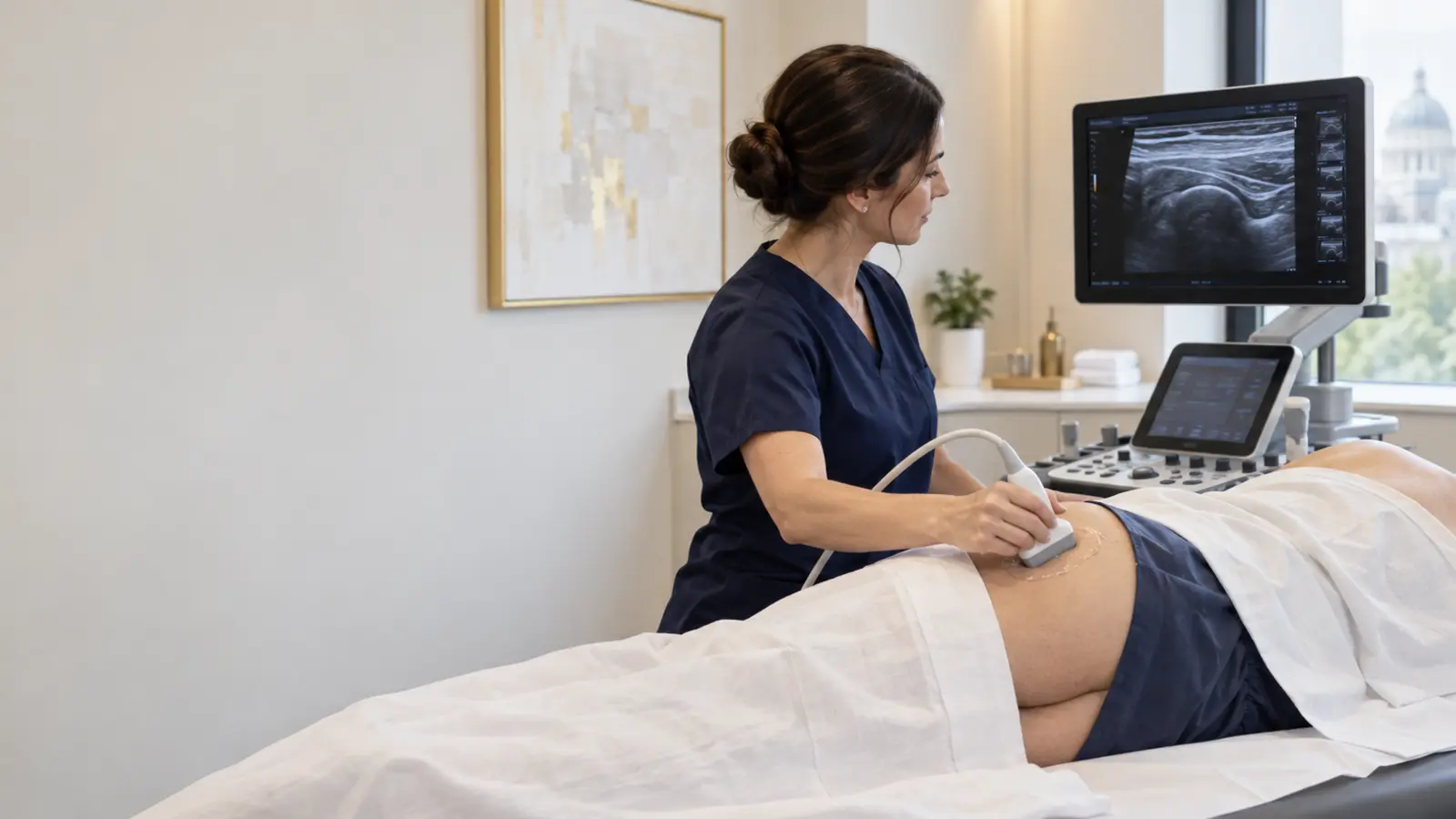
Knee & Hip Ultrasound
Assessment of tendons, bursae and soft tissue around the knee or hip, useful when more than one joint is involved or symptoms are widespread.

One-Stop Orthopaedic & MSK Clinic
Scan, specialist review and treatment in a single pathway when you want to move from diagnosis to a plan as quickly as possible.
Shoulder Ultrasound Near Me: Central London and St Albans
Two clinics, seven days a week, 9am to 7pm, with same-day and next-day shoulder appointments frequently available. Both run the full £199 shoulder scan (£299 both shoulders) with MSK-specialist clinicians and the written report within 24 hours.

Central London: Harley Street Medical District
27 Welbeck Street, London W1G 8EN
Two minutes from Bond Street (Elizabeth line, Central, Jubilee), five from Oxford Circus, eight from Marylebone and Baker Street. Convenient for patients travelling in from Mayfair, Fitzrovia, Marylebone, Soho, the City and Paddington, and searches for a shoulder ultrasound on Harley Street.

St Albans: Hertfordshire
54–56 Victoria Street, St Albans AL1 3HZ
A short walk from St Albans City station, with parking nearby. Convenient for patients across Hertfordshire and North London, including Watford, Hatfield, Harpenden, Radlett and Welwyn Garden City.
Registered & Regulated
London Private Ultrasound is a CQC-registered clinic, and the clinicians who scan your shoulder and upper arm and review your results are on the UK’s professional registers. This is who stands behind your scan.
Care Quality Commission
London Private Ultrasound is a CQC-registered clinic, so our service is held to national standards for safe, effective care.
General Medical Council
Our Medical Director, Dr Babak Soleimanpour (GMC 6060555), and the doctors who review your care are on the GMC register.
Health & Care Professions Council
Our Lead MSK Consultant Clinician, Mr Paul Watson (HCPC PH105122), is on the HCPC register for radiographers and allied health professionals.
Royal College of Radiologists
The UK professional body for radiology. Our MSK team includes radiology-trained doctors, and your findings follow in a written report within 24 hours.
Chartered Society of Physiotherapy
Mr Paul Watson is a CSP member, so physiotherapy expertise sits behind your scan and your advice on next steps.
Meet Your Musculoskeletal Team

Mr Paul Watson
Lead MSK Consultant ClinicianHCPC · NMP · DipMSK · DFSEM · CSP · PgCert

Dr Adil Naeem
Medical DoctorMBChB · FRANZCR · musculoskeletal radiology

Dr Reza Salehi
Medical DoctorMBChB · FRANZCR · musculoskeletal radiology

Mr Benjamin Iyenkutty
Musculoskeletal SonographerPgCert MSK Ultrasound (UEL) · RCT · SoR
Shoulder Ultrasound Scan: Frequently Asked Questions
How much does a shoulder ultrasound cost in London?
At London Private Ultrasound a shoulder ultrasound costs £199 for one shoulder and £299 for both, all-inclusive, at our Central London and St Albans clinics. The price covers the scan, results explained on the day and a written report within 24 hours.
Across the UK, private shoulder ultrasounds typically advertise from around £130 to £300. When you compare prices, check who performs and reports the scan, and whether the assessment is dynamic.
Can an ultrasound detect shoulder problems, and what will it show?
Yes. Shoulder ultrasound is the recommended first-line scan for most shoulder pain. It shows the rotator cuff, biceps tendon, bursa, AC joint and upper-arm soft tissues in real time, and finds rotator cuff tears, impingement, bursitis, calcific tendinitis, biceps problems, AC joint arthritis and lumps. Because you move your arm during the scan, problems that only appear on movement can be seen.
Is MRI or ultrasound better for the shoulder?
For the rotator cuff, biceps tendon, bursa and soft tissue, ultrasound is comparable to MRI in experienced hands, and it shows the shoulder moving, which MRI cannot. MRI is better for the labrum, the bone and the deep joint.
Ultrasound is the ideal first test for most shoulder pain, and we will tell you clearly if an MRI is the right next step.
Is a shoulder ultrasound or CT scan better?
For soft tissue, ultrasound is the better test, with no radiation. CT uses X-rays and is best for bone, complex fractures and surgical planning, not tendons.
For a suspected cuff tear, impingement, bursitis or tendon pain, ultrasound is the right first scan, and we will tell you if CT is the better route for you.
Can a shoulder ultrasound show cancer?
Ultrasound is not a cancer screening test, but it can characterise lumps around the shoulder and upper arm, such as a lipoma, ganglion or bursal swelling, and flag one that needs further assessment.
If a lump looks concerning, the clinician will advise an MRI and specialist referral, because a definite diagnosis usually needs MRI and a biopsy.
Can ultrasound detect a rotator cuff tear?
Yes. High-resolution ultrasound is highly accurate for rotator cuff tears. It can tell full-thickness tears, partial tears and degenerative tendinopathy apart, and shows calcium deposits in the tendons. For full-thickness supraspinatus tears it is comparable to MRI in experienced hands, with the added benefit of a moving assessment.
Does the scan cover the upper arm too?
Yes. As well as the shoulder structures, the scan assesses the upper-arm muscles, tendons and soft tissue, and any lump or swelling there, because shoulder problems often refer pain down the arm.
If your pain is centred at the elbow, an elbow scan may suit you better. Ask us and we will guide you.
Can ultrasound diagnose frozen shoulder?
Frozen shoulder (adhesive capsulitis) is largely a clinical diagnosis, but ultrasound helps. It can show supportive signs such as thickening around the joint and rotator interval, and it can rule out a rotator cuff tear that mimics it. It can also guide an injection or hydrodistension if that is the plan.
Does the NHS do a shoulder ultrasound?
Yes, the NHS offers shoulder ultrasound, but usually only after a GP referral and often with a wait.
A private scan is for people who want a fast, specialist answer, often the same or next day, with results explained in the room. No GP referral is needed to book with us.
How long does a shoulder ultrasound take?
Allow about 20 to 30 minutes for a single shoulder, or a little longer if both shoulders are being scanned. Your findings are explained straight after the scan, and the full written report follows within 24 hours.
Do I need a GP referral for a private shoulder ultrasound in London?
No. You can self-refer and book directly online or by phone on 020 7101 3377, with same-day and next-day appointments often available at both clinics.
If you have previous X-ray, ultrasound or MRI reports for the shoulder, bring them so the clinician can read today’s findings in context.
Is a shoulder ultrasound painful, and how is it done?
It is painless and non-invasive. Warm gel is applied to the skin and the clinician moves a small probe over the shoulder and upper arm, viewing the structures on screen. There are no needles and nothing internal.
You will be asked to move your arm during the scan so the tendons and bursa can be watched in motion. If a movement is uncomfortable because of your symptoms, tell the clinician and they will adapt.
When will I get my shoulder scan results?
You get verbal results the same day: the clinician explains what they have found immediately after the scan and answers your questions. A full written report with images follows within 24 hours.
On request, we can share the report directly with your GP, physiotherapist or specialist to speed up your next step.
Can you do a child’s shoulder scan?
Ultrasound is radiation-free and can be appropriate for children in the right circumstances, for example after an injury or for a soft-tissue concern. Please call us on 020 7101 3377 first so we can confirm suitability and arrange the right appointment.
Do you do a shoulder ultrasound near me in London?
London Private Ultrasound has two clinics. Central London is at 27 Welbeck Street, W1G 8EN, in the Harley Street Medical District, a short walk from Bond Street, Oxford Circus and Marylebone. St Albans is at 54–56 Victoria Street, AL1 3HZ, serving Hertfordshire and North London.
Both offer the £199 shoulder scan (£299 both shoulders), seven days a week, 9am to 7pm, with MSK-specialist clinicians and same-day and next-day appointments often available.
Can the scan guide a cortisone injection for shoulder pain?
Yes. If the scan confirms a treatable problem such as subacromial bursitis, impingement or a painful tendon, an ultrasound-guided cortisone injection can often be arranged. Placing the injection under live ultrasound means it is delivered accurately to the right spot.
Our one-stop orthopaedic and MSK clinic can take you from scan to treatment quickly where that is the right plan.
Medical disclaimer. This page is general information and does not replace individual medical advice. A shoulder ultrasound is highly accurate for the rotator cuff, tendons, bursa and soft tissue, but image quality and interpretation depend on the clinical picture, and some structures (the labrum, bone and deep joint) are better assessed on MRI. Findings and any recommended next steps are explained on the day and set out in your written report. Seek urgent medical care rather than a routine scan if your shoulder pain follows significant trauma with deformity or inability to move the arm, or comes with chest pain, breathlessness, fever, a hot swollen joint, or spreading numbness or weakness. Contact your GP, NHS 111, or attend urgent care or A&E as appropriate.