
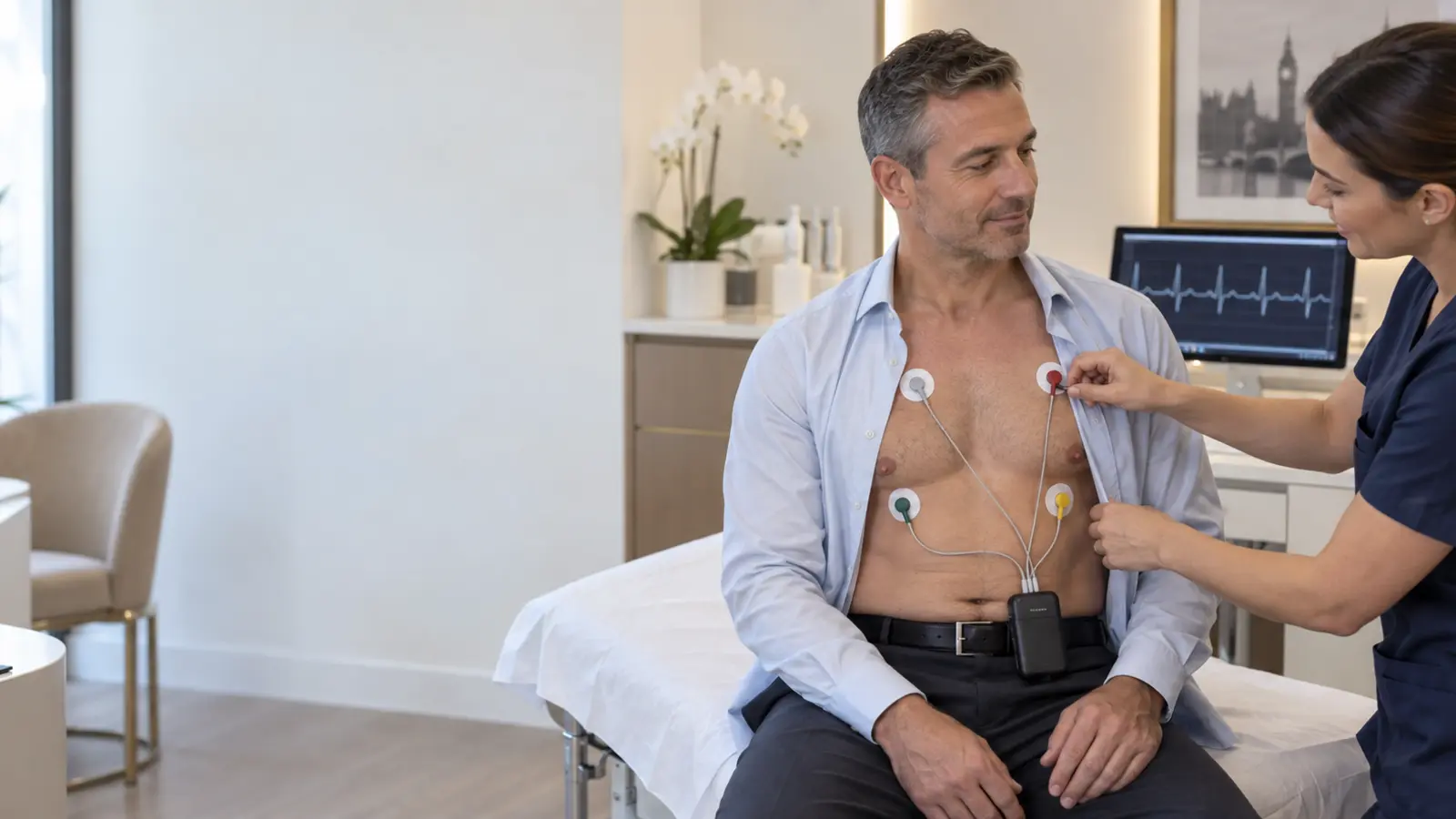
Holter Monitoring
Rhythm recording with cardiologist reviewfrom£449
- Beat-by-beat ECG while you live normally
- Free 12-lead ECG included
- GMC-registered cardiologist reviews every recording
- Written report, with fitting in about 15 minutes
Holter monitor & ambulatory ECG · Harley Street, Central London & St Albans · 7 days a week
A private Holter monitor (ambulatory ECG) at London Private Ultrasound starts at £449 with a free ECG included. Record your heart rhythm continuously over 3, 5 or 7 days while you carry on as normal. Every recording is reviewed by a GMC-registered cardiologist. No GP referral needed.
If you get palpitations, dizziness, an irregular heartbeat or blackouts that a standard resting ECG never seems to catch, a Holter monitor records every heartbeat for days at a time, so an intermittent rhythm problem has far more chance of being caught and explained.
From £599, add a face-to-face cardiology consultation and an echocardiogram to your monitoring, so rhythm and heart structure are explained together. Compare the options.
| Price | £449 (3-day) · £549 (5-day) · £649 (7-day) · free ECG included |
|---|---|
| With consultation & echo | From £599 · cardiology consultation and echocardiogram added |
| What it shows | Atrial fibrillation · ectopics (SVE) · SVT · pauses · slow or fast heart rate · heart block |
| Fitting & results | About 15 minutes to fit · cardiologist-reviewed report, usually within a few working days |
| Referral | No GP referral needed |
| Where & when | 27 Welbeck Street, W1G 8EN · 54–56 Victoria Street, St Albans AL1 3HZ · 7 days, 9am–7pm |
Both include continuous ECG monitoring, a free ECG and a cardiologist-reviewed report. Compare the options here, then choose the exact duration on the secure booking page.
from£449
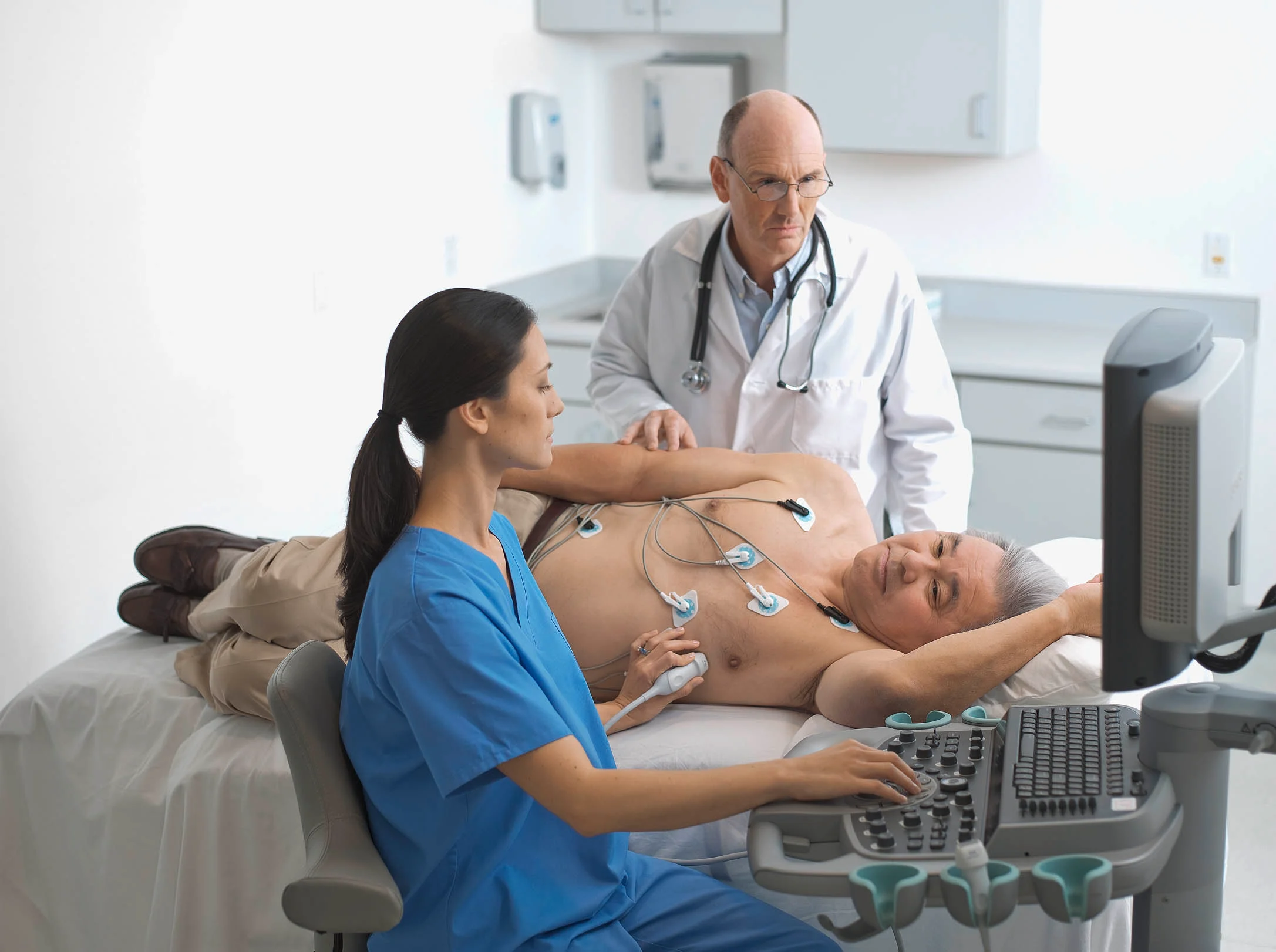
from£599
Save £398 or more compared with booking the monitor, a cardiology consultation (from £249) and an echocardiogram (£299) separately.
Not sure which length to choose? Call 020 7101 3377 and our team will help you pick the right recording length for your symptoms.
Choose your package and monitoring period, then a clinic and a time. No GP referral is needed. Fitting is usually available within days, 7 days a week.
Continue to our secure booking page to choose a 3-, 5- or 7-day monitor, or a package with a cardiology consultation and echocardiogram. You can then select your clinic and appointment time.
Book Holter monitoring · from £449 Call 020 7101 3377A Holter monitor is a small, portable ECG recorder worn on the chest. Unlike a resting ECG that captures a few seconds, it records every heartbeat for days, so it catches rhythm problems that come and go.
A few small electrodes connect to a lightweight recorder on a belt clip or waist strap. It records beat by beat while you live normally, and your symptom diary is matched to the trace.
Atrial fibrillation and flutter, ectopic beats including SVE, supraventricular tachycardia, pauses, a slow rate and heart block.
A GMC-registered cardiologist reviews your recording alongside your diary and writes a clear report, with a GP referral letter if a finding needs onward review.
Holter vs a single ECG: a resting ECG is a snapshot, a Holter monitor is a diary. If your symptoms come and go, days of continuous recording give a far better chance of catching the moment they happen.
A single ECG only captures the few seconds you are in the clinic. When symptoms are intermittent, monitoring over several days is the test that links what you feel to what your heart is doing.
A racing, fluttering or pounding heart that comes and goes.
Light-headedness, unexplained fainting or near-fainting.
A skipped or uneven beat you have noticed, or suspected atrial fibrillation.
Seeing whether rhythm control on medication is working.
Monitoring a known arrhythmia, or after a cardiac procedure or diagnosis.
Reassurance if heart rhythm problems run in your family.
Not an emergency test. If you have current chest pain, severe breathlessness, a collapse, or pain spreading to the arm or jaw, call 999 or go to A&E rather than booking a routine test.
Fitting is quick and painless, with no needles. Your chest should be clean, dry and shaved so the electrodes stick securely and the recording stays accurate.
A button-down or loose top for easy chest access. No lotion, oil or powder on the chest, and tell us about adhesive allergies. Bring a small diary or notes app.
Sticky pads and leads connect to a recorder about the size of a phone, worn on a belt or waist strap. Usually 2–3 leads, with spare batteries for longer recordings.
Work and daily activity are fine. Keep the device dry, so no baths or swimming. Wear it in bed and sleep on your back or side. Note any symptoms in your diary.
Return the device with your notes. A cardiologist reviews the recording and your written report follows, usually within a few working days.
Rhythm is one piece of the picture. These are the tests patients most often combine with ambulatory monitoring.
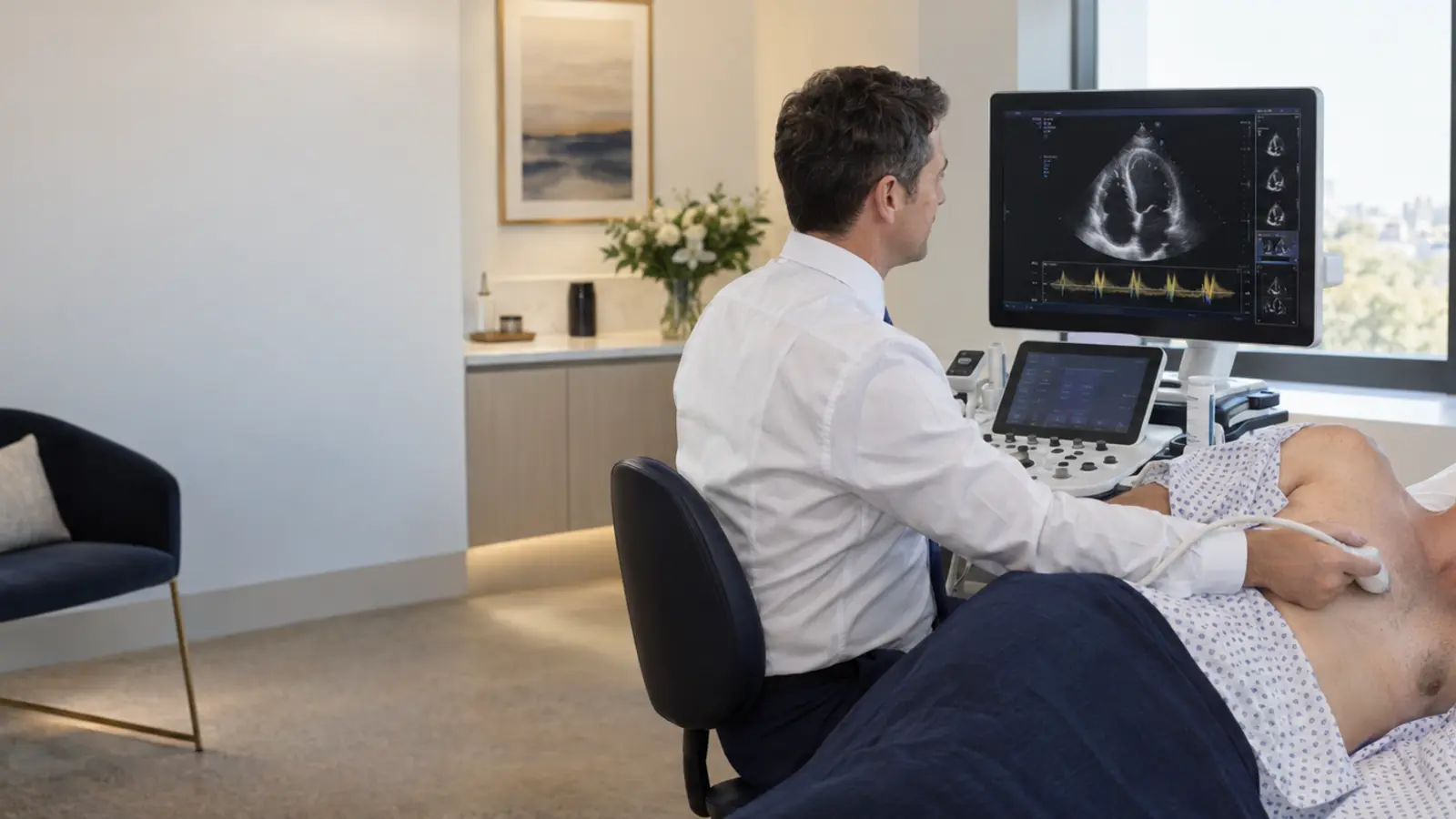
Ultrasound of the heart’s chambers, valves and pumping function. Part of the full monitoring package.
View echocardiogram →
A quick electrical snapshot of your heart rhythm. A free ECG is included with every Holter package.
View ECG →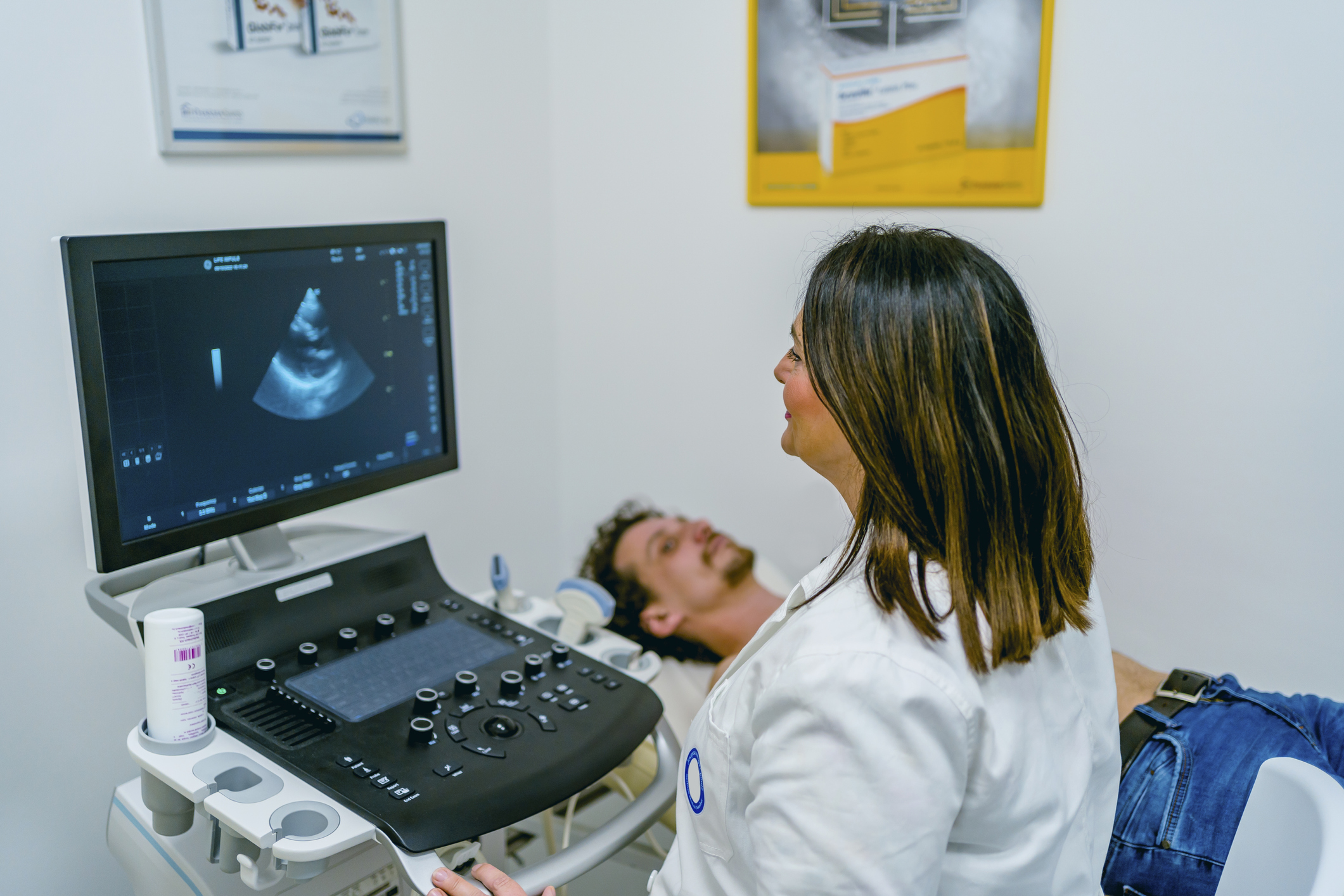
A combined cardiac assessment bringing rhythm, structure and risk together.
View heart health check →Holter monitor fitting at both clinics, 7 days a week from 9am to 7pm, usually available within days. From £449 with a free ECG and cardiologist reporting.
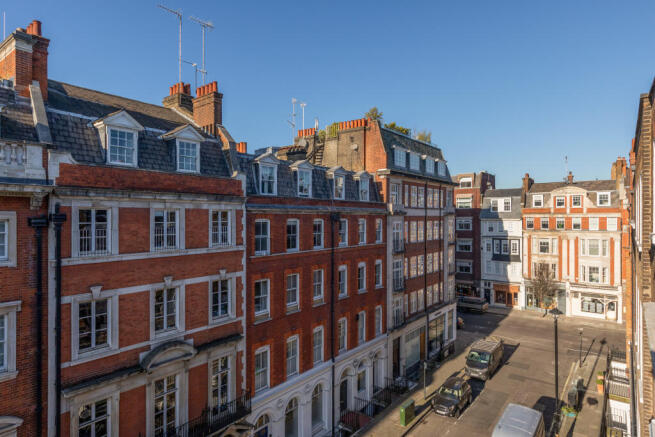
27 Welbeck Street, London W1G 8EN
Two minutes from Bond Street station (Elizabeth, Central and Jubilee lines), five from Oxford Circus and eight from Marylebone and Baker Street. Also close to Great Portland Street and Regent’s Park. Convenient for Mayfair, Fitzrovia, Soho, Paddington, the City, Stratford and Essex via the Elizabeth line.

54–56 Victoria Street, St Albans AL1 3HZ
A short walk from St Albans City station, with parking nearby and fast Thameslink trains from London St Pancras. Convenient for Harpenden, Hatfield, Welwyn Garden City, Watford, Hemel Hempstead, Luton, Radlett and North London.
Your Holter monitoring sits within a CQC-registered pathway, recorded and reported by clinicians on the UK’s professional registers.
Care Quality Commission
Independent regulator of health and social care in England.
General Medical Council
Register for doctors, including our cardiologists and medical director.
Royal College of Physicians
Professional standards for physicians, including cardiologists (MRCP).
British Society of Echocardiography
Professional body for cardiac imaging and echocardiography.
Royal College of General Practitioners
Professional standards for GPs, including our medical director (MRCGP).
Your ambulatory ECG pathway is supported by our cardiology team, with rhythm review, clear reporting and onward guidance where needed.

Dr Farveh Vakilian Aghouee
CardiologistGMC-registered cardiologist · ECG interpretation, Holter monitoring review, cardiovascular risk assessment and heart health review

Dr Hana Pospisilova
CardiologistGMC-registered cardiologist · heart rhythm assessment, ECG interpretation, Holter monitoring review and cardiac assessment

Dr Mohammad Al-Majali
CardiologistGMC-registered cardiologist · cardiac assessment, ECG interpretation, Holter monitoring review and echocardiography

Dr Babak Soleimanpour
Medical Director & GPGMC-registered GP · MD · MRCGP · DRCOG · overall clinical governance
Cost, the NHS, wearing the device, showering, sleeping, results and more: the questions our team is asked most.
A private Holter monitor test in the UK typically costs from about £240 to £900, depending on how many days you record for and whether a cardiologist reviews the recording and writes a report. Hospital and Harley Street clinics are usually at the higher end.
At London Private Ultrasound, Holter monitoring costs £449 for 3 days, £549 for 5 days and £649 for 7 days, with a free ECG, cardiologist review and a written report included. Adding a cardiology consultation and an echocardiogram costs £599, £699 and £799 for the same durations.
Yes. Holter monitoring, also called ambulatory ECG monitoring, is available on the NHS and privately across the UK. On the NHS it usually follows a referral from your GP or a hospital doctor. Privately you can book directly, with no referral.
We fit and report private Holter monitors at two clinics: Central London (27 Welbeck Street, W1G 8EN) and St Albans (54–56 Victoria Street, AL1 3HZ), seven days a week from 9am to 7pm.
For a private test, expect to pay roughly £250 to £800 or more, rising with the length of recording. A fair price includes fitting, the recording, analysis, a cardiologist’s review and a written report you keep.
Before you compare prices, check who reviews the recording (a cardiologist or a technician), whether the report is included, and how long you wait for it. Ours starts at £449 and includes all three, plus a free 12-lead ECG.
Yes. The NHS provides 24-hour, 48-hour and longer ambulatory ECG monitors, but normally only after a GP or hospital referral. Waiting times for the monitor to be fitted, and then for the result, can run to several weeks depending on your area.
If you do not want to wait, you can book privately with no referral. Our monitor is usually fitted within days, and a GMC-registered cardiologist reviews the recording. If your symptoms are severe, such as fainting or chest pain, do not wait for either: see when to seek urgent help.
Our shortest option is 3-day (72-hour) monitoring at £449 with a free ECG. A longer recording gives a much better chance of catching symptoms that come and go, which a single 24-hour window often misses.
If you specifically need a 24-hour ECG, for example because a doctor has asked for one, call 020 7101 3377 and we will advise on the best option. Private 24-hour heart monitor prices elsewhere generally start from about £200 to £250.
London Private Ultrasound fits and reports Holter monitors at two clinics. Central London is at 27 Welbeck Street, W1G 8EN, in the Harley Street Medical District, a short walk from Bond Street, Oxford Circus, Marylebone and Baker Street. St Albans is at 54–56 Victoria Street, AL1 3HZ, near St Albans City station.
Both are open seven days a week, 9am to 7pm. Fitting is usually available within a few days, and no GP referral is needed. Book online or call 020 7101 3377.
Your Holter monitor is fitted in person at one of our two clinics, so a clinician can place the electrodes correctly and check the trace is clean before you leave. You wear it at home and at work for the whole recording, then bring it back. We do not sell Holter monitors, because the recording needs to be analysed and reported by a cardiologist to be useful.
If you cannot travel to either clinic, call 020 7101 3377 and we will tell you what is possible. Personal consumer ECG devices are not a replacement for a reported Holter.
A Holter monitor, also called an ECG Holter or ambulatory ECG, is a small, portable ECG recorder worn on the chest. It records every heartbeat continuously over several days while you carry on with normal life.
It shows your heart rhythm over time and can detect atrial fibrillation, ectopic beats (including supraventricular ectopics, or SVE), supraventricular tachycardia, a slow heart rate, pauses and heart block that a brief resting ECG may miss.
It depends on how often your symptoms happen. Choose 3-day monitoring if palpitations or dizziness occur most days, 5-day if they are less predictable, and 7-day if they are occasional. Seven days is the longest recording we offer.
The longer you record, the higher the chance of capturing an intermittent rhythm problem. If your cardiologist feels you need a longer recording, such as two weeks, they will explain the options. If you are unsure which to pick, call us and we will help you choose.
You can carry on with most normal activity, and you should, because that is what the recording is meant to capture. The main restrictions are keeping the device dry, avoiding anything that could pull the electrodes loose, and keeping the recorder away from strong magnets and electric blankets. It should not be worn for an X-ray or MRI. You can eat and drink normally.
A Holter monitor is painless and low-risk. The usual side effect is mild redness or irritation under the sticky pads, which can occasionally look like a small patch of burn and settles after removal. Tell us in advance if you have an adhesive allergy or sensitive skin.
Most standard Holter recorders are not waterproof, so avoid baths, swimming and soaking the device. You should only shower if you are told your device is water-resistant. Many people have a quick wash and keep the monitor and electrodes dry.
We explain exactly what is safe for the device fitted at your appointment. If an electrode comes loose, call us and we will advise.
Yes, and you should keep it on overnight, because night-time recordings are an important part of the assessment. The recorder is small and light enough to wear in bed. Most people rest it beside them or clip it to nightwear.
Sleeping on your back or side is usually most comfortable and keeps the leads from being pulled. A soft, loose top helps.
The electrodes are placed on the breastbone and rib area, not on the breasts. A wired bra is usually removed while the device is fitted because the underwire can interfere with the trace, but an unwired or sports bra can normally stay on and often helps hold the leads comfortably.
Wear a two-piece outfit, such as a button-down or loose top with separate bottoms, rather than a dress, so the chest is easy to reach and the recorder is easy to hide. Your chest should be clean, dry and shaved so the pads stick well, with no lotion or powder that day.
Once you return the monitor, the recording is downloaded and analysed and a GMC-registered cardiologist reviews it. The written report is typically ready within a few working days, with a GP referral letter included if a finding needs onward review.
SVE stands for supraventricular ectopics, extra heartbeats that start in the upper chambers. A few are very common and usually harmless. An abnormal result simply means the cardiologist saw something to explain or act on, such as atrial fibrillation, pauses or a very fast rhythm. Your report sets out what it means and what to do next.
No to both. A Holter monitor records the heart’s rhythm, not the coronary arteries, so it does not directly show a blockage. If a blocked artery is suspected, a CT coronary angiogram, a stress test or a cardiology consultation is the right next step.
It also does not measure blood pressure, which needs a separate 24-hour ambulatory blood pressure monitor. An echocardiogram checks the structure and pumping of the heart, which is why many people add one, as in our monitoring package with consultation and echo.
A Holter monitor investigates symptoms that come and go. It is not for an emergency. If you have current chest pain, severe breathlessness, a collapse, or pain spreading to the arm or jaw, call 999 or go to A&E straight away.
For palpitations, dizziness or an irregular pulse that settle on their own, a Holter monitor is a sensible next step, and fitting is usually available within days.
Medical disclaimer. This page is general information and does not replace individual medical advice. A Holter monitor records heart rhythm only. It does not show the coronary arteries and cannot on its own confirm or exclude coronary artery disease. Seek urgent medical attention (A&E or 999) rather than booking a routine test if you have current chest pain, severe breathlessness, collapse or pain spreading to the arm or jaw.