
Cardiovascular risk screening · Harley Street, Central London & St Albans · 7 days a week

Private Heart Health & Stroke Risk Screening in London

A heart health and stroke risk screening is a cardiologist-led check that combines four tests in one appointment: a carotid artery ultrasound for stroke-risk plaque, an Ankle-Brachial Index (ABI) for peripheral arterial disease, an abdominal aortic aneurysm (AAA) ultrasound and a 12-lead ECG for atrial fibrillation.

It costs £649 with a same-day written report and no GP referral needed. Most strokes are linked to risk factors that develop silently, so this screening gives you a clear, joined-up picture of your cardiovascular risk in a single visit.

  • £649 all-inclusive
  • 4 tests in one visit
  • Cardiologist-led
  • Same-day written report
  • No GP referral needed
  • No radiation
Want bloods and a fuller cardiac work-up too?

See the Premium Heart Health Check with blood test.

Quick facts

Heart & Stroke Risk Screening at a Glance

Heart and stroke risk screening quick facts
Price£649 · all tests inclusive
Assessment typeCardiologist-led cardiovascular screening package (4 tests)
Tests includedCarotid duplex ultrasound · Ankle-Brachial Index (ABI) · Abdominal aortic aneurysm (AAA) ultrasound · 12-lead ECG
Areas assessedCarotid & vertebral arteries · abdominal aorta · arm & ankle circulation · heart rhythm
RadiationNone: ultrasound and ECG only
DurationAbout 60 minutes
PreparationMinimal: loose clothing; light fasting may be advised for the AAA scan
ReferralNo GP referral needed
ReportSame-day written report, formatted for onward referral where needed
In one appointment

A Complete Cardiovascular Risk Screen, Led by a Cardiologist

Four targeted tests assess the arteries to your brain, the main vessel from your heart, the circulation to your legs and your heart rhythm: the areas most strongly linked to stroke and heart attack.

Cardiologist-led heart health and stroke risk screening in London
Heart Health & Stroke Risk Screening £649
  • Carotid artery duplex ultrasound: stroke-risk plaque and narrowing
  • Ankle-Brachial Index (ABI): peripheral arterial disease
  • Abdominal aortic aneurysm (AAA) ultrasound
  • 12-lead ECG: atrial fibrillation (AFib) and heart rhythm
  • Cardiologist interpretation and same-day report
Book online

Book Your Heart & Stroke Risk Screening in London

Choose a clinic and a time. Same-day and next-day appointments are often available, 7 days a week, with no GP referral needed.

Continue to our secure booking page to choose your clinic and appointment time.

Book Heart & Stroke Risk Screening · £649
What is it

What the Heart & Stroke Risk Screening Is

Stroke and heart attack are most often the end-point of conditions that build up silently over years: narrowed arteries to the brain, a widening aorta, poor circulation to the limbs, or an irregular heartbeat. None of these typically cause symptoms until they are advanced.

This screening brings together the four checks that map those risks most directly. Your carotid arteries in the neck supply most of the blood to your brain, so plaque or narrowing there is one of the clearest warning signs of stroke risk. The abdominal aorta is the body’s main artery, and a slowly enlarging aneurysm can be silent until dangerous. The Ankle-Brachial Index compares blood pressure at the arm and ankle to reveal peripheral arterial disease. A 12-lead ECG detects atrial fibrillation, a common irregular rhythm that sharply raises stroke risk.

Because a cardiologist interprets all four together, you receive a joined-up picture of your cardiovascular risk rather than four isolated results, with a same-day report you can act on.

Cardiologist explaining a heart and stroke risk screening to a patient in London
Ultrasound & ECG checks for

What Does a Cardiovascular Risk Screening Look For?

Each test targets one of the main causes of stroke and heart attack. Together they show where your risk comes from and what to do next.

Carotid plaque and narrowing

The carotid duplex scan looks for plaque, the percentage of narrowing (stenosis) and turbulent flow in the neck arteries. Irregular or ulcerated plaque carries a higher stroke risk than smooth plaque.

Vertebral artery flow

The arteries at the back of the neck also feed the brain. We check the direction and speed of flow for signs of narrowing or blockage.

Abdominal aortic aneurysm

The AAA ultrasound measures the widest diameter of the aorta. A larger diameter carries a higher risk of rupture, so the measurement guides how closely you are monitored.

Circulation to your legs

The Ankle-Brachial Index compares blood pressure at the ankle and the arm. A low ratio points to peripheral arterial disease and wider cardiovascular risk.

Atrial fibrillation and rhythm

The 12-lead ECG detects atrial fibrillation and flutter, a major and treatable cause of stroke, along with other rate and rhythm irregularities.

Strain and conduction changes

The ECG also shows evidence of previous heart strain or conduction changes, and any finding that warrants onward cardiology review.

Related conditions

Conditions This Screening Relates To

Heart and stroke conditions assessed by a cardiologist at London Private Ultrasound

Carotid artery disease

Fatty plaque narrowing the neck arteries that supply the brain, a leading cause of stroke. Carotid Doppler scan →

Abdominal aortic aneurysm

A bulge in the body’s main artery that can enlarge silently. AAA scan →

Peripheral arterial disease

Narrowed leg arteries, and a marker of risk to the heart and brain. ABPI scan →

Atrial fibrillation (AFib)

An irregular heart rhythm that allows clots to form, sharply raising stroke risk. ECG test →

Who it is for

Who Should Consider a Stroke Risk Screening or Cardiovascular Risk Test?

Family history

Stroke, heart attack or aneurysm in close relatives.

Existing risk factors

High blood pressure, raised cholesterol or diabetes.

Aged 40 and over

A proactive cardiovascular risk check before symptoms appear.

Lifestyle risk

A smoking history, high stress or a sedentary routine.

Peace of mind

No symptoms, but you want clarity and reassurance.

Known vascular disease

Monitoring after a previous finding or diagnosis.

Preparation

How to Prepare for Your Heart and Stroke Risk Screening

Preparation is minimal and nothing hurts. The whole appointment takes about 60 minutes.

BeforeYour visit

Dress for easy access

Wear loose, comfortable clothing with easy access to the neck, chest and ankles, and avoid heavy moisturiser on the neck and chest. Light fasting may be advised for the abdominal scan, which we confirm at booking. Bring your medication list and any past scan reports.

10 minHistory

Your cardiologist reviews your risk factors

Symptoms, family history, blood pressure and medication, so the tests are read in context.

40 minTests

Carotid scan, ABI, AAA scan and ECG

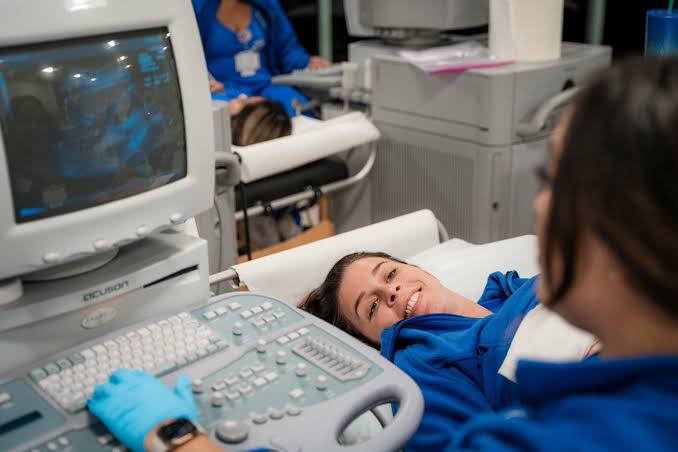
Warm gel and a probe on the neck and abdomen, blood pressure cuffs on the arms and ankles, and small ECG sensors on the chest, arms and legs. No needles, no radiation.

Same dayReport

Findings explained, written report in hand

The cardiologist talks you through the results and you leave with a written report and clear next steps.

If something is found: you leave with a clear plan, never just a result. That may be lifestyle and risk-factor advice, a GP review, a cardiology consultation with us to go through the findings, or a referral letter to the right specialist. Urgent findings are followed up promptly.

Why us

Why People Choose London Private Ultrasound for Their Cardiac Risk Screening

Cardiologist-led

All four tests are interpreted by an experienced cardiologist, not left as disconnected results. You get one joined-up view of your risk.

Same-day, 7 days a week

Same-day and next-day appointments are often available, and your report is ready on the day. There is no wait for a routine NHS pathway.

No referral needed

Book directly, with no GP referral. If a finding needs onward care, we write the referral letter for you.

Four tests, one visit

Carotid, aorta, leg circulation and heart rhythm are checked together in about an hour. Separate NHS pathways usually mean separate appointments.

Two clinics, one team

Choose Harley Street in Central London or St Albans in Hertfordshire. The same screening and price apply at both.

Trusted since 2012

CQC and ICO registered, with more than 35,000 patients and a 4.8 Google rating from over 1,200 reviews. £649 covers everything, with no extras.

Find us

Private Heart & Stroke Risk Screening Near Me: Central London & St Albans

Cardiovascular risk screening at both clinics, 7 days a week from 9am to 7pm, with same-day and next-day slots often available. No GP referral needed.

London Private Ultrasound clinic at 27 Welbeck Street, Harley Street Medical District

Central London: Harley Street Medical District

27 Welbeck Street, London W1G 8EN

Two minutes from Bond Street station (Elizabeth, Central and Jubilee lines), five from Oxford Circus and eight from Marylebone and Baker Street. Also close to Great Portland Street and Regent’s Park. Convenient for Mayfair, Fitzrovia, Soho, Paddington, the City, Stratford and Essex via the Elizabeth line.

020 7101 3377 · Get directions

London Private Ultrasound clinic, Victoria Street, St Albans

St Albans: Hertfordshire

54–56 Victoria Street, St Albans AL1 3HZ

A short walk from St Albans City station, with parking nearby and fast Thameslink trains from London St Pancras. Convenient for Harpenden, Hatfield, Welwyn Garden City, Watford, Hemel Hempstead, Luton, Radlett and North London.

020 7101 3377 · Get directions

Accredited · Regulated · Trusted

Registered & Regulated

Your screening sits within a CQC-registered service, interpreted by clinicians on the UK’s professional registers.

Care Quality Commission

Independent regulator of health and social care in England.

General Medical Council

Register for doctors, including our cardiologists and medical director.

Royal College of Physicians

Professional standards for physicians, including cardiologists (MRCP).

British Society of Echocardiography

Professional body for cardiac imaging and echocardiography.

Royal College of General Practitioners

Professional standards for GPs, including our medical director (MRCGP).

Who interprets your screening

Meet Your GMC-Registered Cardiology Team

Your results are interpreted by one of our cardiologists, with clinical governance from our Medical Director.

Dr Farveh Vakilian Aghouee, Cardiologist at London Private Ultrasound

Dr Farveh Vakilian Aghouee

Cardiologist

GMC-registered cardiologist · cardiovascular risk assessment, ECG interpretation and heart health review

Dr Hana Pospisilova, Cardiologist at London Private Ultrasound

Dr Hana Pospisilova

Cardiologist

GMC-registered cardiologist · heart rhythm assessment, ECG interpretation and cardiac assessment

Dr Mohammad Al-Majali, Cardiologist at London Private Ultrasound

Dr Mohammad Al-Majali

Cardiologist

GMC-registered cardiologist · cardiac assessment, ECG interpretation and echocardiography

Dr Babak Soleimanpour, Medical Director & GP at London Private Ultrasound

Dr Babak Soleimanpour

Medical Director & GP

GMC-registered GP · MD · MRCGP · DRCOG · overall clinical governance

Questions

Heart & Stroke Risk Screening: Frequently Asked Questions

What are 80% of strokes caused by?

Most strokes, around 85 in every 100, are ischaemic strokes, caused by a blood clot or a narrowed artery cutting off the blood supply to part of the brain. The rest are haemorrhagic strokes, caused by bleeding in or around the brain.

Ischaemic strokes are commonly linked to fatty plaque in the neck (carotid) arteries, atrial fibrillation (an irregular heartbeat that allows clots to form), high blood pressure, high cholesterol, diabetes and smoking. Many of these can be found and managed early, which is what this screening is designed to do.

Can you get screened for stroke risk?

Yes. A stroke risk screening looks for the conditions that most often lead to a stroke, rather than waiting for symptoms. Our cardiologist-led screening combines four tests in one visit: a carotid artery ultrasound for plaque and narrowing, an Ankle-Brachial Index (ABI) for circulation, an abdominal aortic aneurysm (AAA) ultrasound and a 12-lead ECG for atrial fibrillation.

It does not predict a stroke on a particular day, and it is not a substitute for blood pressure, cholesterol and diabetes checks. It gives you and your doctor a clear, joined-up picture of your risk so you can act on it.

Who is the best stroke consultant in the UK?

There is no official ranking of stroke consultants. A good choice is a doctor on the GMC specialist register in stroke medicine, neurology, cardiology or vascular surgery, with experience of your particular concern. Your GP or hospital team can refer you to one on the NHS, and you can check any doctor’s registration on the GMC website.

This screening is about assessing risk. It is led by GMC-registered cardiologists, and if a finding needs a specialist we provide a referral letter. If you think you are having a stroke, call 999 straight away. See when to seek urgent help.

Where can I get a cardiovascular screening in the UK?

On the NHS, adults in England aged 40 to 74 without a known heart condition can have an NHS Health Check every five years, and men are invited for an aortic aneurysm scan in the year they turn 65. Your GP can arrange other tests if you have symptoms or risk factors.

Privately, you can book directly with no referral. We offer a cardiologist-led cardiovascular risk screening at our Central London and St Albans clinics, seven days a week, with all four tests in one appointment and a same-day written report.

How much does a stroke risk screening cost in London?

Our Heart Health & Stroke Risk Screening costs £649, all-inclusive. That covers the carotid artery ultrasound, the Ankle-Brachial Index, the abdominal aortic aneurysm ultrasound, the 12-lead ECG, the cardiologist’s interpretation and your same-day written report. There are no extra fees.

Private cardiovascular screening in London ranges from a few hundred pounds for blood-test-only or basic checks to several thousand pounds for full-day assessments. Check what is included, who interprets the results and whether you get a written report. If you want blood tests added, see our Premium Heart Health Check with blood test.

What tests are done to check stroke risk?

Doctors usually combine several checks: blood pressure, a heart rhythm test (ECG), blood tests for cholesterol and diabetes, and sometimes an ultrasound of the neck arteries. Our screening includes four of these in one visit: carotid duplex ultrasound, Ankle-Brachial Index, AAA ultrasound and a 12-lead ECG.

Together they assess the arteries to your brain, the main artery from your heart, the circulation to your legs and your heart rhythm. Blood tests are not part of the £649 screening.

Is there a blood test for stroke risk, or a genetic test?

Blood tests can show some risk factors, such as cholesterol, blood sugar (HbA1c) and kidney function, but there is no single blood test that tells you whether you will have a stroke. Tests are used alongside blood pressure, heart rhythm and artery checks.

Blood tests are not included in the £649 screening. You can add them through the Premium Heart Health Check or book private blood tests. Genetic testing is not part of routine stroke risk assessment in the UK and is not included in this screening.

What is a private cardiac Doppler test, and what does it show?

A Doppler test is an ultrasound technique that measures the speed and direction of blood flow. In this screening it is used on the carotid arteries in the neck to look for plaque and narrowing, and on the abdominal aorta to check for an aneurysm. The Ankle-Brachial Index compares blood pressure at the arm and ankle to check the circulation to your legs. It uses no radiation and no needles.

If you are looking for a Doppler test of the heart itself, that is part of an echocardiogram, which looks at the heart’s structure and pumping. You can also book the neck artery scan on its own as a carotid Doppler scan.

How is this different from a heart health check or echocardiogram?

An echocardiogram looks at the heart’s structure and pumping. A heart health check usually combines a cardiologist consultation, an echo and an ECG. This screening focuses on stroke and vascular risk: the neck arteries, the aorta, leg circulation and heart rhythm.

Many people choose the screening if their main worry is stroke or a family history of vascular disease, and a heart health check or echo if their main worry is symptoms such as breathlessness or palpitations. Ask us if you are unsure which is right.

Do I need a GP referral, and can you send my results to my GP?

No. You can book directly online or by phone, without a GP referral. Online booking is for patients aged 18 and over.

Your written report is formatted for onward referral. If a finding needs action, we provide a referral letter to your GP or a specialist, and you can share the report with your NHS GP or private doctor.

How long does the screening take, how do I prepare and is it painful?

Allow about 60 minutes for all four tests and your discussion with the cardiologist. Wear loose clothing for easy access to the neck, chest and ankles. Light fasting may be advised for the abdominal ultrasound, which we confirm when you book. Bring a list of your medication and any previous scan reports.

It is painless. The scans use warm gel and a probe, the Ankle-Brachial Index uses blood pressure cuffs on the arms and ankles, and the ECG uses small sensors on the chest, arms and legs. There are no needles and no radiation.

When will I get my results?

The cardiologist explains the main findings before you leave. You receive a written report the same day, with clear next steps. If something needs action, you leave with a plan, not just a result: this may be lifestyle and risk-factor advice, a GP review, a cardiology consultation with us, or a referral letter to a specialist.

Most screenings are reassuring. Urgent findings, such as severe carotid narrowing or newly detected atrial fibrillation, are followed up promptly.

Who should consider a stroke risk screening?

It suits adults who want a proactive cardiovascular check, especially if you are over 40, have a family history of stroke, heart attack or aneurysm, or have high blood pressure, high cholesterol, diabetes or a smoking history. It is also used for peace of mind, or to monitor a known vascular condition.

Carotid disease, atrial fibrillation and peripheral arterial disease affect both men and women, so the screening is suitable for everyone. Abdominal aortic aneurysm is more common in older men, but the scan is included for all.

Can I have just one of the four tests?

Yes. The carotid Doppler scan, the AAA scan, the Ankle-Brachial (ABPI) test and the ECG are all available individually. The £649 screening bundles all four, with a cardiologist interpreting the results together, in one visit at a lower combined price.

If you only need one check, for example a carotid Doppler scan for the neck arteries or an ECG, call 020 7101 3377 and we will advise.

Where can I get a private heart and stroke screening near me in London?

London Private Ultrasound has two clinics. Central London is at 27 Welbeck Street, W1G 8EN, in the Harley Street Medical District, a short walk from Bond Street, Oxford Circus, Marylebone and Baker Street. St Albans is at 54–56 Victoria Street, AL1 3HZ, near St Albans City station.

Both are open seven days a week, 9am to 7pm, and same-day or next-day appointments are often available. Book in the calendar on this page or call 020 7101 3377.

When should I seek urgent help instead of booking a screening?

A screening is for people without current symptoms. If you think someone is having a stroke, think FAST: Face drooping, Arm weakness, Speech slurred or confused, Time to call 999. Call 999 for sudden numbness, loss of vision, severe headache or loss of balance, too.

Also call 999 or go to A&E for current chest pain, especially with breathlessness, sweating, collapse, or pain spreading to the arm or jaw. Do not wait for a booked appointment.

Medical disclaimer. This page is general information and does not replace individual medical advice. A screening estimates risk and does not predict or prevent a stroke on its own. It cannot rule out every condition. Call 999 if you think someone is having a stroke, or if you have current chest pain, breathlessness, collapse or pain spreading to the arm or jaw, rather than booking a routine screening.

Written byMr Pedram Aghaei, Co-founder & Medical Writer
Clinically reviewed byDr Babak Soleimanpour, Medical Director, GMC 6060555
Last reviewed · next review due October 2027
Scroll to Top