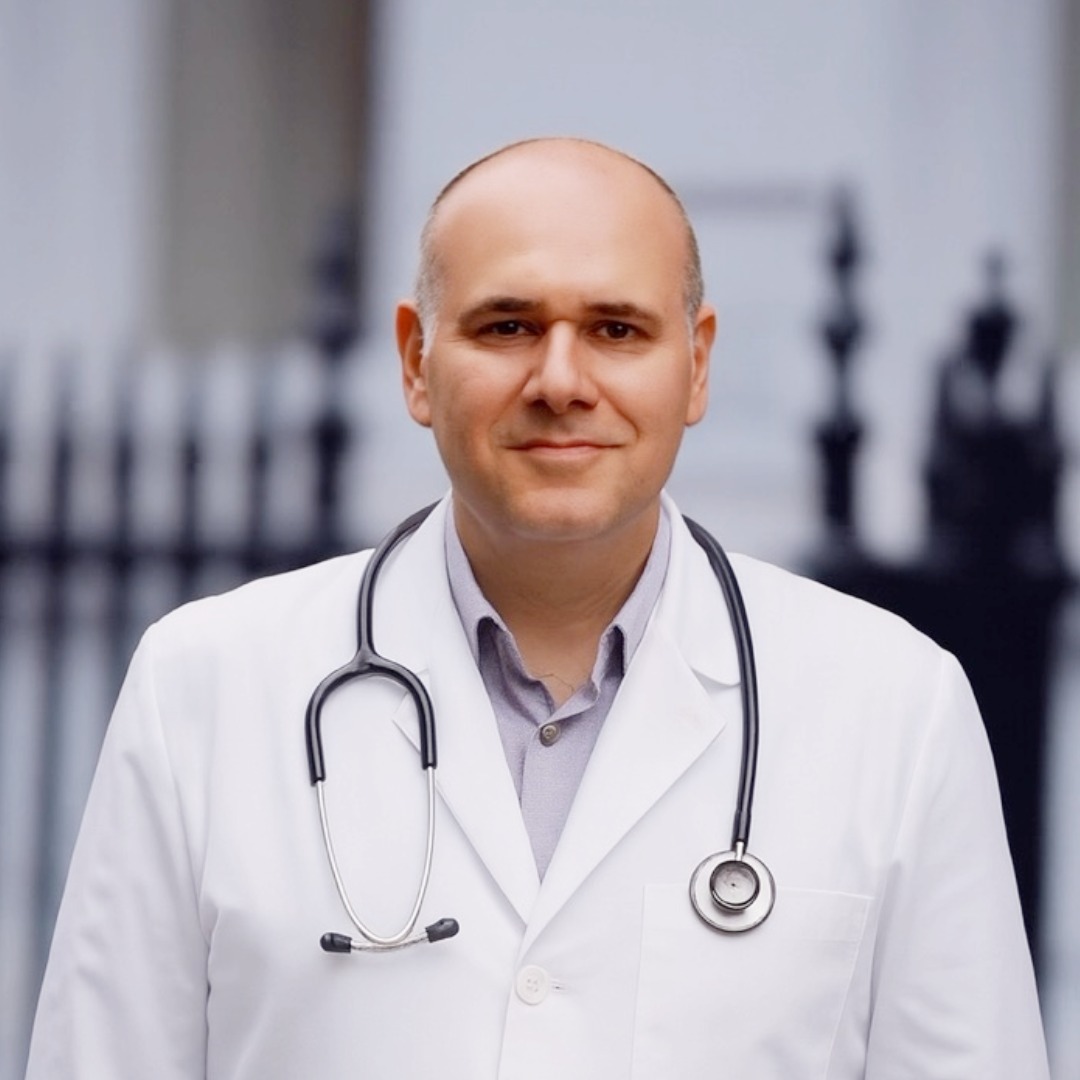
Dr Farveh Vakilian Aghouee
Cardiologist involved in echocardiography, ECG interpretation, cardiovascular risk assessment and heart health review.
GMC: 7862164A cardiologist-led transthoracic echocardiogram assessing your heart chambers, valves, ejection fraction, pumping function and blood flow with fast reporting.
Ideal for breathlessness, palpitations, heart murmur, abnormal ECG, high blood pressure, leg swelling, family history of cardiomyopathy, or follow-up of known valve and heart muscle conditions.
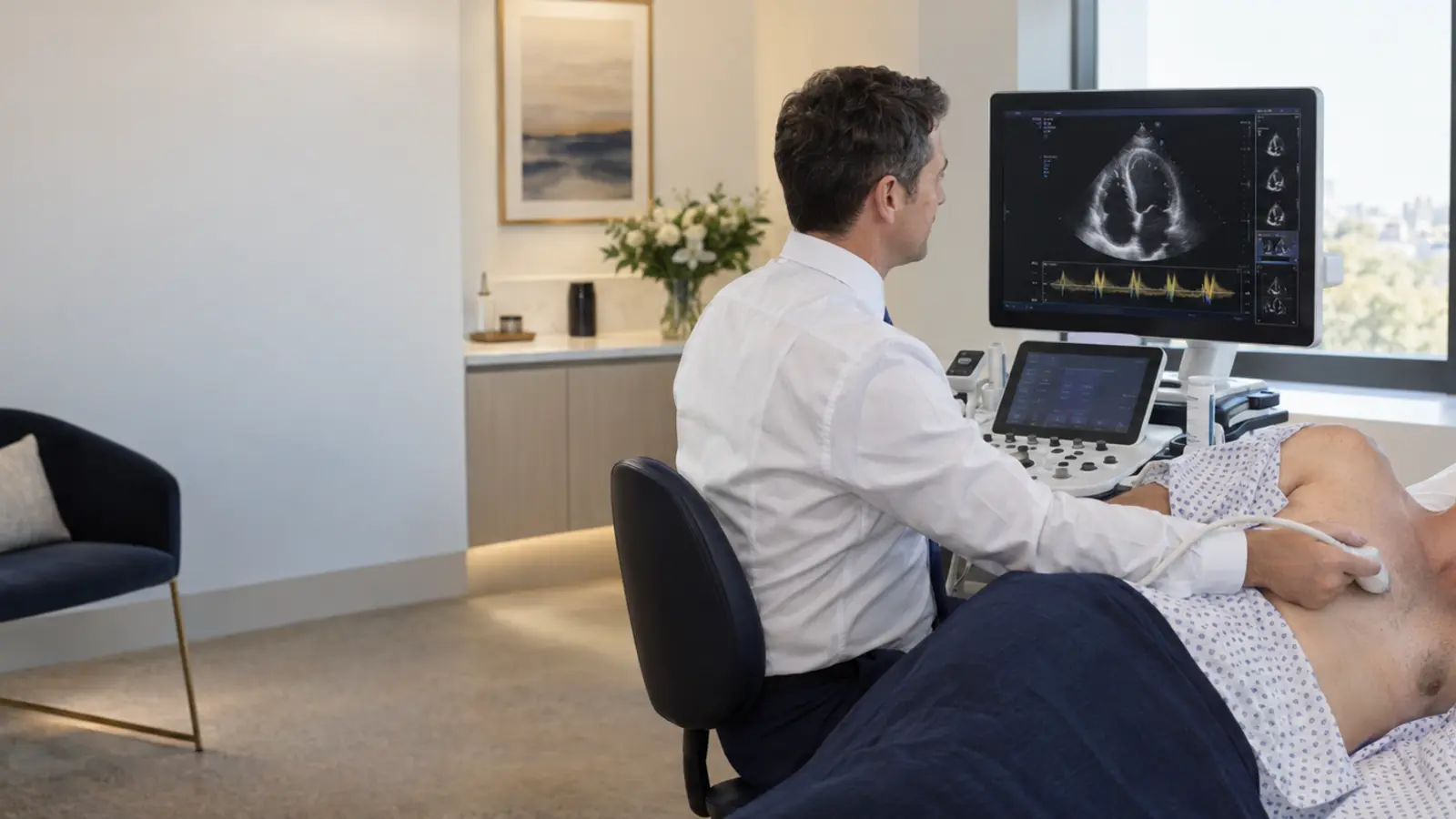
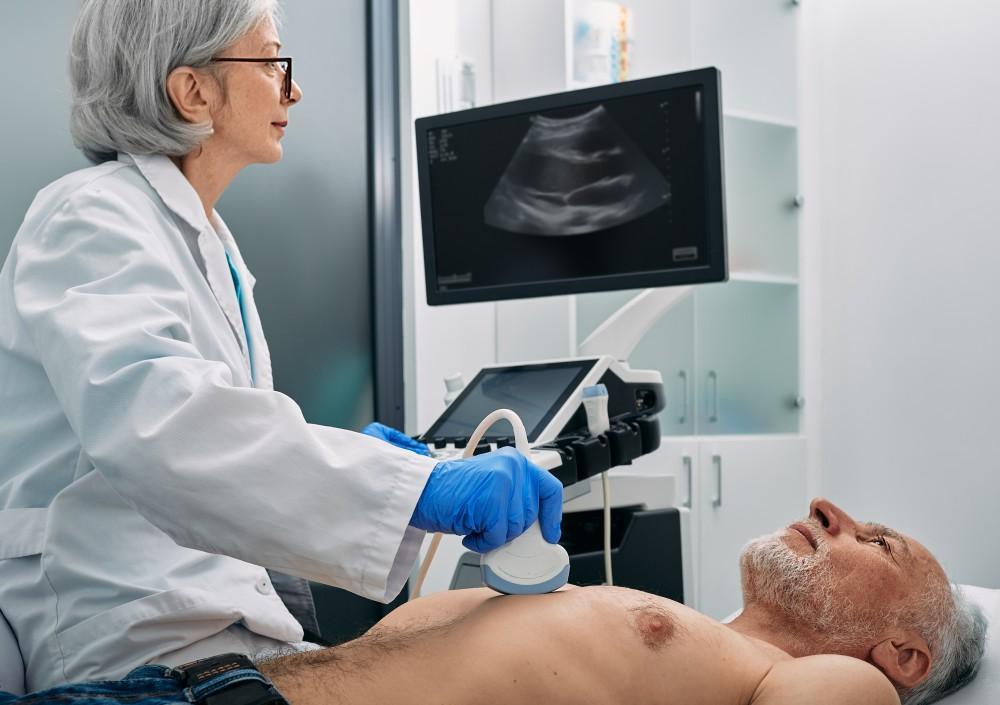
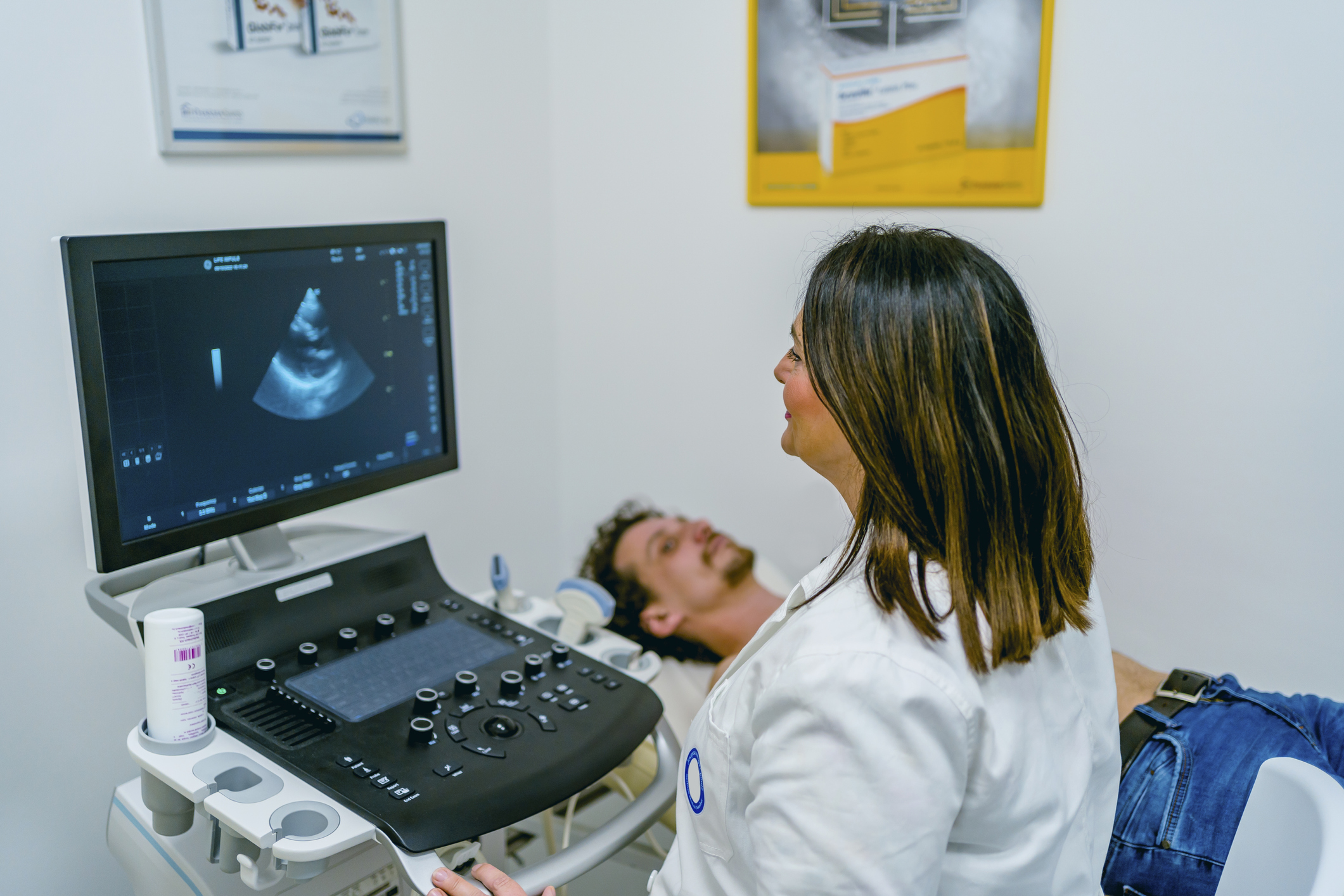
An echocardiogram is a painless, non-invasive ultrasound scan that creates real-time moving images of the heart. It is one of the most useful tests for assessing how well the heart is pumping and how the heart valves are working.
At London Private Ultrasound, your Echo is performed and interpreted by a GMC-registered cardiologist, with a verbal explanation during your appointment and a written report within 24 hours.
Echocardiography provides detailed information about the mechanical function of the heart and the movement of blood through the cardiac valves.
We review your symptoms, medical history, medications and any previous ECG or cardiac reports that you bring with you.
You lie on your left side while the cardiologist uses ultrasound gel and a probe on the chest to capture live heart images.
The cardiologist explains the main findings on the day, followed by a written report within 24 hours.
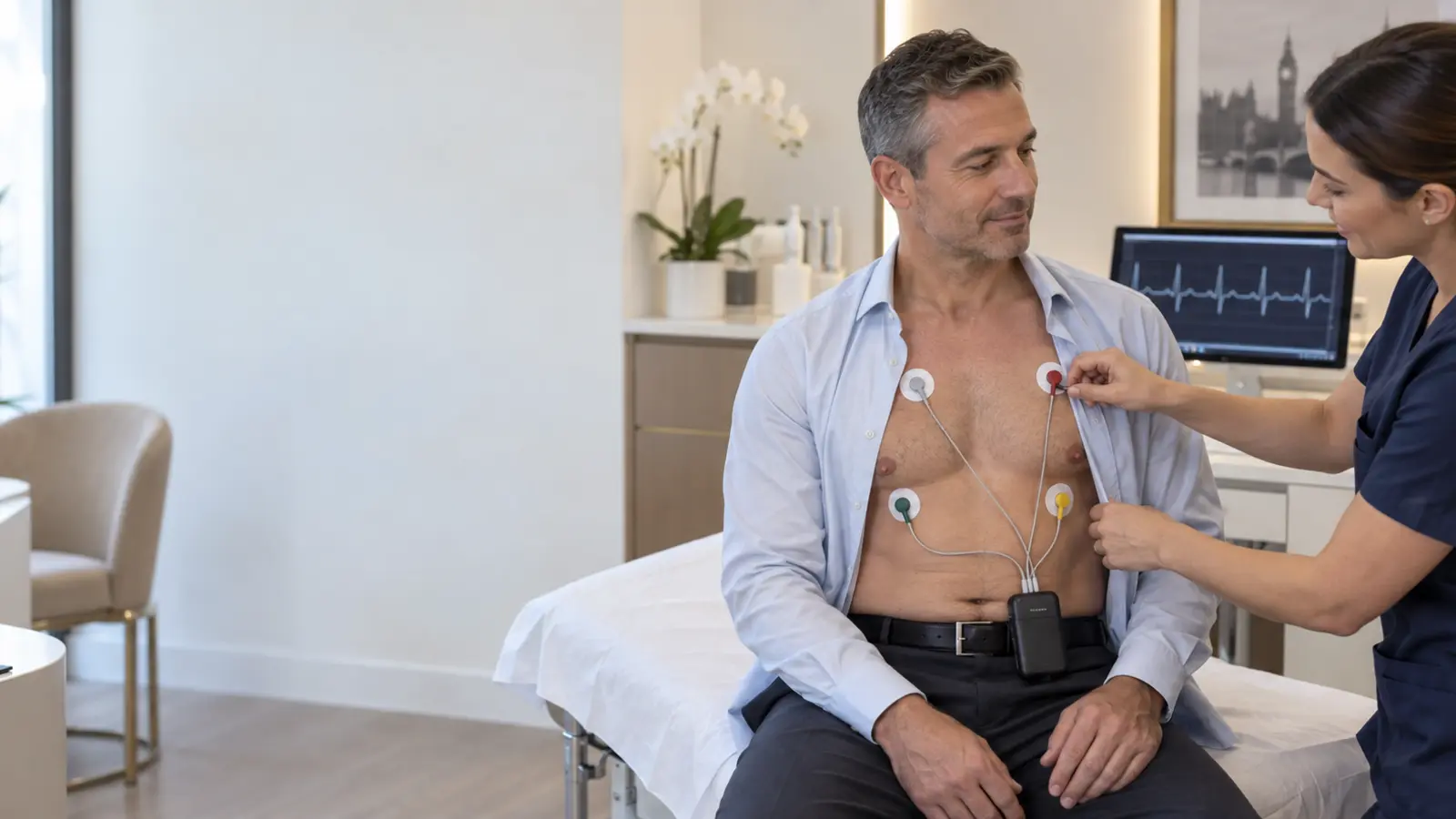
ECG and echocardiogram are different tests. An ECG records the electrical activity of your heart, while an echocardiogram uses ultrasound to assess heart structure, valves and pumping function.
A private echocardiogram is useful when symptoms, examination findings, medical history, ECG changes or family history suggest a possible structural or functional heart problem.
Breathlessness, palpitations, dizziness, fainting, chest discomfort after urgent causes are excluded, or ankle swelling.
Heart murmur, abnormal ECG, high blood pressure, known valve disease, raised BNP, or follow-up of heart failure.
Family history of cardiomyopathy, previous abnormal Echo, monitoring after treatment, or pre-operative cardiac assessment.
A resting transthoracic echocardiogram does not directly show blocked coronary arteries, does not continuously monitor intermittent rhythm problems, and does not replace urgent emergency assessment for active chest pain.
If your symptoms include palpitations or irregular heartbeat, adding ECG or Holter monitoring may provide more complete information.
Your Echo is delivered by London Private Ultrasound’s cardiology team, supported by clear clinical governance and fast onward referral pathways where needed.
Cardiologist involved in echocardiography, ECG interpretation, cardiovascular risk assessment and heart health review.
GMC: 7862164
Cardiologist involved in heart health assessment, cardiovascular review, ECG interpretation and echocardiography.
GMC: 6145856
Cardiologist involved in cardiac assessment, echocardiography and interpretation of cardiology investigations.
GMC: 7389425Choose your preferred appointment time using our secure online booking system. You can also call the clinic if you need help selecting the right cardiac test.
Please select your appointment from the booking panel below. If the calendar does not load, use the button below to open the secure booking page.
Detailed answers for patients comparing Echo, ECG, Holter monitoring and wider heart health checks.
An echocardiogram, often called an Echo or cardiac ultrasound, is a non-invasive ultrasound scan of the heart. It uses sound waves, not radiation, to show the heart chambers, valves, pumping function and blood flow in real time.
The standalone private echocardiogram is £299. This includes the scan, same-day verbal explanation and a written report within 24 hours.
Your echocardiogram is performed and interpreted by a GMC-registered cardiologist at London Private Ultrasound.
No. You can book directly online, by phone or by WhatsApp. If you have previous ECGs, echo reports, letters or medication lists, please bring them to your appointment.
The scan usually takes around 20 to 30 minutes. Please allow around 40 minutes for the full appointment, including check-in, the scan, explanation and questions.
Yes. A transthoracic echocardiogram uses diagnostic ultrasound and does not use ionising radiation. It is non-invasive, painless and has no recovery time.
No special preparation is required. You can eat, drink and take your usual medication unless your own doctor has advised otherwise. Wear clothing that gives easy access to the chest.
An Echo can help assess heart valve disease, heart failure, cardiomyopathy, chamber enlargement, thickened heart muscle, pericardial fluid, pulmonary pressure estimates and aortic root dilatation.
A standard resting echocardiogram does not directly show the coronary arteries. If coronary artery disease is suspected, you may need other tests such as CT coronary angiography, stress testing or specialist cardiology review.
An Echo can show whether there is structural heart disease associated with rhythm problems, but it does not continuously record your heartbeat. For intermittent rhythm symptoms, an ECG or Holter monitor may be needed.
An ECG records the electrical activity of the heart. An echocardiogram uses ultrasound to show the structure, valves and pumping function. The two tests are complementary and are often used together.
The cardiologist explains the main findings during your appointment. A written report is normally emailed within 24 hours.
Yes. Many patients combine an echocardiogram with a 12-lead ECG, Holter monitoring or cardiology consultation for a more complete cardiac assessment.
Common reasons include breathlessness, chest discomfort after urgent causes have been excluded, palpitations, dizziness, fainting, leg swelling, heart murmur, abnormal ECG or high blood pressure.
No. If you have current chest pain, especially with shortness of breath, sweating, collapse or pain spreading to the arm or jaw, call 999 or attend A&E immediately.
Yes. Echocardiography is one of the main tests for assessing valve narrowing, valve leakage and the effect of valve disease on heart size and function.
Yes. It can measure pumping function, estimate ejection fraction, assess chamber size and identify valve or muscle abnormalities that may contribute to heart failure.
No. You may feel gentle pressure from the ultrasound probe on the chest, but the scan is usually comfortable and does not involve needles or injections.
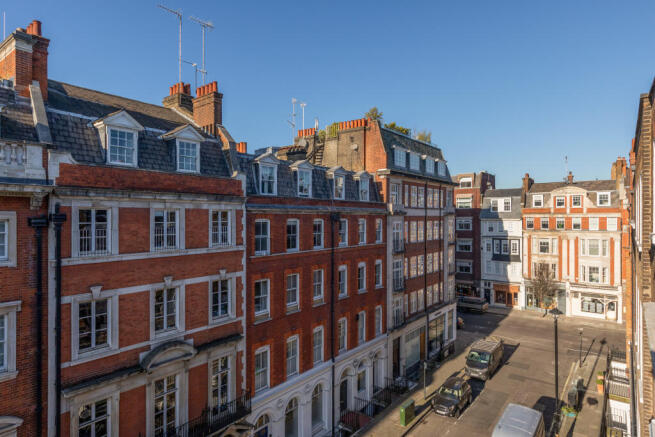
Echocardiography is performed at London Private Ultrasound, 27 Welbeck Street, London W1G 8EN, in the Harley Street medical district.
Many insurers cover echocardiography when clinically indicated. You should check with your insurer before booking and obtain pre-authorisation if required.
Yes. One companion can usually attend with you. Please tell the team in advance if you would like a chaperone or have accessibility requirements.
The cardiologist will explain the findings, include the details in the written report, and recommend the most appropriate next step, such as GP follow-up, cardiology consultation, ECG, Holter monitoring, blood tests or urgent referral if needed.
Fast access to cardiologist-led cardiac ultrasound at London Private Ultrasound, with clear explanation and a report suitable for your GP, NHS specialist or private cardiologist.