
The aorta
The aorta is the body’s main artery. It leaves the heart, arches over, and runs down through the chest and abdomen before dividing into the arteries that supply each leg. The abdominal section is what this scan looks at.
Vascular ultrasound · Central London & St Albans · 7 days a week
A private AAA scan at London Private Ultrasound costs £219. It is a painless abdominal aortic aneurysm ultrasound that measures the widest point of your abdominal aorta and checks the iliac arteries, so an aneurysm can be found, sized and monitored before it causes a problem. It takes 20–30 minutes, uses no radiation, and your measurement is explained on the day with a written report within 24 hours. No GP referral needed.
An abdominal aortic aneurysm is a bulge in the body’s main artery, low down in the tummy. It usually grows slowly and quietly, without pain or any outward sign, so most people who have one have no idea it is there. A scan is the simple way to check. You lie comfortably on your back for about half an hour while the aorta is measured, and you leave knowing your number and what it means for you.
We are a diagnostic clinic. Your measurement is explained on the day and your written report follows within 24 hours. Where a finding needs a specialist opinion, whether that is a vascular review of an aneurysm or a wider cardiovascular assessment, we can arrange a consultation with one of our specialists and provide a referral letter with your confirmed measurements. Extra cost applies for that specialist consultation, which is booked separately and is not included in the £219 scan price.
| Price | £219 all-inclusive · scan, findings and written report |
|---|---|
| Also known as | AAA screening · triple A scan · abdominal aortic aneurysm ultrasound · aorta scan · aortic surveillance scan |
| What is measured | Maximum diameter of the abdominal aorta, aneurysm location and shape, mural thrombus, and the iliac arteries |
| Aneurysm threshold | An aorta of 3.0 cm or more is classed as an aneurysm. Below 3.0 cm is normal. |
| Appointment time | Allow 20–30 minutes |
| Preparation | Avoid food for about 4–6 hours and fizzy drinks that day, to reduce bowel gas. Water is fine; take medication as normal. |
| Radiation | None. Ultrasound uses sound waves only, and nothing enters the body. |
| GP referral | Not required. Book directly. |
| Results | Measurement explained on the day · written diagnostic report within 24 hours |
| Who it suits | Men 65+ who missed or declined NHS screening · smokers and ex-smokers · family history of aortic aneurysm · high blood pressure or known arterial disease · women with risk factors · anyone monitoring a known aneurysm |
| Not the right test if | You have sudden severe abdominal or back pain, or feel faint or unwell with it. Call 999 rather than booking a scan |
| After your scan | Findings explained on the day. Where a finding needs a specialist opinion, a consultation can be arranged and a referral letter provided (extra cost applies), booked separately from the £219 scan. |
| Locations | 27 Welbeck Street, Central London W1G 8EN · 54–56 Victoria Street, St Albans AL1 3HZ |
| Availability | 7 days a week, 9am–7pm · same-day and next-day appointments often available |
AAA stands for abdominal aortic aneurysm, often written or spoken as triple A. It is one of the more confusing abbreviations in medicine because it describes a measurement rather than a symptom, so here is the whole thing in plain terms before anything else on this page.
The aorta is the body’s main artery. It leaves the heart, arches over, and runs down through the chest and abdomen before dividing into the arteries that supply each leg. The abdominal section is what this scan looks at.
An aneurysm is a permanent bulge in an artery wall, caused by the wall weakening and stretching. It is not a blockage and it is not a clot. It is a widening, and the wider it gets, the thinner and more fragile the wall becomes.
A normal abdominal aorta measures under 3.0 cm across. At 3.0 cm and above it is classed as an abdominal aortic aneurysm. That single threshold is why the scan is fundamentally a measuring exercise.
An aneurysm does not obstruct blood flow, so it rarely causes symptoms. Some people notice a pulsating sensation in the abdomen or a persistent ache in the tummy or lower back; most notice nothing at all until it is found on a scan.
If the wall gives way, the bleeding is sudden and catastrophic. Ruptured aneurysms account for around 3,000 deaths a year in men aged 65 and over in England and Wales. Found early, the same aneurysm is a monitoring exercise, not an emergency.
Ultrasound measures aortic diameter accurately, costs a fraction of a CT scan, uses no radiation and takes half an hour. It is the test used by the NHS screening programme and the test recommended by NICE for detection and surveillance.
Screening or surveillance? The two words describe the same scan used for different reasons. Screening means a first measurement in someone with no known aneurysm, to find out whether one is there. Surveillance means a repeat measurement in someone who already has one, to see whether it has grown. This appointment covers both, and if you bring previous figures the report will compare them.
The headline is the maximum diameter, but a proper aortic assessment records more than one number. These are the things your clinician documents and what each one is there to answer.
The widest measurement across the abdominal aorta, taken outer wall to outer wall. This is the figure that determines everything: whether an aneurysm is present, how it is classified, and how often it needs rechecking.
Most abdominal aortic aneurysms are infra-renal, meaning below the arteries supplying the kidneys. Whether an aneurysm sits above or below that level, and whether it extends into the iliac arteries, changes how a surgeon would plan any repair.
Aneurysms can be fusiform, widening evenly, or saccular, bulging to one side. Layered clot along the inside wall, called mural thrombus, is common and is recorded because it affects how the true lumen is measured and interpreted.
The aorta divides into the iliac arteries in the lower abdomen, and these can develop aneurysms of their own, sometimes alongside an aortic one. They are checked as part of the same appointment rather than as an extra.
Calcification and atherosclerotic change in the aortic wall are noted. They do not diagnose an aneurysm by themselves, but they are a marker of arterial disease elsewhere and often prompt a wider cardiovascular conversation.
If you have been scanned before, the new measurement is compared with the old one. Growth rate matters as much as absolute size: an aneurysm expanding by more than about 1 cm a year warrants vascular review whatever its diameter.
What this scan is not. An AAA scan is a focused examination of the abdominal aorta and iliac arteries. It is not a general abdominal survey, and it is not a cancer check. Anything unexpected that is seen is reported, but if you want the liver, gallbladder, kidneys, pancreas and spleen assessed as well, the correct test is a full abdominal ultrasound scan, which can be added to the same visit. Be cautious of any clinic advertising an aorta scan as a check for lumps, masses or tumours. That is a different examination being sold under the wrong name.
Select your clinic, date and appointment time through our secure booking page.
An abdominal aortic aneurysm ultrasound measures the abdominal aorta and checks the iliac arteries in one focused, painless appointment.
These thresholds come from the NHS AAA Screening Programme and NICE guideline NG156, and they are the same figures an NHS screening service or a vascular surgeon would apply to your number.
| Aortic diameter | Classification | What usually happens next |
|---|---|---|
| Under 3.0 cm | Normal, no aneurysm | No monitoring needed on the basis of size. This is the result the large majority of people get. Cardiovascular risk factors are still worth attention. |
| 3.0 – 4.4 cm | Small aneurysm | Surveillance ultrasound, typically once a year. Rupture risk at this size is very low. Blood pressure control and stopping smoking do more than anything else to slow growth. |
| 4.5 – 5.4 cm | Medium aneurysm | Closer surveillance, typically every three months, with vascular review so that the picture is being followed by a specialist as it approaches the repair threshold. |
| 5.5 cm or more | Large aneurysm | Referral to a vascular surgeon for assessment of repair. At this size the risk of rupture begins to outweigh the risk of a planned operation. |
| Growth over 1 cm per year | Rapid expansion, any size | Vascular referral regardless of the absolute diameter, because the rate of change is itself a risk marker. |
| Any size, with symptoms | Symptomatic aneurysm | Urgent assessment. Sudden severe abdominal or back pain with a known or suspected aneurysm is an emergency. Call 999. |
A word on measurement precision. Ultrasound measurement of the aorta has a small margin of error, usually a couple of millimetres between operators, which is why a single reading close to a threshold is interpreted alongside your history rather than treated as an absolute verdict. It is also why comparison scans are ideally done using the same technique and, where possible, reported by the same service. Bring any previous measurements with you.
Risk here is unusually predictable. Age, sex, smoking, blood pressure and family history account for most of it, which means it is possible to say fairly precisely who benefits from a measurement.
The single largest risk group, and the reason the NHS programme starts at 65. Worth booking privately if you missed your invitation, declined it at the time, moved during your 65th year, or simply want it done now.
Smoking is the strongest modifiable risk factor for developing an aneurysm and for it growing faster once present. A significant smoking history is reason enough to check, including for men below the screening age.
A parent, sibling or child with an abdominal aortic aneurysm raises your own risk appreciably. Family history is one of the situations where scanning earlier than 65, and repeating it, makes sense.
Hypertension, raised cholesterol, coronary artery disease, peripheral arterial disease or a previous stroke all point to arterial disease that does not confine itself to one vessel. The aorta is worth including in the picture.
An awareness of pulsing in the abdomen, or a nagging ache in the tummy, side or lower back that has no obvious explanation, is worth measuring rather than wondering about. Most turn out to be normal.
If you already have a small or medium aneurysm, this appointment provides the interval measurement, with a written report and a comparison against your previous figures.
Call 999 instead of booking a scan if you have sudden, severe pain in the abdomen or lower back, particularly with dizziness, sweating, clammy or pale skin, collapse, or a feeling that something is seriously wrong. In someone with a known or suspected aneurysm this can indicate a rupture, which is a medical emergency where minutes count. Do not drive yourself, and do not wait for a scan appointment.
Should women be scanned? Not routinely, and not on population grounds, because the condition is far less common in women and most of those scans would be normal. But it is a reasonable individual decision for a woman with a family history of aortic aneurysm, a significant smoking history, high blood pressure or known arterial disease elsewhere, particularly beyond the age of 70. If you are unsure whether it applies to you, call and talk it through before booking rather than after.
Twenty to thirty minutes, lying on your back, with gel on your abdomen. There is nothing to recover from and nothing to arrange afterwards, and you will know your measurement before you leave.
Avoid food for around four to six hours beforehand and skip fizzy drinks that day. Bowel gas is the one thing that makes the aorta harder to see. Water is fine, take all medication as normal, and wear something that allows easy access to the abdomen.
You are shown to a private scan room. Bring any previous aortic measurements, surveillance letters or hospital reports. A comparison is worth considerably more than a single figure on its own.
Your clinician asks about age, smoking, blood pressure, family history, previous scans and any symptoms. This takes a few minutes and it is what allows your number to be read in context rather than reported blind.
You lie on your back, warm gel is applied and a probe is passed over the abdomen. You may be asked to breathe in and hold briefly to bring the aorta into view. It is painless, nothing enters the body and no radiation is used.
The aorta is shown to you on screen and the measurement is explained: whether it is a normal size, whether an aneurysm is present, what the number means, and what interval or referral follows from it.
A written diagnostic report follows within 24 hours, suitable for your GP, a vascular specialist or an insurer, with a referral letter included where onward care is needed.
If fasting is difficult. Tell us when you book. If you have diabetes, take medication with food, or simply cannot fast on the day, the scan is often still successful, particularly in slimmer patients, and it is far better to attend without fasting than not to attend at all. What matters most is avoiding fizzy drinks, which introduce the gas that obscures the aorta.
Ours is £219, all in. Private AAA scans in London generally sit somewhere between £180 and £280, and the spread usually comes down to what is bundled: whether a written report is included or charged separately, whether the iliac arteries are assessed, and whether you get your result on the day or wait for a letter.
| Ultrasound measurement of the full abdominal aorta | Included |
| Maximum diameter recorded to national standards | Included |
| Aneurysm location, shape and mural thrombus assessment | Included |
| Assessment of the iliac arteries | Included |
| Comparison with your previous measurements | Included |
| Findings explained on the day by the clinician who scanned you | Included |
| Written diagnostic report within 24 hours | Included |
| Advice on the appropriate surveillance interval | Included |
| Referral letter to a GP or vascular surgeon if needed | Included |
| Vascular surgery consultation, CT planning or repair | Arranged separately |
| Total, all-inclusive | £219 |
If you are a man aged 65 or over in England and have never been screened, NHS AAA screening is free and you can self-refer to your local programme, and we would rather tell you that than take £219 you did not need to spend. A private scan is for people the programme does not cover, people who want a measurement now rather than at the next interval, and people who want a written report of their own. If you would like the aorta assessed alongside the carotid arteries, blood pressure and cardiovascular risk in one appointment, the heart health and stroke risk screening is usually better value than booking the scans individually.
Whatever weakens the aorta tends to affect the other arteries too, including the ones supplying your brain, your legs and your heart. If you are booking because of your age, blood pressure, cholesterol or a smoking history, it is worth knowing the aorta is one of four areas we can check in a single appointment.
£219
The focused option. Right for an aortic measurement, a surveillance check on an aneurysm you already know about, or reassurance about one specific worry.
£649
The same aortic scan, alongside the three other checks that map cardiovascular risk most directly, all read together by a cardiologist in about an hour.
Which one should you book? If one specific worry brought you here, such as a pulsating feeling in your tummy or an aneurysm you are already monitoring, the AAA scan answers it. If you are here because of your age, blood pressure, cholesterol, smoking history or a family history of stroke or heart disease, the wider screening usually tells you more, and the four checks together cost less than booking them one at a time. Call 020 7101 3377 if you would like help deciding, or read the full details on the heart health and stroke risk screening page.
Two clinics, seven days a week, 9am to 7pm, with same-day and next-day appointments frequently available. Both run the full aortic assessment at £219, with your measurement explained on the day and the written report within 24 hours.
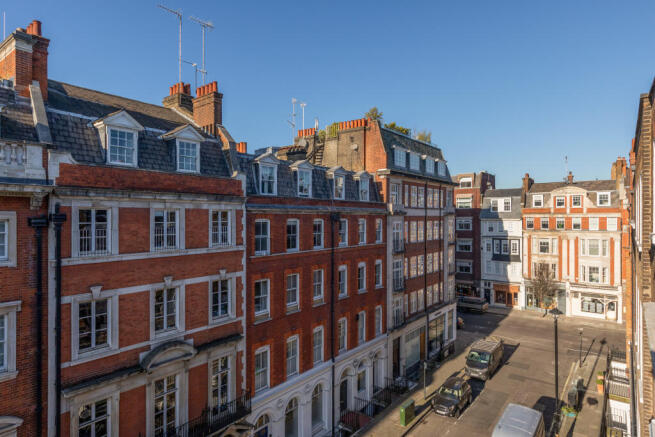
27 Welbeck Street, London W1G 8EN
Two minutes from Bond Street (Elizabeth line, Central, Jubilee), five from Oxford Circus, eight from Marylebone and Baker Street. Convenient for patients travelling in from Mayfair, Fitzrovia, Soho, the City and Paddington.

54–56 Victoria Street, St Albans AL1 3HZ
A short walk from St Albans City station, with parking nearby. Convenient for patients across Hertfordshire, North London, Watford, Hatfield, Harpenden and Welwyn Garden City.
Your scan sits within a CQC-registered pathway, performed and reported by clinicians on the UK’s professional registers.
Independent regulator of health and adult social-care services in England.
Professional body for vascular scientists, whose accredited members perform vascular ultrasound.
Official register and professional standards for doctors and medical practitioners.
Professional standards, education and guidance for medical ultrasound practice.
UK data protection register, covering how your records and results are handled.
Vascular scans are performed and reported by accredited vascular scientists rather than technicians, under doctor-led clinical governance. The person who scans you is the person who explains your measurement.

SVT · RCT · BMUS · SoR · Vascular ultrasound and aortic surveillance

Specialist ultrasound practice and patient-centred imaging care across our diagnostic pathways

MD · MRCGP · DRCOG · GMC · Overall clinical governance responsibility

NMC registered · Clinical standards and patient safety oversight
The questions our vascular team is asked most often, answered plainly.
A private AAA scan at London Private Ultrasound is £219, all-inclusive. That covers the ultrasound measurement of the abdominal aorta and iliac arteries, the findings explained on the day, a written diagnostic report within 24 hours, advice on any surveillance interval, and a referral letter if onward care is needed.
Private AAA scans in London generally sit between roughly £180 and £280, so compare what is actually included: some quotes cover the scan alone, with the report charged separately. If you are a man aged 65 or over in England, NHS AAA screening is free and you should take it. A private scan is for people the programme does not cover, or who do not want to wait.
In England, the NHS AAA Screening Programme invites men for a single ultrasound of the abdominal aorta during the year they turn 65. Men over 65 who have never been screened are not invited automatically but can self-refer directly to their local screening service. Similar programmes run in Scotland, Wales and Northern Ireland.
Women are not routinely screened, because abdominal aortic aneurysm is around six times more common in men. That leaves clear gaps: men under 65 with a strong family or smoking history, women with risk factors, people who missed or declined their invitation, and anyone wanting a repeat measurement of an aneurysm they already know about.
For the group it targets, the evidence is unusually clear. Around 1 in 70 men aged 65 in England has an abdominal aortic aneurysm, and ruptured aneurysms account for roughly 3,000 deaths a year in men aged 65 and over in England and Wales. Randomised trials showed that offering men a single ultrasound in their 65th year reduces premature deaths from rupture by up to half, which is why the NHS programme exists.
It works because an aneurysm is silent until it ruptures, at which point it is usually fatal, whereas a planned repair carries a low risk. Screening is less clearly worthwhile for people at very low risk, where a normal result is the overwhelmingly likely outcome. That is a reasonable conversation worth having before booking rather than after.
AAA stands for abdominal aortic aneurysm, often written or said as triple A. The aorta is the main artery carrying blood from the heart down through the chest and abdomen, and an aneurysm is a permanent bulge or weakening of the artery wall.
When the abdominal section of the aorta measures 3.0 cm or more across, it is classed as an abdominal aortic aneurysm. An AAA scan is simply an ultrasound that measures that diameter.
An abdominal aorta under 3.0 cm is normal. From 3.0 cm it is classed as an aneurysm: 3.0 to 4.4 cm is small, 4.5 to 5.4 cm is medium, and 5.5 cm or more is large.
Large aneurysms, and any aneurysm growing faster than about 1 cm a year, are referred to a vascular surgeon for assessment. Most people who have an AAA scan have a normal result.
Surveillance intervals follow size. A small aneurysm of 3.0 to 4.4 cm is usually rescanned once a year; a medium aneurysm of 4.5 to 5.4 cm every three months. At 5.5 cm or more the question is no longer surveillance but whether repair is appropriate, so a vascular assessment is arranged.
If you are already in an NHS surveillance programme, stay in it. A private scan can sit alongside it as an extra measurement, but it does not replace it.
Ideally yes. Avoiding food for around four to six hours beforehand, and avoiding fizzy drinks that day, reduces bowel gas, which is the main thing that obscures the aorta on ultrasound. Water is fine and you should take all prescribed medication as normal.
If you have diabetes or another reason not to fast, tell us when you book and we will adapt. The scan is often still successful without fasting, particularly in slimmer patients, and attending unfasted is much better than not attending.
No. You can self-refer and book directly online, by phone on 020 7101 3377, or by WhatsApp. Same-day and next-day appointments are often available, seven days a week.
If you have previous aortic measurements, a hospital letter or a surveillance record, bring them. A comparison against earlier scans is far more informative than a single number on its own.
Allow 20 to 30 minutes. The scan itself is painless: warm gel is applied to the abdomen and a probe is passed over the skin, and you may be asked to breathe in and hold briefly to bring the aorta into view.
Nothing enters the body and no radiation is used, so there are no known risks or side effects and no recovery time. You can eat, drive and go back to work straight afterwards.
Yes. Women are not invited by the NHS programme because aneurysms are around six times more common in men, but women do develop them, and there is evidence that outcomes are worse when they do.
A private scan is reasonable for a woman with a family history of aortic aneurysm, a significant smoking history, high blood pressure or known arterial disease elsewhere, particularly beyond the age of 70.
Planned repair is now a low-risk operation. UK National Vascular Registry figures for 2023 record in-hospital mortality after elective keyhole repair (EVAR) of 0.3 per cent and 2.7 per cent after elective open repair, so more than 97 in every 100 patients survive either planned operation.
Emergency surgery after a rupture is a different situation entirely: in-hospital mortality was around 21 per cent for emergency EVAR and around 46 per cent for emergency open repair, and that only counts people who reach an operating theatre. Including deaths before hospital, most ruptures are fatal. That gap is the whole argument for finding an aneurysm early. Your individual risk depends on age, heart and lung function and the anatomy of the aneurysm, and your surgeon will give you personal figures.
Most cause no symptoms at all, which is why they are usually found by screening or by chance on a scan done for another reason. Where symptoms do occur, they can include a pulsating sensation in the abdomen, or a persistent ache in the tummy, side or lower back.
Sudden severe abdominal or back pain, especially with dizziness, sweating, collapse or a feeling that something is seriously wrong, may indicate a rupture. That is a medical emergency: call 999 rather than booking a scan.
You are told on the day. A small aneurysm of 3.0 to 4.4 cm means annual surveillance plus attention to blood pressure, cholesterol and smoking. A medium aneurysm of 4.5 to 5.4 cm means closer surveillance, usually three-monthly, alongside vascular review. An aneurysm of 5.5 cm or more, or one growing rapidly, means an urgent referral letter to a vascular surgeon.
We are a diagnostic service, so specialist consultation, CT planning and any surgery are arranged separately and carry their own cost. Your written report and referral letter are yours to use in the NHS or privately, whichever you prefer.
To begin with, most are not treated at all. A small aneurysm of 3.0 to 4.4 cm is simply measured once a year, and the most useful things you can do are keeping blood pressure under control, managing cholesterol and stopping smoking, which slows growth more than anything else available. A medium aneurysm of 4.5 to 5.4 cm is measured more often, usually every three months, with a vascular surgeon following the picture.
Repair is considered at 5.5 cm or more, or when an aneurysm is growing quickly. There are two routes. EVAR is a keyhole repair that lines the aneurysm from the inside using a stent graft passed up through the groin arteries, with a short recovery and lifelong imaging follow-up. Open repair replaces the affected section with a graft through an abdominal incision, which is a bigger operation with a longer recovery but a durable result. Which suits you depends on your general health and the shape of the aneurysm.
We are a diagnostic service, so specialist consultations, CT planning and surgery are arranged separately and carry their own cost. Your report and referral letter are yours to use in the NHS or privately, whichever you prefer.
An AAA scan is a focused examination of the abdominal aorta and iliac arteries, not a general abdominal survey. Incidental findings are occasionally seen and are always reported.
If you want the liver, gallbladder, kidneys, pancreas and spleen assessed too, the right test is a full abdominal ultrasound scan, which can be booked at the same visit. Be wary of any clinic advertising an aorta scan as a check for lumps, masses or cancer. That is a different examination.
It is the same measurement, using the same technique, read against the same thresholds used by the NHS AAA Screening Programme and NICE guideline NG156. What differs is the setting: a private appointment you can book at any age, on any day of the week, usually within 24 to 48 hours, with a written report you keep.
It does not enter you into the NHS screening programme record, and if you are already under NHS surveillance you should continue with it.
Yes. The written diagnostic report is issued within 24 hours and is designed to be shared: it states the measurement, the classification and the recommended interval or referral. Patients routinely take it to their NHS GP, to a vascular surgeon, or submit it to an insurer.
Where an onward referral is appropriate, a referral letter is included at no extra charge.
Usually the same day or the next day. Both clinics are open seven days a week from 9am to 7pm, and the appointment takes 20 to 30 minutes.
If your concern is urgent but not an emergency, call 020 7101 3377 and the team will find the earliest slot. If it is an emergency, call 999.
London Private Ultrasound has two clinics. Central London is at 27 Welbeck Street, W1G 8EN, in the Harley Street Medical District, a short walk from Bond Street, Oxford Circus and Marylebone, and convenient for Mayfair, Fitzrovia, Soho, the City and Paddington.
St Albans is at 54–56 Victoria Street, AL1 3HZ, serving Hertfordshire and North London. Both are open seven days a week, 9am to 7pm.
An aneurysm rarely exists in isolation from the rest of the arterial system. These are the assessments that most often make sense at the same visit or shortly after.
Aorta, carotid arteries and cardiovascular risk assessed together. Usually the better-value route if you want the whole arterial picture rather than one vessel.
Narrowing in the neck arteries that supply the brain. The same risk factors drive both conditions, so a carotid scan is the most common addition to an aortic one.
Blood flow in the arteries of the legs, for cramping on walking, cold feet, or slow-healing wounds. Peripheral arterial disease and aortic aneurysm frequently travel together.
A simple pressure comparison between ankle and arm, and a quick objective measure of circulation in the legs. Often combined with an arterial Doppler.
Narrowing of the arteries to the kidneys, which is worth excluding where blood pressure is high and difficult to control despite treatment.
The wider abdominal examination: liver, gallbladder, kidneys, pancreas and spleen. The right choice if your concern is abdominal symptoms generally rather than the aorta specifically.
Medical disclaimer. This page is general information and does not replace individual medical advice. Ultrasound measurement of the abdominal aorta is accurate but not infallible: bowel gas and body habitus can limit the view, measurements carry a small margin of error, and a normal result on one day does not guarantee that an aneurysm will never develop. Size thresholds and surveillance intervals quoted here follow the NHS AAA Screening Programme and NICE guideline NG156 and are interpreted in full clinical context. Seek urgent medical attention rather than booking a routine appointment if you have sudden severe abdominal or back pain, particularly with dizziness, sweating or collapse. Call 999.