
Patient guide · Vascular ultrasound
Deep Vein Thrombosis Symptoms: When to Get a Same-Day Ultrasound
Learn the early signs of DVT, how a clot can differ from a calf strain, and how a Doppler ultrasound helps provide a clear diagnosis.
Medically reviewed by Mr Pedram Aghaei, Co-founder and Medical Writer, London Private Ultrasound · 21 October 2026
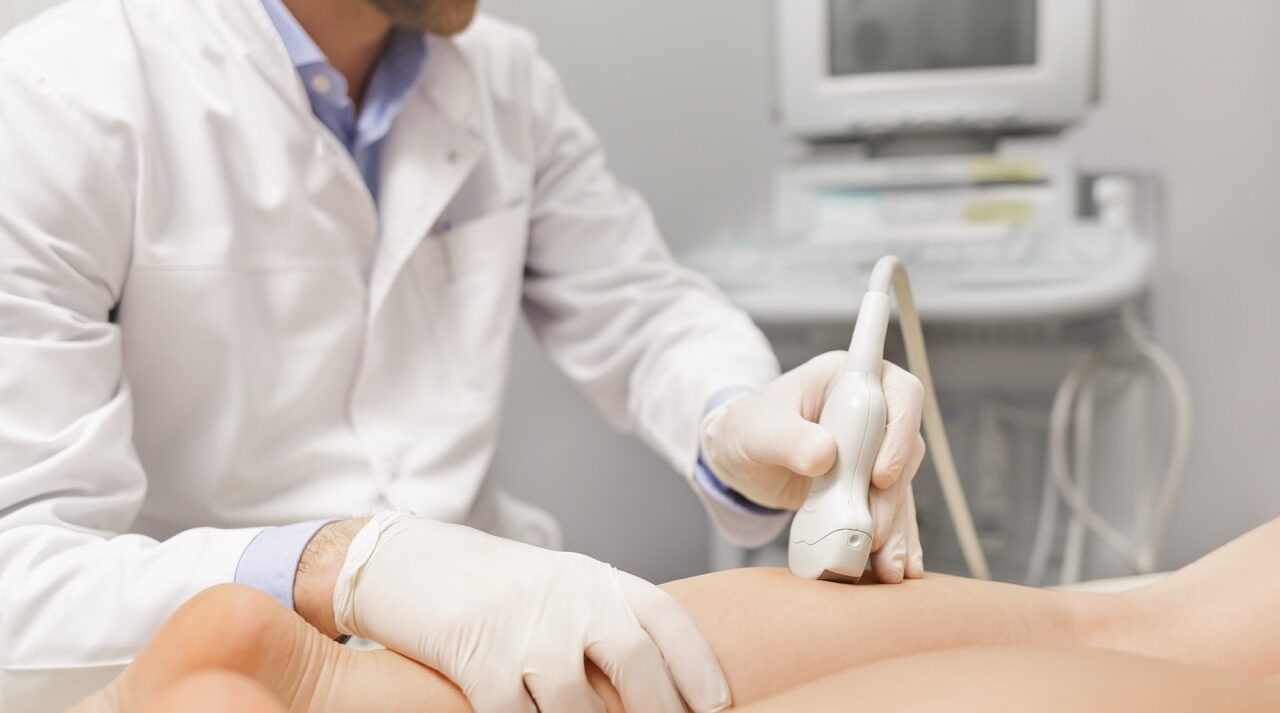
Turns out, DVT symptoms are easy to mistake for something ordinary.
Most of our patients tell us that it started with a calf ache after a long walk, or legs that feel heavy by the evening.
Mostly, they all have harmless explanations, and most of the time that’s exactly what they turn out to be.
But a deep vein thrombosis (DVT), a blood clot in one of the deep veins of the leg, can begin with those very same feelings, which is why it’s so often brushed off.
When picked up early, it’s straightforward to treat with medicine, so knowing the signs and getting the diagnosis earlier is what sets it apart and helps us act on it at the right time.
This guide explains the symptoms of DVT, the early signs that are easy to overlook, how to tell a clot from a strain, and what a scan and treatment involve.
What Is DVT (Deep Vein Thrombosis)?
DVT, or deep vein thrombosis, is a blood clot that forms in one of the deep veins of your body, most often in your calf or thigh.
These veins carry blood back up towards your heart, so in cases where a clot partly blocks one, blood can back up behind it. This is the main reason for pain and swelling that comes along with DVT.
It’s also more common than many people realise, affecting around 1 in every 1,000 people in the UK each year, according to the National Institute for Health and Care Research.
Doctors always treat a possible DVT as urgent because there are cases where a piece of the clot can break away and travel to the lungs. Hence, the right diagnosis pathway and catching it early is what keeps that from happening.
What Are the Symptoms of DVT?
DVT usually shows up as pain and swelling in one leg, most often in the calf, and the leg may feel warm, heavy or tight compared with the other one.
The NHS lists these as the main signs to look out for:
- throbbing or cramping pain in one leg, usually in the calf or thigh
- swelling in that leg, which might make a shoe or sock feel tighter on one side
- warm skin over the sore area
- red or darker skin, which can be harder to spot on brown or black skin
- veins that look swollen and feel hard or sore when you touch them
The thing to notice most is that it’s usually just one leg. If both legs are swollen, it’s more often down to heat, being on your feet all day, or a heart, kidney or liver problem, though it’s still worth getting checked.
What Are the Early Signs of DVT in the Leg?
The early signs of DVT usually include a dull ache, tightness or heaviness in one calf—which can be easy to dismiss.
Because it is easy to blame a long day, new exercise or sleeping awkwardly as the reason.
But we’d still recommend that symptoms affecting one leg more than the other are worth taking seriously.
In cases where there are small clots in the calf, they may cause very few symptoms at first. If you have recently had surgery, been in hospital, travelled for a long time or are pregnant, contact a healthcare professional if one leg becomes swollen, painful, warm or noticeably different from the other.
What Do DVT Symptoms Feel Like?
DVT symptoms feel similar wherever the clot is, but what really gives us the clue on which vein is affected depends on where you notice the pain.
Here’s what our patients commonly tell us:
An ache in your calf that won’t ease
A DVT in the calf usually feels like a deep ache, cramp or tenderness in the calf muscle, often with some swelling around the ankle. It can feel a lot like a pulled muscle, but where a strain slowly gets better with rest, a clot tends to linger or get worse, and the calf may feel warm and tight.
Pain and swelling behind your knee
A clot in the vein behind your knee can cause pain and swelling at the back of the knee that spreads down into your calf. It’s easily mistaken for a Baker’s cyst, a fluid-filled lump behind the knee, and only a scan can tell the two apart.
A heavy, swollen thigh
A DVT in the thigh can make your upper leg ache and swell, and often the whole leg looks bigger. Clots in the thigh sit in larger veins, so they’re more likely to travel to the lungs and need checking the same day.
Swelling in one arm
DVT can also happen in the arm, causing swelling, aching and a bluish tinge in one arm or hand, sometimes with veins showing across the shoulder. It’s more likely if you’ve recently had a drip or a line in that arm, or after a lot of heavy, repetitive arm work.
What Are the Signs a Blood Clot Has Moved to Your Lungs?
When a DVT blood clot moves to your lungs, it can cause sudden breathlessness, a sharp chest pain that often gets worse when you breathe in, and you might even cough up blood. This is known as pulmonary embolism. Call 999 or attend A&E immediately. Do not delay emergency care to arrange a private limb scan.
What’s the Difference Between a DVT and a Calf Strain?
The biggest difference between a DVT and a calf strain is how it starts.
A calf strain usually comes with a clear moment, like a sudden pull or “pop” while you are running or stretching, and then slowly improves. But on the other hand, a DVT often creeps up without any injury and may get worse, with swelling and warmth.
Even so, the two can feel so similar that you can’t reliably tell them apart yourself, and that’s exactly when a scan helps.
A few other things can also cause one sore, swollen leg:
- A Baker’s cyst: a fluid-filled swelling behind the knee, which can burst and send pain down into the calf.
- Cellulitis: a skin infection that makes the leg red, hot and tender, sometimes with a high temperature.
- A clot in a surface vein (superficial thrombophlebitis): this feels like a hard, sore cord just under the skin, and occasionally sits close to a deep vein.
- A torn calf muscle: often with bruising that shows up a day or two later.
While a Doppler ultrasound is checking for a clot, it often picks up which of these is causing your symptoms instead.
What Causes DVT?
DVT happens when blood in a deep vein slows down, becomes more likely to clot, or the vein wall has been damaged, so a clot can form and stick.
Often it’s a combination of things rather than one single cause.
The NHS says you’re more likely to get DVT if you:
- are over 60
- are overweight or smoke
- have had DVT before, or a close relative has
- take the combined pill or HRT
- have cancer or heart failure
- have recently had an operation or a hospital stay, especially if you couldn’t move around much
- are pregnant or had a baby in the last 6 weeks
- have recently sat still for a long journey of more than 4 hours
Sometimes DVT happens with no obvious reason at all. So even if none of these sound like you have them, a new swollen, painful leg still deserves a proper check.
Can I Get DVT Symptoms During Pregnancy?
DVT symptoms in pregnancy are the same as at any other time, usually pain and swelling in one leg, but they’re easy to miss because your ankles and feet may already be swelling as your pregnancy goes on.
The risk of a clot is higher throughout pregnancy and for around 6 weeks after your baby is born.
If one leg starts to hurt or looks more swollen than the other, contact your midwife, GP or maternity unit the same day.
NICE recommends same-day assessment for possible DVT in pregnancy, and an ultrasound scan is completely safe for you and your baby.
How Is DVT Diagnosed?
DVT is diagnosed with a Doppler ultrasound scan, which lets us watch the blood flowing through the veins in your leg and see whether a clot is blocking the way.
A doctor or specialist will usually ask about your symptoms first and may work out a score, called the Wells score, to see how likely a clot is.
The NICE guideline on blood clots is a good rule of thumb to understand what usually happens next:
What Happens During a DVT Scan?
A DVT scan is quick, painless and done while you lie comfortably on a couch.
The sonographer will put some cool gel on your leg and glide a small handheld probe along the veins from your groin down to your calf, watching the blood flow on the screen as they go.
Every so often they might press gently on the vein with the probe.
A healthy vein squashes flat under that light pressure, but a vein with a clot inside stays firm and round, which is one of the clearest signs we look for.
The whole scan takes around 20 to 30 minutes for one leg, and at London Private Ultrasound you also get verbal results on what we’ve seen before you leave.
Worried about a calf that’s swollen or sore today?
A DVT scan at London Private Ultrasound checks the veins in your leg for a clot, from £249 for one leg. We’ll talk you through what we’ve found straight after the scan, and same-day appointments are often available. No GP referral is needed.
How Is DVT Treated?
DVT is treated with blood-thinning medicines, called anticoagulants, which stop the clot from getting bigger and lower the chance of it travelling to your lungs while your body slowly breaks it down.
These medicines need to be started by a doctor, at A&E, an urgent care centre or through your GP. While you’re recovering, you may also be advised to:
- keep moving and walk regularly, which helps your blood flow
- rest your leg up on a stool or cushion when you’re sitting down
- wear compression stockings if they help with the swelling
- hold off on flights and long journeys until at least 2 weeks after starting your blood thinners
If there’s no obvious reason why the clot formed, your doctor may suggest some further tests to understand why it happened.
How Much Does a DVT Scan Cost in London?
A DVT scan in London starts from £200, but may or may not be inclusive of a GP consultation. At London Private Ultrasound a DVT scan costs £249 for one leg or £449 for both legs, with nothing extra to pay afterwards. It includes:
- a Doppler ultrasound of the deep and surface veins in your leg
- your results explained straight after the scan
- an urgent written report, or one within 24 hours, with images where helpful
- no GP referral and no preparation needed
It helps to bring a list of any medicines you take and details of recent surgery, flights or hospital stays. If you’ve had scans before, bring those reports too so we can compare.
Book a Same-Day DVT Scan in London
A sore, swollen leg is worrying, and not knowing whether it’s a clot can cause unnecessary worry.
A DVT scan with London Private Ultrasound gives you a quick, clear answer from a team that has been caring for patients in the Harley Street Medical District since 2012.
Here’s why patients usually choose us for their DVT scans:
Experienced vein scanning
Your scan is carried out by an ultrasound professional experienced in venous Doppler assessment, in a CQC-registered clinic.
Answers before you leave
We’ll explain what we’ve found while you’re still with us, and your written report follows urgently or within 24 hours.
Seen quickly
Same-day appointments are often available, 9am to 7pm, seven days a week, and you can call us for an urgent slot.
No preparation, no referral
Just wear loose clothing that’s easy to roll up and book directly.
A clear next step
If we find a clot, you’ll leave with a report so a doctor or A&E team can start treatment without delay.
Trusted by patients
We’re rated 4.8 out of 5 on Google, with over 1,200 reviews.
You’ll find us at 27 Welbeck Street, a short walk from Bond Street station, and at 54–56 Victoria Street, St Albans.
Leg Swollen, but Otherwise Feeling Well?
If your breathing is normal and it’s just your leg that’s worrying you, a same-day DVT scan can give you an answer quickly. If we do find a clot, we’ll explain what it means and give you a report to take to a doctor or A&E, so your treatment can start straight away. Same-day appointments are often available, seven days a week.
Frequently Asked Questions
What is the squeeze test for DVT?
The squeeze test for DVT is an old check where a doctor looked for calf pain when your foot was bent upwards, but it isn’t reliable enough to tell whether you have a clot. Rather than squeezing or massaging a leg you’re worried about, an ultrasound scan is the way to get a clear answer.
How long can you have DVT without knowing?
You can have a DVT for days or even longer without knowing, especially if it’s a small clot in the calf that only causes a mild ache. That’s why any new swelling or pain in one leg is worth checking, even if it seems minor.
Can DVT go away on its own?
A small DVT can sometimes dissolve on its own, but there’s no way of knowing which clots will settle and which will grow or travel to the lungs. For that reason, every DVT that’s found is treated with blood thinners.
Is DVT completely curable?
Most DVTs are treated successfully with blood thinners, and your body gradually breaks the clot down over a few weeks to months. Some people are left with ongoing swelling or aching from post-thrombotic syndrome, and a few need longer treatment if they’re likely to have another clot.
Can I fly with DVT symptoms?
You shouldn’t fly with leg symptoms that haven’t been checked, because sitting still for hours can make a clot worse. If you’ve been diagnosed with DVT, the NHS advises waiting at least 2 weeks after starting blood thinners before you fly.
Do I need a GP referral for a private DVT scan?
You don’t need a GP referral for a private DVT scan at London Private Ultrasound, and you can book online or call us for an urgent same-day slot. If we find a clot, your report can go straight to the doctor or A&E team who’ll start your treatment.
Medical disclaimer: This page provides general information and does not replace individual medical advice. If you develop sudden breathlessness, chest pain, cough up blood, collapse, or feel severely unwell, call 999 or attend A&E immediately.