
1PSA blood test
Measures prostate-specific antigen, the main blood marker for prostate health.
Blood testProstate health screening · PSA test · Harley Street, Central London & St Albans · 7 days a week
A prostate health check is a private screening appointment that checks your prostate, bladder and kidneys and tests your blood and urine, including a PSA blood test.
It is used to look for an enlarged prostate, a raised PSA, infection and early warning signs of prostate cancer, and to explain urinary symptoms such as getting up at night or a weak stream.
Our Prostate Health Check costs £599, with no GP referral needed. A GP and a pharmacist go through all your results with you.
Add free PSA, a urologist, a prostate MRI or a testosterone test. See the add-ons.
| Price | £599 all-inclusive · optional add-ons from £90 |
|---|---|
| Includes | PSA test, prostate, kidney & bladder ultrasound, urine culture, blood profile, GP + pharmacist review |
| Visits | Tests (about 45–60 min), then your GP & pharmacist review, usually the first Friday after |
| Results | Scan report within 24 hours · PSA, bloods & urine in 3–5 working days |
| Referral | No GP referral needed |
| Where & when | Welbeck Street, W1G 8EN · St Albans, AL1 3HZ · 7 days, 9am–7pm |
Your tests are done in one visit. A GP and a pharmacist then go through every result with you once the lab reports are back.
Measures prostate-specific antigen, the main blood marker for prostate health.
Blood testProstate size, bladder emptying and both kidneys. External scan, nothing inserted.
Scan · report in 24 hChecks for infection, blood and protein, which can also raise PSA.
Urine testBlood count, kidney and liver function, minerals, glucose and iron.
Blood testA GP explains all your results together and agrees next steps with you.
ReviewChecks whether any of your medicines affect your bladder, kidneys or PSA.
ReviewAdd extra tests when you book, or your GP may recommend them after reviewing your results. Add-ons are charged on top of the £599 package.
Refines a borderline PSA. Free PSA and PSA density (PSA divided by prostate volume) help tell an enlarged prostate from cancer.
Same-day or next-day appointment with a consultant urologist for anything found in your package.
A painless 5–10 minute test that measures how strongly you pass urine.
Multiparametric MRI, the main imaging test for a raised PSA.
Targeted biopsy by a consultant urologist, the test that confirms or rules out prostate cancer.
Total testosterone and SHBG, with free testosterone calculated.
Three vitamins that are commonly low in men over 45.
Not sure what you need? You don’t have to decide now. Book the package and your GP will advise on the day.
Customise your prostate health check package. Tell us which add-on you need and we’ll arrange it for you, by phone or on WhatsApp.
Choose Central London or St Albans and a time for your tests. Same-day and next-day appointments are often available, 7 days a week.
Open the secure booking page to view live availability in Central London and St Albans. Add-ons can be arranged separately by phone or WhatsApp.
A PSA test is a simple blood test and the usual first step in checking for prostate cancer, the most common cancer in men in the UK. Early prostate cancer rarely causes symptoms, so a PSA test is worth considering if any of these apply to you.
Any man over 50 can have a PSA test after weighing up the pros and cons.
About 1 in 4 Black men get prostate cancer, twice the risk of other men.
A father or brother with prostate cancer, or close relatives with breast or ovarian cancer.
Men with BRCA2 and a family history are to be offered a PSA test every two years from 45.
Getting up at night, a weak stream or a feeling that your bladder hasn’t emptied.
Men keeping an eye on a borderline result who want it rechecked with a scan.
Both, and cycling in particular, can raise your PSA for a short time.
Drink 2–4 glasses of water about an hour before so the scan can see your prostate and bladder clearly.
A list of your medicines and supplements for the pharmacist, and any previous PSA results or letters.
A urine infection, catheter or prostate biopsy can raise PSA, so the blood test may need to wait a few weeks.
Prostate, kidneys, bladder and bloods checked in one go.
Or a weak flow, urgency or dribbling, often from an enlarged prostate.
The scan and urine culture look for infection, stones and incomplete emptying.
Your PSA is read with your prostate size and urine results, not on its own.
The pharmacist checks for medicines that affect the bladder or kidneys.
Kidney function and glucose are checked alongside your prostate.
Your PSA is reviewed with your prostate size, urine culture and symptoms, not in isolation. That means fewer false alarms and fewer unnecessary referrals.
The scan also checks your kidneys and bladder, and the blood profile covers kidney, liver and blood count. You get a wider picture of your health from one visit.
A GMC-registered GP explains every result face to face in a 30-minute appointment. A pharmacist reviews your medicines at the same visit.
If something needs a closer look, free PSA, a prostate MRI or a urologist can be arranged quickly. You won’t be left with a number and no plan.
Tests are often available the same or next day, 7 days a week. Choose the Harley Street Medical District or St Albans.
Rated 4.8 on Google from more than 1,300 reviews, with over 35,000 patients seen. One clear, all-inclusive price.
Prostate health checks and PSA tests at both clinics, 7 days a week from 9am to 7pm, with same-day slots often available.
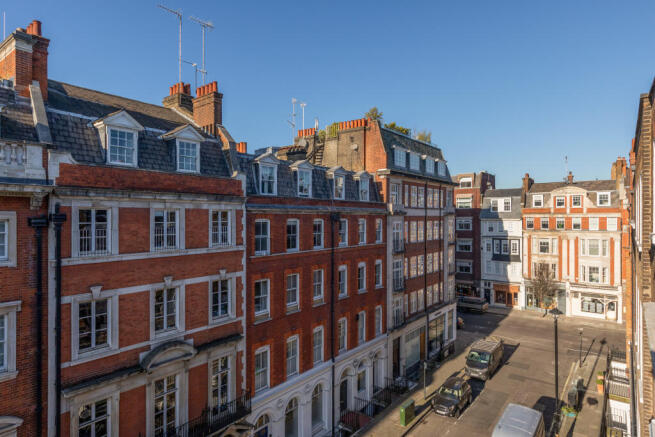
27 Welbeck Street, London W1G 8EN
Two minutes from Bond Street (Elizabeth, Central and Jubilee lines), five from Oxford Circus and eight from Marylebone.

54–56 Victoria Street, St Albans AL1 3HZ
A short walk from St Albans City station, with parking nearby. Serving Hertfordshire and North London.
Your tests, scan and reviews sit within a CQC-registered service, delivered by clinicians on the UK’s professional registers.
Care Quality Commission
Independent regulator of health and social care in England.
General Medical Council
Register for doctors, including the GP who reviews your results.
General Pharmaceutical Council
Regulator for pharmacists, including our pharmacist prescriber.
Royal College of General Practitioners
Professional body setting standards for general practice.
British Medical Ultrasound Society
Professional standards for medical ultrasound in the UK.

Dr Babak Soleimanpour
Medical Director & GPMD · MRCGP · DRCOG · leads your 30-minute GP results appointment

Mr Ali Aghaei
Pharmacist PrescriberMPharm · carries out your medication review, including medicines that affect the bladder, kidneys and PSA

Mr Pedram Aghaei
Co-founder & Medical WriterBMUS · SVT · SoR · patient information and content governance

Scans and GP review for urinary symptoms, bladder and kidney concerns and testicular pain.
View urology clinic →
For lumps, pain, swelling, varicocele and hydrocele. Discreet, same-day appointments.
View testicular scan →
Full body ultrasound, heart health, 30+ blood markers and a private GP consultation.
View men’s health check →There are two routes. On the NHS, book an appointment with your GP. They will ask about symptoms and can arrange a free PSA blood test and a urine test, then refer you to a urologist if needed.
Privately, you can book a prostate check directly, with no GP referral. At London Private Ultrasound the Prostate Health Check costs £599 and includes a PSA blood test, a prostate, kidney and bladder ultrasound, urine analysis and culture, a blood profile, and a GP and pharmacist review of all your results.
Yes. Private clinics, pharmacies and home-test companies in London offer PSA blood tests without a GP referral. At London Private Ultrasound the PSA test is included in our £599 Prostate Health Check, so your result is never read on its own: a GP reviews it alongside your prostate size on ultrasound, your urine culture and your blood tests, and explains what it means for you.
Tests are often available the same or next day at 27 Welbeck Street, London W1G 8EN, and in St Albans. Book online, call 020 7101 3377 or message us on WhatsApp.
There is no fixed schedule, because the UK does not screen all men for prostate cancer. As a guide, men aged 50 and over can ask their GP about a PSA test, and Black men and men with a family history of prostate cancer are advised to talk to their GP from age 45.
Men aged 45 to 61 with a BRCA2 gene change and a family history of certain cancers are to be offered a PSA test every two years under the new targeted NHS programme. For everyone else, how often to repeat the test depends on your first result and your risk, and your doctor will advise. See a doctor sooner if you develop urinary symptoms.
It isn’t banned, but routine PSA testing in men over 70 without symptoms is generally not advised. Prostate cancer found at this age is often slow-growing and unlikely to shorten life, while testing can lead to biopsies and treatments whose side effects, such as incontinence and erection problems, may outweigh the benefit.
PSA also rises naturally with age and prostate size, so false alarms are more common. Men over 70 with urinary symptoms, bone pain or a strong family history should still speak to a doctor, and the decision to test is made individually.
PSA stands for prostate-specific antigen, a protein made by the prostate gland. A PSA test is a simple blood test that measures how much is in your blood, in nanograms per millilitre (ng/mL).
A raised PSA can be caused by prostate cancer, but it is more often caused by an enlarged prostate (BPH), prostatitis, a urine infection, recent ejaculation or vigorous exercise. That is why PSA is a guide rather than a diagnosis, and it is best read alongside a prostate scan, a urine test and your symptoms.
There is no single normal PSA level, because PSA rises with age. The NICE age-specific thresholds for referral are: aged 40–49, above 2.5 ng/mL; 50–59, above 3.5; 60–69, above 4.5; and 70–79, above 6.5.
A result above the threshold for your age is called raised and should be discussed with a doctor, but it does not mean you have cancer. A normal result does not completely rule it out either. There is no single dangerous level: the higher the PSA, the more likely a significant cause, which is why your GP explains your result in context.
Most men with a raised PSA do not have prostate cancer. The first step is to look for other causes, such as a urine infection, prostatitis, recent ejaculation, cycling or an enlarged prostate. In our Prostate Health Check the GP reviews your PSA together with your prostate volume on ultrasound and your urine culture.
Next steps may include a repeat test, a free PSA and PSA density test (+£90), which helps tell benign enlargement from cancer, a prostate MRI (+£500) or a consultant urologist appointment (+£350). In the UK an MRI scan usually comes before any biopsy.
A PSA test on its own usually costs about £37 to £85 as a home finger-prick kit or lab test, and around £100 to £200 at a London clinic once a doctor’s appointment is included. These are approximate prices, and cheaper tests usually give you the number only.
Our Prostate Health Check is £599 and includes the PSA test plus a prostate, kidney and bladder ultrasound, urine culture, a blood profile, and a 30-minute GP appointment with a pharmacist medication review to explain your results.
Private prostate checks in London start at around £110 for a basic PSA test with a GP, and cost more when a scan and wider blood tests are included (approximate prices). Our Prostate Health Check is £599 all-inclusive: prostate, kidney and bladder ultrasound, PSA, urine analysis and culture, a blood profile of around 25 markers, a 30-minute GP appointment and a pharmacist medication review.
Optional add-ons, such as free PSA, a urologist or a prostate MRI, are charged separately. You can pay by card, Apple Pay, Google Pay or Klarna.
Not for all men. In 2026 the UK National Screening Committee recommended screening only for men aged 45 to 61 with a BRCA2 gene change and a family history of certain cancers, with a PSA test every two years. Roll-out in England is planned from 2027.
Other men can ask their GP for a free PSA test and talk through the pros and cons. There is no NHS online prostate test, but Prostate Cancer UK has a free online risk checker that tells you whether to speak to your GP. Men book privately when they want every test done quickly, together, and explained in one place.
Often, yes. Your first visit (ultrasound, PSA, bloods and urine sample) is regularly available the same or next day, 7 days a week from 9am to 7pm, at 27 Welbeck Street, London W1G 8EN, near Bond Street, and 54–56 Victoria Street, St Albans AL1 3HZ. No GP referral is needed.
Your GP and pharmacist review follows once the lab results are ready, usually on the first Friday after your tests. Call 020 7101 3377 for today’s availability.
Not reliably on its own. An external (transabdominal) ultrasound measures the size of your prostate, shows enlargement, calcification and cysts, checks how well your bladder empties and looks at your kidneys. It can sometimes show a suspicious area, but many prostate cancers cannot be seen on this scan.
That is why we combine it with a PSA test. The prostate volume from the scan also lets your GP work out PSA density. If cancer is suspected, a multiparametric prostate MRI is the recommended next test.
Yes. A digital rectal examination (DRE) is still used by GPs and urologists, especially when someone has symptoms, but it is no longer the only way to check the prostate.
Our Prostate Health Check does not rely on it. The prostate is measured with an external ultrasound over the lower tummy, with nothing inserted, and combined with a PSA blood test. If further assessment is needed, your GP will explain the options.
Early prostate cancer usually causes no symptoms, which is why men at higher risk choose to be tested. An enlarged prostate or prostatitis more often causes: needing to pee more often, especially at night; a weak or stop-start stream; straining; a feeling that your bladder has not emptied; urgency; or dribbling.
Blood in your urine or semen, pain when peeing, or pain in the lower back, hips or pelvis should be checked promptly. These symptoms are common and usually not cancer, but they are worth investigating.
Not fully. You cannot examine your own prostate, but home finger-prick PSA kits are sold online for roughly £37 to £65, and Prostate Cancer UK’s free online risk checker tells you whether to talk to your GP.
A home PSA result still needs interpreting, and a raised result will lead to a clinic appointment anyway. If you would rather have one visit that covers PSA, a prostate scan and a doctor’s explanation, book our Prostate Health Check.
Yes, as add-ons to the Prostate Health Check when your results suggest they are needed. A multiparametric prostate MRI referral (+£500) is the recommended test after a raised PSA and often avoids an unnecessary biopsy.
If the MRI shows a suspicious area, a prostate biopsy referral (+£1,000) with a consultant urologist can be arranged, with histology results in about 5 to 7 working days. Add-ons are arranged by phone on 020 7101 3377 or on WhatsApp.
Medical disclaimer. This page is general information and does not replace individual medical advice. A PSA result or ultrasound alone cannot diagnose or rule out prostate cancer. Go to A&E or call 111 if you suddenly cannot pass urine, or have a high temperature with pain when passing urine. Tell your GP promptly about any visible blood in your urine.