
Ultrasound for Kidney Imaging: Symptoms, Causse and Diagnosis
The kidneys are vital organs located on either side of the spine, responsible for filtering waste from the blood, balancing bodily fluids, and forming urine. Various disorders can affect the kidneys, such as infections, stones, cysts, and tumors. When symptoms or lab results suggest an issue, imaging tests like ultrasounds are often necessary for a comprehensive evaluation.
Why Consider Private Ultrasound for Kidney Imaging?
Ultrasound is a first-line imaging modality for the kidneys due to its non-invasive nature, lack of radiation exposure, affordability, and quick results. In a private ultrasound setting, patients can often get appointments more quickly and avoid long waits associated with public healthcare systems.
Indications for Kidney Ultrasound
A private ultrasound for kidney imaging might be considered if you experience any of the following symptoms or conditions:
- Flank Pain: Pain on the sides of the lower back, which may indicate kidney stones or infection.
- Blood in Urine (Hematuria): This can be a sign of kidney stones, infection, or more serious conditions like tumors.
- Frequent Urinary Tract Infections (UTIs): Recurrent infections can sometimes be linked to structural abnormalities in the kidneys or bladder.
- High Blood Pressure: Since the kidneys play a role in regulating blood pressure, unexplained hypertension might warrant a kidney ultrasound.
- Swelling (Edema): Swelling in the legs, ankles, or around the eyes can indicate kidney dysfunction.
- Abnormal Blood Tests: Elevated levels of creatinine or urea in blood tests can signal impaired kidney function.
- Family History of Kidney Disease: Those with a family history of kidney disease may benefit from periodic ultrasound screenings.
- Diabetes: Diabetes can lead to chronic kidney disease, making regular monitoring important.
Symptoms of Kidney Disorders
Flank Pain: This is a common symptom indicating potential kidney issues, such as stones, infection, or trauma. The pain is usually sharp and severe, located on one side of the lower back, and may radiate to the lower abdomen or groin.
Hematuria: Blood in the urine, visible as pink, red, or brown discoloration, can be alarming. It can result from kidney stones, infections, or tumors.
Frequent UTIs: Symptoms include painful urination, urgency, frequent urination, and cloudy or foul-smelling urine. Persistent UTIs might suggest an underlying structural problem in the kidneys or bladder.
High Blood Pressure: Kidneys help regulate blood pressure by managing fluid balance and producing hormones. Unexplained hypertension may be a sign of kidney disease.
Swelling (Edema): Accumulation of fluid, particularly in the legs, ankles, and around the eyes, can indicate that the kidneys are not properly balancing fluids and salts.
Fatigue: Chronic kidney disease often results in reduced kidney function, leading to the buildup of toxins in the blood, which can cause fatigue and weakness.
Nausea and Vomiting: These symptoms are often associated with kidney infections or severe kidney stones.
Fever and Chills: Indicative of infections such as pyelonephritis, where the kidneys are infected and inflamed.
Causes of Kidney Disorders
Kidney Stones: These are hard deposits made of minerals and salts that form inside the kidneys. Dehydration, dietary factors, obesity, and certain medical conditions can increase the risk.
Infections: Bacterial infections, particularly from E. coli, can ascend from the bladder to the kidneys, causing pyelonephritis.
Cysts: Fluid-filled sacs can form in the kidneys. Polycystic kidney disease (PKD) is a genetic disorder leading to multiple cysts.
Tumors: Benign or malignant growths can develop in the kidneys. Risk factors include smoking, obesity, hypertension, and certain genetic conditions.
Obstructions: Blockages in the urinary tract, such as those caused by kidney stones, can lead to hydronephrosis (swelling of the kidney due to urine buildup).
Hypertension: High blood pressure can damage the small blood vessels in the kidneys, reducing their ability to filter blood effectively.
Diabetes: Diabetic nephropathy is a complication of diabetes, where high blood sugar levels damage kidney function over time.
Autoimmune Diseases: Conditions like lupus can cause the immune system to attack the kidneys, leading to inflammation and damage.
Diseases Diagnosed by Kidney Ultrasound
Kidney Stones:
- Symptoms: Severe flank pain, hematuria, nausea, vomiting.
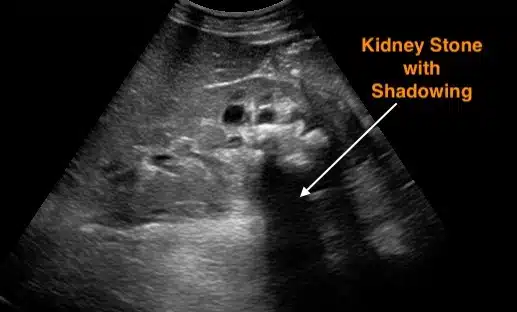
- Ultrasound Findings: Stones appear as bright, echogenic foci with posterior acoustic shadowing.
Cysts:
- Symptoms: Often asymptomatic, or may cause pain if large.
- Ultrasound Findings: Simple cysts appear as anechoic (dark) areas with thin walls. Complex cysts may have septations or calcifications.
Tumors:
- Symptoms: Hematuria, weight loss, flank pain.
- Ultrasound Findings: Solid masses that may be hypoechoic or have mixed echogenicity. Irregular borders suggest malignancy.
Hydronephrosis:
- Symptoms: Flank pain, UTI symptoms.
- Ultrasound Findings: Dilated renal pelvis and calyces with thinning of the renal cortex.
Infections (Pyelonephritis):
- Symptoms: Fever, chills, flank pain, urinary symptoms.
- Ultrasound Findings: Enlarged kidney with areas of increased and decreased echogenicity, possible abscess formation.
Chronic Kidney Disease:
- Symptoms: Fatigue, edema, high blood pressure.
- Ultrasound Findings: Small, shrunken kidneys with increased echogenicity and loss of cortical-medullary differentiation.
The Kidney Ultrasound Procedure
Here’s what you can expect during a kidney ultrasound:
- Preparation: You may be asked to drink water and avoid emptying your bladder before the exam, as a full bladder can help with imaging the kidneys and adjacent structures.
- Positioning: You will lie on an examination table, and a gel will be applied to the skin over the area to be examined. The gel helps conduct the sound waves from the ultrasound probe into your body.
- Scanning: The sonographer will move the probe over your lower back and sides to capture images of your kidneys. You might be asked to change positions to get better views.
- Breath Control: At times, you may need to hold your breath briefly to allow for clearer images.
- Duration: The entire process usually takes about 20-30 minutes.
- After the Exam: You can resume normal activities immediately after the ultrasound. The gel is water-based and will be wiped off your skin.
Advantages of Private Ultrasound
Choosing a private ultrasound for kidney imaging offers several benefits:
- No Radiation Exposure: Unlike CT scans, ultrasound does not use ionizing radiation.
- Affordability: Ultrasound is generally less expensive than other imaging modalities.
- Quick and Non-Invasive: The procedure is quick, usually completed within 20-30 minutes, and does not require any incisions or anesthesia.
- Immediate Results: Many private clinics provide immediate feedback or quick turnaround times for results.
- Follow-Up Capability: Regular monitoring is easy and safe due to the non-invasive nature of ultrasound.
A private ultrasound for kidney imaging is an effective, safe, and accessible option for evaluating various kidney conditions. Whether you are experiencing symptoms or seeking proactive monitoring due to risk factors, an ultrasound can provide valuable insights into your kidney health. At my clinic, we strive to offer high-quality, patient-centered care with the convenience of direct access and prompt results. If you have concerns about your kidneys, consider scheduling a private ultrasound to gain clarity and peace of mind regarding your health.
To book online select the date and time that suits you best – alternatively, please contact us with any questions via the chat, call or email links provided.
Telephone: 020 7101 3377