
Harley Street Medical District · London & St Albans
Private Heart Health & Stroke Risk Screening in Central London
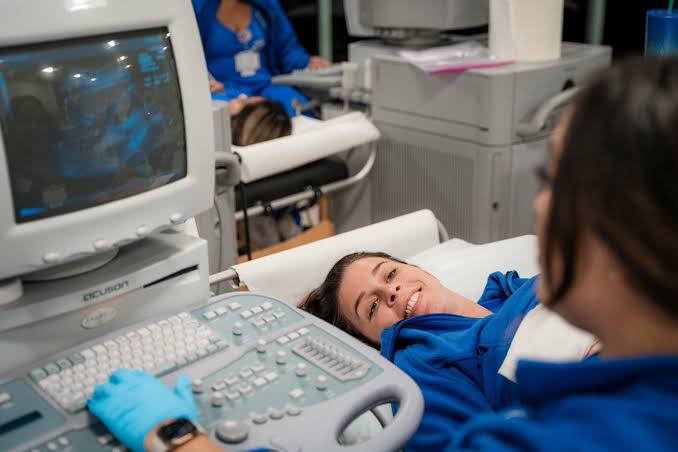
A cardiologist-led screening combining four key cardiovascular checks in one appointment — a carotid artery ultrasound (stroke-risk plaque), an Ankle-Brachial Index (ABI) test for peripheral arterial disease, an abdominal aortic aneurysm (AAA) ultrasound, and a 12-lead ECG for atrial fibrillation. £649, same-day results, no GP referral.
Most strokes are linked to risk factors that develop silently. This expert-led assessment gives a clear, joined-up picture of your cardiovascular risk in a single visit.
No GP referral · Same-day results · 4 tests in one visit · Not sure which scan you need?
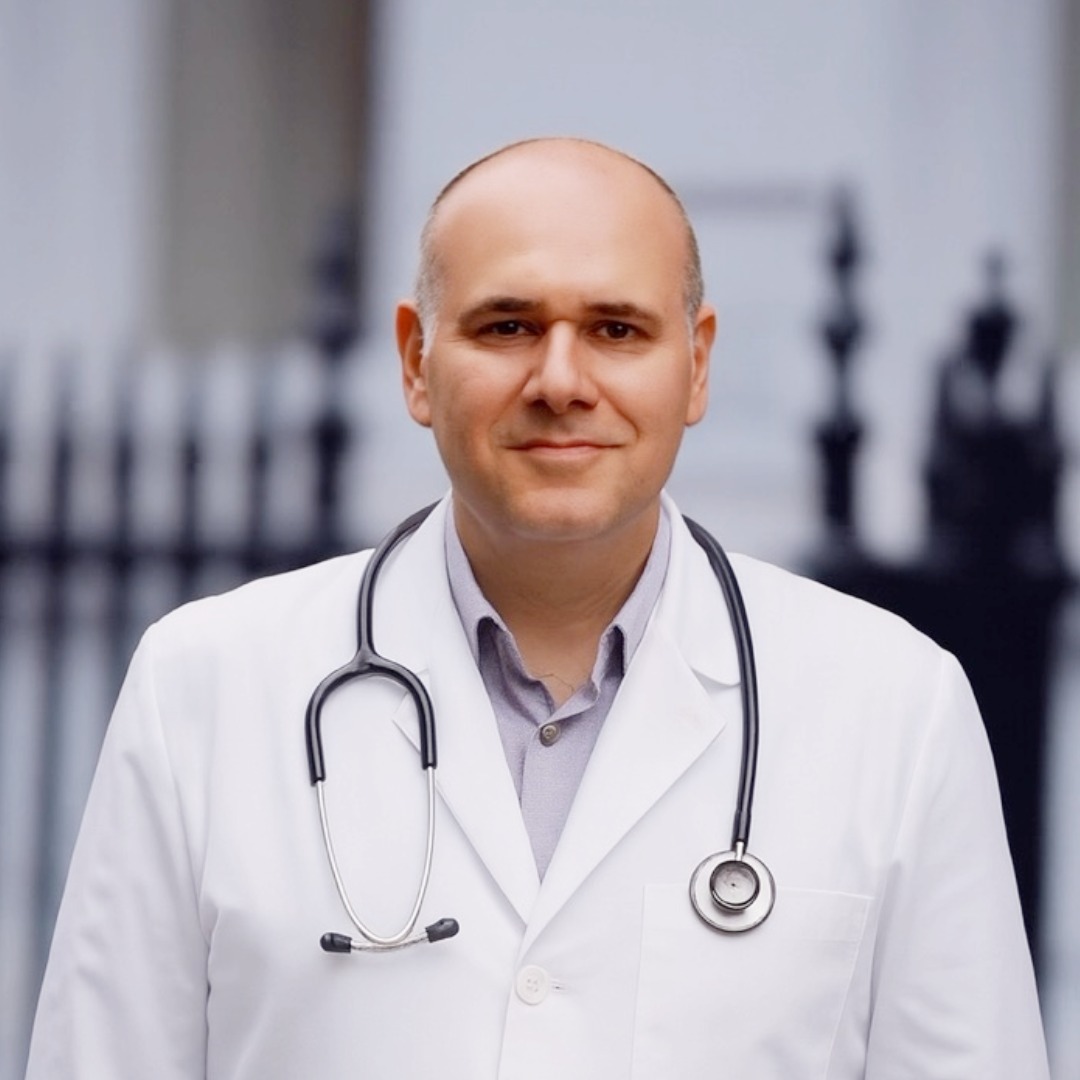
Medically reviewed by our cardiologists (Dr Farveh Vakilian, Dr Hana Pospisilova, Dr Mohammad Almajali), with governance by Medical Director Dr Babak Soleimanpour (GMC 6060555). Meet the team & credentials →
£649ALL TESTS INCLUDED
In one appointment
A complete cardiovascular risk screen — led by a cardiologist
Four targeted tests assess the arteries to your brain, the main vessel from your heart, the circulation to your legs, and your heart rhythm — the areas most strongly linked to stroke and heart attack.
- Carotid artery duplex ultrasound — stroke-risk plaque & narrowing
- Ankle-Brachial Index (ABI) — peripheral arterial disease
- Abdominal aortic aneurysm (AAA) ultrasound
- 12-lead ECG — atrial fibrillation (AFib) & rhythm
- Cardiologist interpretation & same-day report
All fees inclusive · Welbeck Street (Harley Street district) & St Albans · No GP referral required.
At a glance
Heart & Stroke Risk Screening — the essentials
| Assessment type | Cardiologist-led cardiovascular screening package (4 tests) |
|---|---|
| Tests included | Carotid duplex ultrasound · Ankle-Brachial Index (ABI) · Abdominal aortic aneurysm (AAA) ultrasound · 12-lead ECG |
| Areas assessed | Carotid & vertebral arteries · abdominal aorta · arm & ankle circulation · heart rhythm |
| Imaging modality | Doppler / duplex ultrasound (no radiation) + electrocardiography |
| Radiation | None — ultrasound and ECG only |
| Duration | Approx. 60 minutes |
| Preparation | Minimal — loose clothing; light fasting may be advised for the AAA component |
| Referral | Not required |
| Report | Same-day written report, formatted for onward referral where needed |
| Price | £649 — all tests inclusive |
What is it
What the Heart & Stroke Risk Screening is
Stroke and heart attack are most often the end-point of conditions that build up silently over years — narrowed arteries to the brain, a widening aorta, poor circulation to the limbs, or an irregular heartbeat. None of these typically cause symptoms until they are advanced.
This screening brings together the four checks that map those risks most directly. Your carotid arteries in the neck supply the large majority of blood to your brain, so plaque or narrowing there is one of the clearest warning signs of stroke risk. The abdominal aorta is the body’s main artery — a slowly enlarging aneurysm there can be silent until dangerous. The Ankle-Brachial Index compares blood pressure at the arm and ankle to reveal peripheral arterial disease, a marker of arterial disease elsewhere. And a 12-lead ECG records the heart’s electrical activity to detect atrial fibrillation, a common irregular rhythm that sharply raises stroke risk.
Because all four are interpreted together by a cardiologist, you receive a joined-up picture of your cardiovascular risk rather than four isolated results — with a same-day report you can act on.
Ultrasound & ECG checks for
What this screening looks for
Arteries & aorta (ultrasound)
- Carotid plaque, narrowing (stenosis) and turbulent flow
- Plaque character — smooth, irregular or ulcerated surface
- Vertebral artery flow direction
- Abdominal aortic diameter & aneurysm
- Reduced lower-limb circulation (via ABI)
Heart rhythm (ECG)
- Atrial fibrillation (AFib) & atrial flutter
- Heart rate & rhythm irregularities
- Evidence of prior strain or conduction changes
- Findings that warrant onward cardiology review
What we measure & why it matters
| Test | What we assess | Why it matters clinically |
|---|---|---|
| Carotid duplex | Plaque, % narrowing, peak systolic velocity, plaque surface/echogenicity | Quantifies stroke risk; irregular or ulcerated plaque carries higher risk than smooth, calcified plaque |
| Ankle-Brachial Index | Ratio of ankle to arm systolic blood pressure | A low ratio indicates peripheral arterial disease and wider cardiovascular risk |
| AAA ultrasound | Maximum abdominal aortic diameter | Identifies and sizes an aneurysm; larger diameter carries higher rupture risk |
| 12-lead ECG | Heart rate, rhythm and electrical conduction | Detects atrial fibrillation — a major, treatable cause of stroke |
Clinical note: all measurements are interpreted by the cardiologist. Grading thresholds follow established published standards (see Grading) and final reported wording is confirmed by the clinical team.
Want bloods and a fuller cardiac work-up too? See the Premium Heart Health Check + Blood Test.
Everything this screening checks
- Common carotid artery
- Internal carotid artery
- External carotid artery
- Carotid bifurcation
- Vertebral artery flow
- Plaque size & surface
- Carotid stenosis %
- Abdominal aorta diameter
- Aortic aneurysm
- Ankle-Brachial Index
- Peripheral arterial disease
- Heart rate
- Heart rhythm
- Atrial fibrillation
- Atrial flutter
- Conduction changes
Related conditions
Conditions this screening relates to
Carotid artery disease
Fatty plaque narrowing the neck arteries that supply the brain — a leading cause of stroke. Carotid Doppler scan →
Abdominal aortic aneurysm
A bulge in the body’s main artery that can enlarge silently. AAA scan →
Peripheral arterial disease
Narrowed leg arteries — and a marker of risk to the heart and brain. ABPI scan →
Atrial fibrillation (AFib)
An irregular heart rhythm that allows clots to form, sharply raising stroke risk. ECG test →
Stroke & TIA
Interrupted blood supply to the brain — many contributing conditions are silent and detectable early.
Atherosclerosis
The underlying artery-hardening process driving most of the conditions above — best caught early.
What’s included
What your £649 covers
Our clinical approach
How we grade what we find
We name the exact arteries assessed — the common, internal and external carotid arteries, the carotid bifurcation and vertebral arteries, plus the abdominal aorta — and grade findings against established published standards.
Carotid stenosis — NASCET grading
Carotid narrowing is graded using NASCET criteria, combining the degree of narrowing with Doppler velocities.
| Category | % narrowing | Peak systolic velocity (cm/s) | ICA/CCA ratio | Clinical significance |
|---|---|---|---|---|
| Normal | 0% | <125 | <2.0 | No significant narrowing |
| Mild | <50% | <125 | <2.0 | Early disease; risk-factor review |
| Moderate | 50–69% | 125–230 | 2.0–4.0 | Onward review advised |
| Severe | 70–99% | >230 | >4.0 | Specialist referral |
| Near-occlusion | >99% | Variable | Variable | Urgent specialist referral |
About our velocity criteria: thresholds follow widely used consensus duplex criteria (e.g. SRU).
Abdominal aorta — diameter bands
| Category | Aortic diameter | Typical pathway |
|---|---|---|
| Normal | <3.0 cm | No aneurysm |
| Small AAA | 3.0–4.4 cm | Periodic monitoring |
| Medium AAA | 4.5–5.4 cm | More frequent monitoring |
| Large AAA | ≥5.5 cm | Referral for surgical assessment |
Circulation — Ankle-Brachial Index
| ABI value | Interpretation |
|---|---|
| >1.40 | Non-compressible / calcified arteries — needs further assessment |
| 1.00–1.40 | Normal |
| 0.91–0.99 | Borderline |
| ≤0.90 | Peripheral arterial disease |
Sign-off: AAA bands follow the NHS AAA Screening Programme and ABI ranges follow standard published vascular criteria. Exact reported wording and any package-specific thresholds are confirmed by the clinical team before publishing (Part D — no invented figures).
Who it’s for
Who should consider this screening
Family history
Stroke, heart attack or aneurysm in close relatives.
Existing risk factors
High blood pressure, raised cholesterol, or diabetes.
Aged 40+
A proactive cardiovascular check before symptoms appear.
Lifestyle risk
Smoking history, high stress or a sedentary routine.
Peace of mind
No symptoms, but you want clarity and reassurance.
Known vascular disease
Monitoring after a previous finding or diagnosis.
Preparation
How to prepare
Note: the carotid, ABI and ECG components generally need no special preparation.
What to expect
Your appointment, step by step
- Arrival & brief history. The cardiologist reviews your symptoms and risk factors.
- Carotid ultrasound. Warm gel and a probe scan the neck arteries — painless, no needles.
- Ankle-Brachial Index. Blood-pressure cuffs on the arms and ankles compare circulation.
- AAA ultrasound. A quick scan of the abdomen measures the aorta.
- 12-lead ECG. Small sensors on the chest, arms and legs record your heart rhythm.
- Verbal findings & same-day report. The cardiologist explains results and you receive a written report with clear next steps.
Reassurance
What happens if something is found
Most screenings are reassuring. If a finding does need action, you leave with a clear, tiered plan — never just a result and no direction.
Early plaque, borderline ABI or minor changes → lifestyle & risk-factor advice, with GP review where helpful.
Moderate carotid narrowing, a small/medium aneurysm or PAD → graded report and onward review, with monitoring intervals.
Severe stenosis, a large aneurysm or newly detected AFib → prompt referral letter to the appropriate specialist.
Clinical references
The evidence behind cardiovascular screening
Stroke is one of the leading causes of death and long-term disability in the UK, and a large share of cardiovascular events are linked to risk factors that can be identified and managed early. The components of this screening map onto established clinical practice:
- Carotid disease & stroke — the benefit of identifying and treating significant carotid stenosis is established by landmark trials including ECST and NASCET, and reflected in NICE stroke/TIA guidance (NG128).
- Abdominal aortic aneurysm — the NHS AAA Screening Programme and NICE guidance (NG156) support ultrasound detection, with management guided by aneurysm diameter.
- Atrial fibrillation — NICE guidance (NG196) supports detecting AFib because anticoagulation substantially reduces the associated stroke risk.
- Peripheral arterial disease — a reduced Ankle-Brachial Index is a recognised marker of systemic atherosclerosis and wider cardiovascular risk.
Editorial discipline (Part D & F): only genuine, verifiable references are cited, and no specific effect sizes are stated until independently verified and signed off by the clinical team.
Private vs NHS
Why choose private screening
| London Private Ultrasound | Typical NHS route | |
|---|---|---|
| Referral | No GP referral needed | GP referral usually required |
| Waiting time | Same-day / next-day appointments | Often weeks to months |
| Proactive screening | Available without symptoms | Generally symptom- or age-criteria led |
| All four tests together | Bundled in one cardiologist-led visit | Typically separate pathways |
| Report turnaround | Same day, formatted for onward referral | Variable |
The NHS AAA Screening Programme invites men in the year they turn 65; private screening lets you check earlier or across all four areas in one visit.
Why us
Why choose London Private Ultrasound
Cardiologist-led
All four tests interpreted by an experienced cardiologist — not disconnected results.
Harley Street district
27 Welbeck Street, in London’s medical district, plus a St Albans clinic.
Trusted since 2012
Over 35,000 patients and a 4.8★ rating across 1,256 reviews.
Same-day, 7 days
Appointments and reports without the wait — open every day, 9am–7pm.
CQC & ICO registered
Regulated care and protected data as standard.
No referral required
Book directly — we handle onward referral letters when needed.
Pricing
Heart & Stroke Risk Screening
Carotid ultrasound · ABI · AAA ultrasound · 12-lead ECG · cardiologist interpretation · same-day report. All fees inclusive.
Upgrade: Premium Heart Health Check + Blood Test · Men’s Health Check Premium
27 Welbeck Street, London W1G 8EN
54–56 Victoria Street, St Albans AL1 3HZ
When
7 days a week · 9am–7pm
Book online
Select a clinic and time slot below. To book by phone, call 020 7101 3377 — 7 days a week, 9am–7pm.
Online booking calendar
Click to load the secure booking calendar for the Heart & Stroke Risk Screening.
Your clinical team
Meet the team
Your screening is delivered by our experienced team of cardiologists and accredited vascular scientists — findings are interpreted by a cardiologist, carotid stenosis is graded using NASCET criteria, and clinical governance is led by our GMC-registered Medical Director.

Dr Farveh Vakilian
Medical Doctor · Cardiologist
Expertise in heart-health assessment. Specialist in echocardiography, preventive cardiology and cardiovascular risk assessment.

Dr Hana Pospisilova
Medical Doctor · Cardiologist
Heart-health assessment, cardiovascular review, ECG interpretation, echocardiography and patient-centred cardiac care.

Dr Mohammad Almajali
Cardiologist
Cardiac assessment, cardiovascular risk evaluation, heart-health investigations and clinical interpretation of cardiology findings.

Dr Babak Soleimanpour
Medical Director & GP
MD · MRCGP · DRCOG · GMC . Overall clinical-governance responsibility.

Mr Pedram Aghaei
Vascular Scientist
SVT reg. SVT00679 · RCT reg. CT04905. Carotid & vascular Doppler assessment.

Mr Reza Farahmandfar
Accredited Vascular Scientist
Vascular ultrasound & Doppler assessment.

Mr Ali Aghaei
Clinical Team
Cardiovascular & vascular imaging team.

Mrs Arezoo Selahi
Clinical Team
Cardiovascular & vascular imaging team.
Doctor-led clinical governance
Your screening is interpreted by one of our cardiologists — Dr Farveh Vakilian, Dr Hana Pospisilova or Dr Mohammad Almajali — with Doppler ultrasound performed by our accredited vascular scientists. Overall clinical governance rests with our Medical Director, Dr Babak Soleimanpour (MD · MRCGP · DRCOG · GMC ).
Seamless & secure
Booking and results, the easy way
Book your way
Online, by phone or by WhatsApp — whatever suits you.
Same-day appointments
Often available the same or next day, 7 days a week.
Fast, secure results
A clear written report the same day, delivered securely.
Your data protected
ICO-registered and handled to UK data-protection standards.
Registered & regulated
Care you can trust
London Private Ultrasound is a CQC-registered and ICO-registered private clinic in the Harley Street medical district, established in 2012. Scans are delivered to professional imaging standards, with clinical governance overseen by a GMC-registered Medical Director.
Reviews
What our patients say
“[Insert a real, verified patient review here before launch — do not publish placeholder text.]”
— Verified patientFAQ
Frequently asked questions
What’s included in the £649 screening?
How much does the heart & stroke risk screening cost?
Do I need a GP referral?
How long does the appointment take?
Is it painful or does it use radiation?
How do I prepare for the screening?
When will I get my results?
Who interprets my screening, and what are their credentials?
Who is this screening for?
How is this different from a standard heart health check or echocardiogram?
Can I have just one of the four tests instead of the full package?
Is the screening suitable for women?
How is carotid narrowing graded?
How does this compare with the NHS AAA screening programme?
Can you send the results to my GP or refer me on?
Which clinic locations offer this screening, and can I book same-day?
Who performs the medical review and content governance of this page?
This patient-information page was prepared with AI-assisted editorial support and reviewed for clinical accuracy by:
- Mr Pedram Aghaei — Vascular Scientist, SVT reg. SVT00679 · Registered Clinical Technologist, RCT reg. CT04905
- Dr Babak Soleimanpour — MD, MRCGP, DRCOG · Medical Director / GMC-registered GP (GMC )
Reviewed: 23/05/2026 — Next review due: 30/11/2026
This information is for general patient education and does not replace a medical consultation. If your symptoms or scan findings need further assessment, our clinical team will explain your results clearly and advise on suitable next steps, including GP, specialist or urgent referral where appropriate.
London Private Ultrasound (Ultrasound London Limited) is registered with the Care Quality Commission and the Information Commissioner’s Office (ICO).
Here to help
Find us & get in touch
Central London — Harley Street district
27 Welbeck StreetLondon W1G 8EN
Serving Marylebone, Mayfair & Fitzrovia · 5 minutes from Bond Street station.
St Albans
54–56 Victoria StreetSt Albans AL1 3HZ
Serving Hertfordshire & North London.
Prefer to message? You can reach us on WhatsApp or Botim on +44 7414 165515 — helpful for our Arabic-speaking patients who use Botim.
Take control of your heart & stroke risk
Most strokes are linked to risks that build up silently. One cardiologist-led appointment gives you the full picture — and a plan.