
Cholesterol · Cardiovascular health
What Does High Cholesterol Mean for Heart Health?
High cholesterol often causes no symptoms, but it can gradually increase the risk of coronary heart disease, heart attack and stroke. Learn what your lipid results mean and how to protect your heart.
Cholesterol is something many people only start thinking about after a routine blood test comes back higher than expected.
It can feel confusing, especially because cholesterol is not automatically “bad”.
Your body needs some cholesterol to work properly. The concern begins when certain types of cholesterol stay too high for too long, because this can gradually increase the risk of heart disease, heart attack and stroke.
High cholesterol usually does not cause symptoms. That is why it is often called a silent risk factor. You may feel completely well while cholesterol is quietly contributing to changes in your arteries.
This guide explains what cholesterol is, how it affects your heart, what a cholesterol test measures and what you can do to lower your risk.
What Is Cholesterol?
Cholesterol is a waxy, fat-like substance found in every cell in your body. Your liver makes most of it, while some also comes from the food you eat.
Your body uses cholesterol to build cell membranes, make certain hormones and produce vitamin D.
So cholesterol itself is not the enemy. The issue is having too much of the wrong type circulating in your blood.
Cholesterol does not travel around the body on its own. It is carried through the bloodstream by particles called lipoproteins. The two most commonly discussed types are LDL and HDL cholesterol.
What Is the Difference Between LDL and HDL Cholesterol?
When people talk about “bad” and “good” cholesterol, they are usually referring to LDL and HDL.
LDL cholesterol
LDL stands for low-density lipoprotein. It is often called bad cholesterol because high levels can contribute to fatty deposits building up inside artery walls.
HDL cholesterol
HDL stands for high-density lipoprotein. It is often called good cholesterol because it helps carry cholesterol away from the arteries and back to the liver, where it can be processed and removed.
A cholesterol blood test, often called a lipid profile, usually measures:
Swipe sideways to view the full table.
| Measure | What it means |
|---|---|
| Total cholesterol | The overall amount of cholesterol in your blood |
| LDL or non-HDL cholesterol | The cholesterol most closely linked with plaque buildup in the arteries |
| HDL cholesterol | The cholesterol that helps remove cholesterol from the arteries |
| Triglycerides | Another type of blood fat that can be raised by excess calories, alcohol, uncontrolled diabetes or some medical conditions |
When your results arrive, your clinician will look at the overall pattern. Age, blood pressure, smoking history, diabetes, family history and previous heart or circulatory problems all matter when estimating cardiovascular risk.
Want to Understand Your Cholesterol Levels Better?
Our Lipid Profile pathway combines detailed blood testing with abdominal ultrasound and GP consultation, helping you understand cholesterol alongside wider metabolic health. No GP referral is needed.
How Does High Cholesterol Affect the Heart?
High cholesterol can affect the heart over many years.
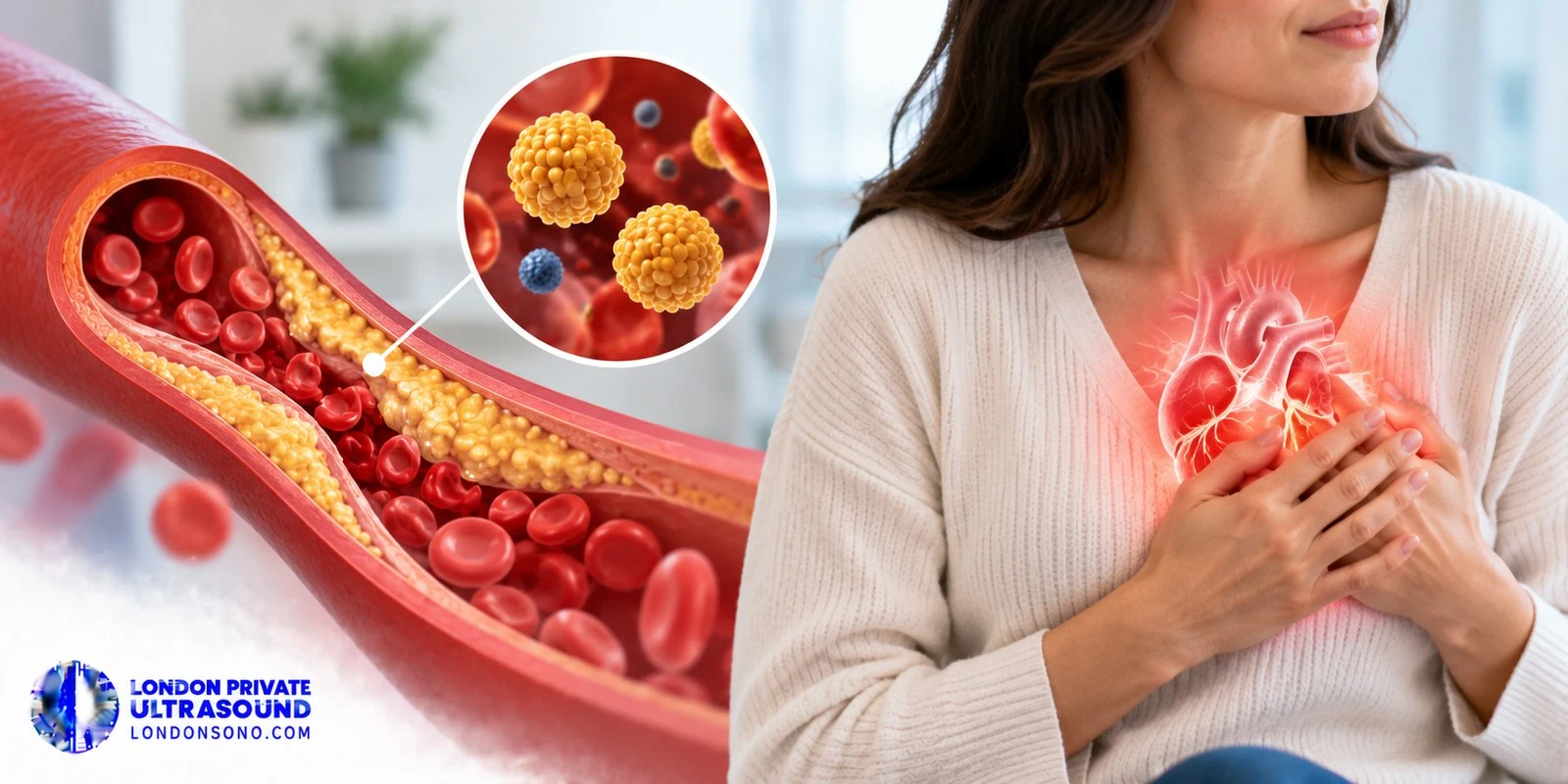
When there is too much LDL cholesterol in the blood, it can become trapped in the walls of the arteries.
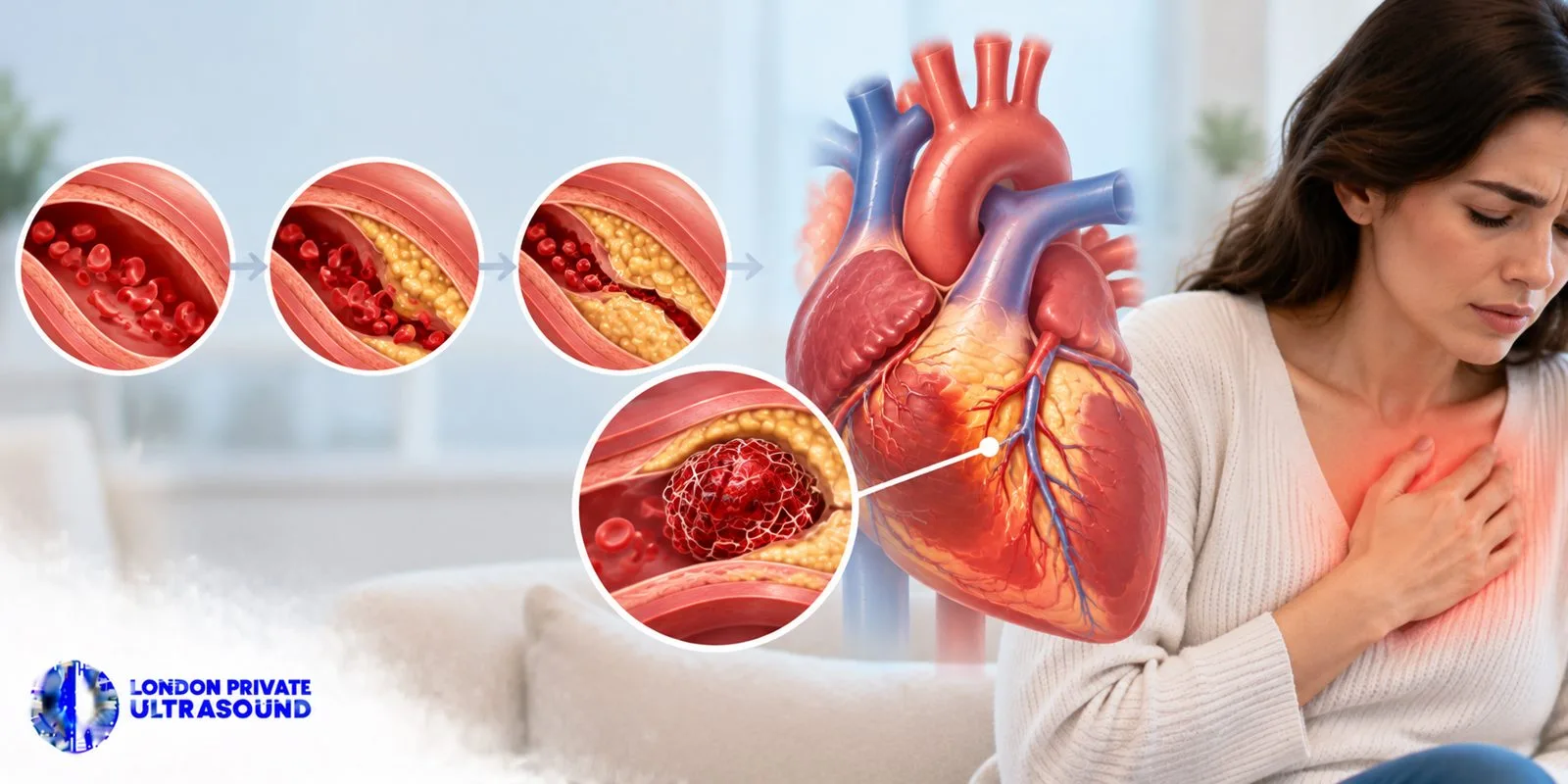
Over time, cholesterol, fats, inflammatory cells and other substances can build up and form plaque.
This process is called atherosclerosis. It causes arteries to become narrower and less flexible, which can reduce blood flow to the heart muscle.
If this happens in the coronary arteries—the arteries that supply blood to the heart—it can lead to coronary heart disease.
Reduced blood flow to the heart can cause angina, which often feels like chest pain, pressure or tightness, particularly during physical activity or stress.
If a plaque becomes unstable and ruptures, a blood clot can form at the site. If that clot blocks a coronary artery, it can cause a heart attack. A similar process in arteries supplying the brain can contribute to a stroke.
High cholesterol does not usually damage the heart overnight. It is a long-term process, which is why checking cholesterol and managing cardiovascular risk early can make a significant difference.
Can High Cholesterol Cause a Heart Attack?
High cholesterol does not directly cause a heart attack in every person who has it, but it is a major risk factor for the process that can lead to one.
When LDL cholesterol contributes to plaque buildup in the coronary arteries, the arteries can narrow over time. If a plaque ruptures and a clot forms, blood flow to part of the heart muscle can suddenly become blocked. This is what happens in many heart attacks.
Other factors also affect risk:
- high blood pressure
- smoking
- diabetes
- physical inactivity
- excess weight
- family history and age
Cholesterol is one important part of a bigger cardiovascular-risk picture.
Does High Cholesterol Cause Symptoms?
For most people, high cholesterol does not cause symptoms. You cannot usually tell whether cholesterol is high by how you feel. Some people only find out after a routine blood test or after developing a heart or circulatory problem.
Waiting for symptoms is not a reliable way to monitor cholesterol. A blood test is the only way to know your levels.
Chest pain, breathlessness, fatigue, palpitations or pain in the arms, jaw or back can sometimes be related to heart or circulatory disease, but they are not specific signs of high cholesterol. Call 999 for current chest pain, severe breathlessness, collapse, sweating or pain spreading to the arm or jaw.
What Causes High Cholesterol?
High cholesterol can happen for several reasons, and it is not always caused by lifestyle alone.
Diet
Eating a lot of saturated fat can raise LDL cholesterol. Sources include fatty cuts of meat, butter, cream, full-fat cheese, pastries, biscuits and many processed foods.
Lifestyle factors
Physical inactivity, smoking, heavy alcohol intake and excess weight—especially around the middle—can contribute to a less favourable cholesterol pattern.
Genetics
Familial hypercholesterolaemia can keep LDL cholesterol high from a young age, even in people who eat well and exercise regularly.
Health conditions and medicines
Type 2 diabetes, underactive thyroid, kidney disease, some liver conditions and certain medicines can affect cholesterol or triglyceride levels.

What Are Healthy Cholesterol Levels?
There is no single “perfect” cholesterol number for everyone; instead, clinicians use reference ranges and individual targets.
The right target depends on overall cardiovascular risk and whether you already have heart disease, diabetes, kidney disease or another relevant condition.
UK cholesterol results are measured in millimoles per litre (mmol/L). A lipid profile usually includes total cholesterol, LDL or non-HDL cholesterol, HDL cholesterol and triglycerides.
If you already have cardiovascular disease, NICE guidance recommends aiming for LDL cholesterol of 2.0 mmol/L or below, or non-HDL cholesterol of 2.6 mmol/L or below.
If a result is outside the expected range, talk to a GP or cardiologist rather than panicking. Results should be interpreted alongside medical history, blood pressure, lifestyle and other risk factors.
How Is Cholesterol Checked?
Cholesterol is checked with a simple blood test. Depending on the test, this may involve a finger-prick sample or blood taken from a vein.
A full lipid profile is more informative than total cholesterol alone. It can measure LDL or non-HDL cholesterol, HDL cholesterol, triglycerides and sometimes the ratio between total and HDL cholesterol.
Some cholesterol tests require fasting, while others do not. Follow the instructions given when you book, particularly if triglycerides are being measured.
How Can I Lower My Cholesterol?
The good news is that cholesterol can often be improved, especially when it is picked up early.
For many people, the first step involves changes to diet, activity and other lifestyle habits. These changes may not lower cholesterol overnight, but they can make a meaningful difference over time.
Eat more heart-friendly foods
Eat more vegetables, fruit, beans, lentils, whole grains, nuts, seeds and oily fish. Replace saturated fats with unsaturated fats—for example, olive or rapeseed oil instead of butter and lower-fat dairy options.
Soluble fibre from oats, barley, beans, lentils, apples, citrus fruit and vegetables can help lower cholesterol.
Move more regularly
Physical activity can improve HDL cholesterol, lower triglycerides and support blood pressure and weight. Aim for at least 150 minutes of moderate-intensity activity each week.
Stop smoking
Smoking damages blood vessels and lowers protective HDL cholesterol. Stopping is one of the most valuable actions for heart and circulatory health.
Manage other risk factors
High blood pressure, diabetes, excess weight and poor sleep all affect cardiovascular risk. Managing these alongside cholesterol better protects the heart long term.

When Should You Have a Heart Health Check?
A heart health check may be useful if you have been told your cholesterol is high, have a family history of early heart disease, or have other risk factors such as high blood pressure, diabetes, smoking or excess weight.
It may also help if you have chest discomfort, breathlessness, palpitations or reduced exercise tolerance and want a clearer understanding of your heart health.
A Heart Health Check at London Private Ultrasound includes cardiologist consultation, physical examination, 12-lead ECG and echocardiogram. The £449 package does not include blood tests; the Heart Health Check Plus adds GP consultation and advanced bloods.
Not Sure Whether Cholesterol Is Affecting Your Heart Health?
A Heart Health Check combines cardiologist review, ECG, cardiovascular examination and echocardiogram, giving a clearer picture of heart rhythm, structure, valves and pumping function.
What an Echocardiogram Can Show
An echocardiogram can help assess whether cardiovascular risk factors have affected the way your heart is working. It can show:
- how well the heart muscle is pumping
- whether heart chambers are enlarged
- heart-valve narrowing or leakage
- signs of increased pressure or strain on the heart
- diastolic function—how well the heart relaxes and fills
- some effects of long-term high blood pressure or heart-muscle disease
It cannot directly visualise cholesterol plaques inside the coronary arteries. However, it is useful within a wider assessment, particularly with symptoms, abnormal ECG findings or multiple cardiovascular risk factors.
Want to Understand How Your Heart Is Functioning?
A private echocardiogram assesses pumping function, valves, chamber size and heart structure. It is a non-invasive ultrasound scan with no radiation.
Book a Heart Health Check in London
High cholesterol doesn’t always cause symptoms, so it can be difficult to know how it is affecting heart health. Understanding cholesterol and wider cardiovascular risk helps you make informed decisions.
A Heart Health Check at London Private Ultrasound brings key investigations and expert advice together in one visit.
Cardiologist-led care
Receive specialist assessment and discussion of your cardiac findings.
Comprehensive assessment
The £449 check includes ECG, echocardiogram, physical examination and cardiologist consultation.
Clear answers
Understand your results and what they may mean for cardiovascular health.
Convenient appointments
Access private cardiac care in London or St Albans without a GP referral.
One roof, one visit
Bring core heart investigations and specialist review together.
Transparent price
Heart Health Check from £449, all-inclusive for the listed cardiac assessment.
Frequently Asked Questions
What is the connection between cholesterol and heart health?
Cholesterol is carried in the blood by LDL and HDL particles. High LDL cholesterol can contribute to plaque buildup in arteries, narrowing them and increasing the risk of heart disease, heart attack and stroke.
Can high cholesterol cause a heart attack?
High cholesterol does not directly cause a heart attack in everyone, but it is a major risk factor. Plaque buildup can narrow coronary arteries, and if plaque ruptures and a clot forms, blood supply to the heart muscle can become blocked.
What is the difference between LDL and HDL cholesterol?
LDL is often called bad cholesterol because high levels can contribute to artery plaque. HDL is often called good cholesterol because it helps carry cholesterol away from arteries.
What causes high cholesterol?
Causes include saturated fat, low physical activity, smoking, excess weight and alcohol. Genetics, diabetes, thyroid problems, kidney disease and some medicines can also contribute.
How often should cholesterol be checked?
This depends on age, risk factors and medical history. High cholesterol, diabetes, high blood pressure, family history or previous cardiovascular disease may require more regular monitoring.
Can I lower cholesterol naturally?
Eating more fibre-rich and plant-based foods, reducing saturated fat, exercising, stopping smoking and maintaining a healthy weight can help many people. Some will still need medication depending on their risk.
Medical disclaimer: This article provides general information and does not replace individual medical advice. Cholesterol targets and treatment depend on overall cardiovascular risk. Seek emergency help for current chest pain, severe breathlessness, collapse or pain spreading to the arm or jaw.