
7 Important Differences Between ECG vs Echo for Better Heart Health
ECG vs Echo is one of the most common questions patients ask when they are worried about palpitations, breathlessness, chest discomfort, heart rhythm changes, heart valve problems or general heart health. Both tests are non-invasive and painless, but they assess the heart in very different ways.
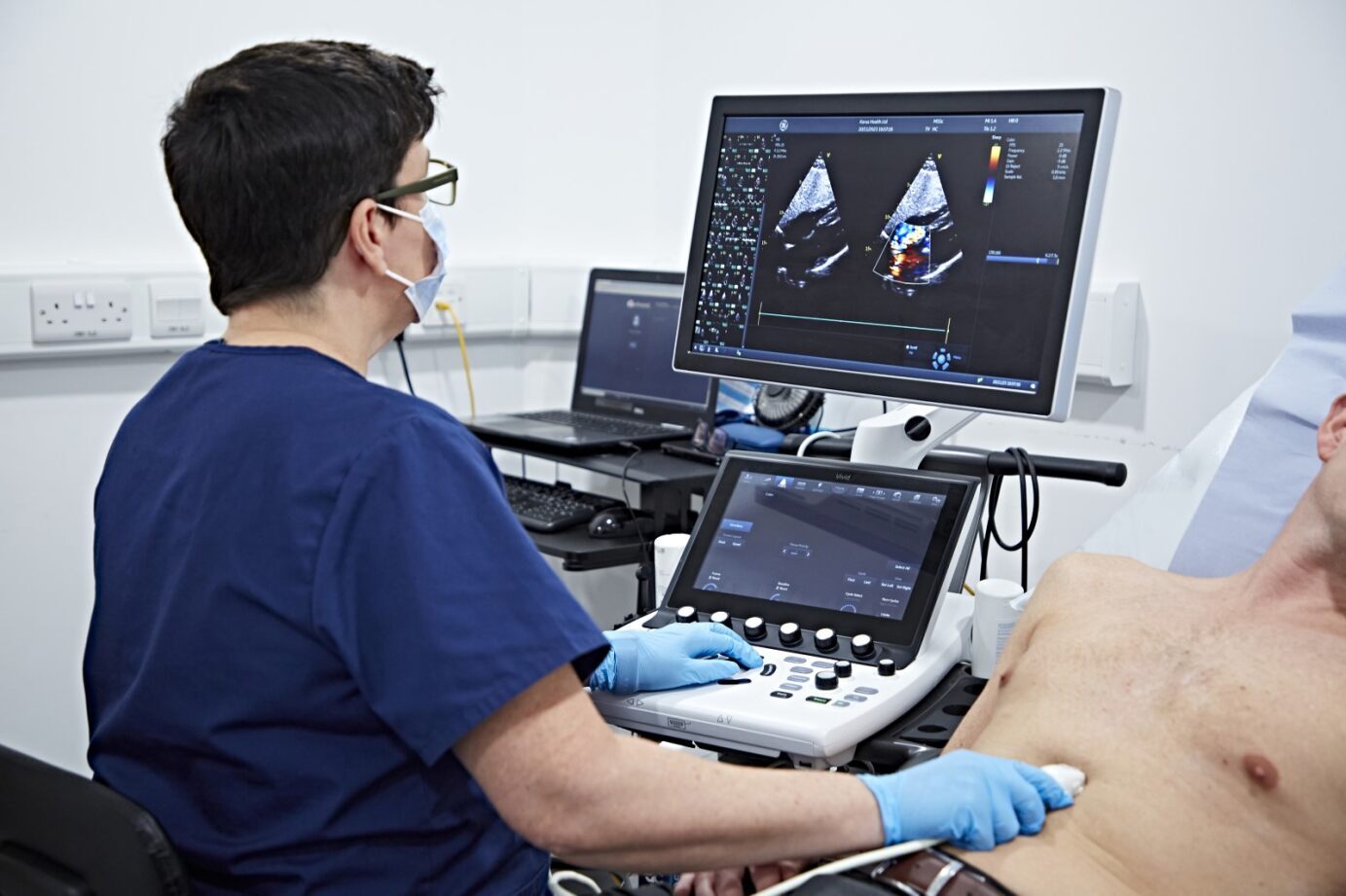
An ECG, also called an electrocardiogram, records the electrical activity of the heart. An Echo, also called an echocardiogram, uses ultrasound to assess the heart’s structure, valves, pumping function and blood flow.
At London Private Ultrasound, we provide private ECG, private echocardiogram, Holter monitoring, cardiologist consultation and structured Heart Health Check packages for patients who want fast, professional and joined-up cardiac assessment in London.
Quick Answer: ECG vs Echo
The simplest way to understand ECG vs Echo is this:
ECG = heart rhythm and electrical activity.
Echo = heart structure, valves and pumping function.
An ECG is especially useful for detecting rhythm problems such as irregular heartbeat, fast heartbeat, slow heartbeat, atrial fibrillation and conduction abnormalities. An Echo is especially useful for assessing heart pumping strength, heart valves, chamber size, wall thickness and fluid around the heart.
For many patients, the best answer is not ECG or Echo, but ECG and Echo together. The two tests are complementary and can provide a more complete understanding of heart health when interpreted alongside symptoms, medical history and clinical risk factors.
ECG vs Echo Comparison Table
| Feature | ECG | Echo / Echocardiogram |
|---|---|---|
| Full name | Electrocardiogram | Echocardiogram |
| Main purpose | Records electrical activity | Uses ultrasound to image the heart |
| Best for | Rhythm, heart rate and conduction | Structure, valves, pumping function and blood flow |
| Shows heart rhythm? | Yes | Not primarily |
| Shows heart valves? | No, not directly | Yes |
| Shows pumping function? | Only limited indirect clues | Yes |
| Useful for palpitations? | Yes | Sometimes, if structural assessment is needed |
| Useful for breathlessness? | Sometimes | Often very useful |
| Radiation? | No radiation | No radiation |
What Is an ECG?
An ECG, or electrocardiogram, is a quick test that records the electrical signals produced by your heart. Every heartbeat is triggered by electrical impulses. These impulses coordinate the heart muscle so that it contracts and pumps blood around the body.
During a standard 12-lead ECG, small sticky electrodes are placed on the chest, arms and legs. These electrodes are connected to a machine that records the heart’s electrical activity and displays it as a tracing.
A private ECG may be suitable if you have palpitations, irregular pulse, dizziness, chest discomfort, fainting episodes, medication-related rhythm concerns or you need a baseline heart rhythm assessment.
At London Private Ultrasound, you can book a private ECG in London as a standalone appointment or as part of a wider Heart Health Check pathway.
What Can an ECG Help Detect?
An ECG may help identify irregular heart rhythm, atrial fibrillation, fast heart rate, slow heart rate, extra beats, conduction delay, some signs of heart strain and some signs of previous heart muscle injury.
The important point in ECG vs Echo is that ECG is mainly a rhythm and electrical test. It does not directly show the heart valves, chamber size or pumping function in the same way as an Echo.
What Is an Echo?
An Echo, or echocardiogram, is an ultrasound scan of the heart. It uses sound waves to create moving images of the heart in real time.
During an Echo, ultrasound gel is placed on the chest and a small probe is moved across different areas. The probe sends sound waves into the chest and receives returning echoes, which are converted into live images of the heart.
A private echocardiogram may be suitable if you have breathlessness, heart murmur, reduced exercise tolerance, abnormal ECG findings, known valve disease, high blood pressure, family history of cardiomyopathy or a need to assess heart pumping function.
At LondonSono, patients can book a private echocardiogram in London or choose a broader package that includes Echo, ECG and cardiologist review.
What Can an Echo Help Detect?
An echocardiogram may help assess reduced heart pumping function, valve narrowing, valve leakage, enlarged heart chambers, thickened heart muscle, cardiomyopathy, pericardial effusion and the effects of long-standing high blood pressure on the heart.
The key point in ECG vs Echo is that Echo assesses the physical structure and mechanical function of the heart, while ECG assesses electrical rhythm and conduction.
7 Important Differences Between ECG vs Echo
1. ECG Checks Electrical Activity, Echo Checks Structure
The main difference between ECG vs Echo is what each test measures. An ECG records the heart’s electrical signals. An Echo creates ultrasound images of the heart’s chambers, valves and pumping function.
2. ECG Is Better for Rhythm Problems
If the main concern is palpitations, irregular heartbeat, racing heartbeat, slow heartbeat or suspected atrial fibrillation, ECG is usually one of the first tests considered.
3. Echo Is Better for Valves and Pumping Function
If the main concern is a heart murmur, breathlessness, valve disease, heart failure features or reduced exercise tolerance, Echo is often more informative because it directly assesses structure and function.
4. ECG Is a Short Snapshot
A standard ECG records the heart rhythm for a short period. If symptoms come and go, the ECG may be normal if the rhythm problem is not happening during the test. In this situation, Holter monitoring or ambulatory ECG monitoring may be recommended.
5. Echo Provides Moving Heart Images
Echo allows the clinician to see the heart moving in real time. It can show whether the heart muscle is pumping well, whether the valves are opening and closing properly, and whether the chambers are enlarged or thickened.
6. One Test Does Not Replace the Other
A patient may have a normal ECG but still have a valve problem visible on Echo. Another patient may have a normal Echo but an abnormal rhythm visible on ECG. This is why the ECG vs Echo question often leads to both tests being used together.
7. The Best Test Depends on Symptoms and Risk Factors
The right choice depends on symptoms, medical history and cardiovascular risk factors. Patients with palpitations may need ECG or Holter monitoring. Patients with breathlessness or murmur may need Echo. Patients with several symptoms or risk factors may benefit from a combined Heart Health Check.
ECG vs Echo for Palpitations
Palpitations are a common reason patients compare ECG vs Echo. Palpitations can feel like fluttering, skipped beats, racing heartbeat, pounding heartbeat or an irregular pulse.
ECG is usually very important for palpitations because it records heart rhythm. However, if palpitations are intermittent, a standard ECG may be normal unless symptoms occur during the test.
Echo may also be useful if palpitations are associated with breathlessness, chest discomfort, abnormal ECG findings, heart murmur, high blood pressure, thyroid disease or family history of heart disease.
If symptoms come and go, longer rhythm monitoring such as ambulatory ECG / Holter monitoring may be more suitable.
ECG vs Echo for Breathlessness
Breathlessness can have many causes, including heart, lung, blood count, thyroid, fitness, medication-related and anxiety-related causes.
An ECG may show rhythm problems or electrical clues, but Echo is often more informative when the concern is heart function. Echo can assess how strongly the heart pumps, whether the valves are leaking or narrowed, whether the chambers are enlarged and whether there is fluid around the heart.
For breathlessness, a combined ECG and Echo assessment can be helpful because it checks both rhythm and structure.
ECG vs Echo for Chest Discomfort
Chest discomfort should always be taken seriously. An ECG can help assess heart rhythm and may show electrical changes that require urgent or further investigation. An Echo can assess heart pumping function, valve function and some structural causes of symptoms.
Important Safety Advice
If chest pain is severe, sudden, persistent, associated with sweating, collapse, shortness of breath, nausea, or pain spreading to the arm, jaw, back or neck, you should seek urgent emergency medical care immediately.
For non-emergency symptoms or preventive assessment, our Heart Health Check packages provide structured evaluation with ECG, Echo and specialist clinical review.
ECG vs Echo for Heart Murmur
A heart murmur is a sound heard through a stethoscope. It may be harmless, but it can also be related to valve narrowing, valve leakage or abnormal blood flow.
ECG may be useful as part of a wider assessment, but Echo is usually the key test for investigating a murmur because it directly visualises the heart valves and blood flow.
If you have been told you have a murmur, a private echocardiogram can provide important structural information.
ECG vs Echo for High Blood Pressure
Long-standing high blood pressure can affect the heart over time. An ECG may show signs of strain or enlargement, but an Echo can directly assess whether the heart muscle has become thickened, whether the chambers are enlarged and whether pumping function is preserved.
Patients with high blood pressure may benefit from a heart health assessment, especially if they also have high cholesterol, diabetes, family history of heart disease, breathlessness, chest symptoms, palpitations or an abnormal previous ECG.
Do I Need ECG, Echo or Both?
Many patients benefit from both ECG and Echo because the tests answer different clinical questions.
You may need ECG only if the main concern is a rhythm snapshot, such as irregular pulse or palpitations. You may need Echo only if the main concern is structural assessment, such as murmur, valve disease or heart pumping function.
You may need both ECG and Echo if you have broader symptoms, multiple cardiovascular risk factors, abnormal previous test results, family history of heart disease or if you want a more complete private cardiac assessment.
For many patients, the safest answer to ECG vs Echo is not choosing one test only, but combining ECG and Echo with clinical review when symptoms or risk factors suggest a wider heart assessment.
Watch: ECG vs Echo Explained
Watch this video to understand the difference between ECG vs Echo, how each heart test works, and when ECG, echocardiogram or a complete Heart Health Check may be recommended.
London Private Ultrasound Heart Services
At London Private Ultrasound, we provide a full range of private heart services, from standalone tests to advanced heart and vascular screening packages.
Private ECG
Suitable for patients who need a quick assessment of heart rhythm and electrical activity.
View Private ECGPrivate Echocardiogram
A heart ultrasound scan that assesses heart structure, valves and pumping function.
View EchocardiogramHolter ECG Monitoring
Useful for intermittent palpitations, dizziness, fainting episodes or symptoms not captured on a standard ECG.
View Holter MonitoringPrivate Cardiology Clinic
Cardiologist consultation, ECG, Echo and specialist cardiac assessment in one pathway.
View Cardiology ClinicHeart Health Check
Includes cardiologist consultation, echocardiogram, 12-lead ECG and cardiovascular physical examination.
View Heart Health CheckHeart Health Check Plus
Adds GP consultation and advanced blood testing for broader cardiovascular and metabolic review.
View Heart Health Check PlusHeart Health Check Premium
A more advanced heart health package with extended cardiac and vascular risk assessment.
View Heart Health Check PremiumHeart Health Check Diamond
Our most comprehensive heart and vascular screening package for patients seeking high-level preventive assessment.
View Heart Health Check DiamondHeart and Stroke Risk Screening
Suitable for patients concerned about cardiovascular and vascular risk, including carotid artery and stroke-risk assessment.
View Stroke Risk ScreeningSpecialist Heart Health Pathways
Heart health is not the same for every patient. Some patients need a general ECG and Echo assessment, while others need a focused pathway because of pregnancy, thyroid disease, high cholesterol, diabetes or vascular risk.
Heart Health Check-up in Pregnancy
For pregnancy-related palpitations, breathlessness, dizziness, blood pressure concerns or reassurance.
View Pregnancy Heart CheckHeart Health Check-up for Thyroid Disease
For patients with thyroid-related palpitations, fast heart rate, rhythm changes or cardiovascular symptoms.
View Thyroid Heart CheckHeart Health Check-up for High Cholesterol
For patients with raised cholesterol, family history or concern about cardiovascular risk.
View Cholesterol Heart CheckHeart Health Check-up for Diabetic People
For patients with diabetes who want a more complete heart, kidney and metabolic risk review.
View Diabetes Heart CheckHelpful External Heart Test Resources
For additional patient information about ECG and echocardiogram testing, you may also find these independent resources helpful:
ECG vs Echo FAQs
Is ECG the same as Echo?
No. ECG and Echo are different tests. ECG records the heart’s electrical activity and rhythm. Echo uses ultrasound to show the heart’s structure, valves and pumping function.
Which is better, ECG or Echo?
Neither is always better. ECG is better for rhythm and electrical activity. Echo is better for valves, chambers and pumping function. The best test depends on your symptoms and clinical question.
Do I need both ECG and Echo?
You may need both if you have symptoms such as palpitations, breathlessness, chest discomfort, heart murmur, high blood pressure, abnormal previous test results or cardiovascular risk factors.
Can an ECG detect heart failure?
An ECG may show clues of heart strain, but it does not directly measure heart pumping function. Echo is usually more useful for assessing heart function.
Can an Echo detect arrhythmia?
Echo may show structural causes or effects related to arrhythmia, but ECG is the main test for recording heart rhythm.
Can ECG detect valve problems?
Not directly. ECG may show indirect effects, but Echo is the key test for assessing heart valves.
Can Echo detect blocked arteries?
A standard resting Echo does not directly show coronary artery narrowing. It can show heart function and sometimes effects of previous damage, but coronary artery assessment may require other tests such as CT coronary angiography or specialist cardiology investigation.
What if my ECG is normal but I still have symptoms?
A normal ECG is reassuring, but it does not exclude all heart problems. If symptoms continue, you may need Echo, Holter monitoring, blood tests or cardiologist review.
What if my Echo is normal but I still have palpitations?
If your Echo is normal but palpitations continue, rhythm monitoring may be useful. A standard ECG or ambulatory ECG monitoring may help capture intermittent rhythm changes.
Can I book without a GP referral?
Yes. Many London Private Ultrasound heart services can be booked directly without a GP referral, including ECG, Echo, Holter monitoring and Heart Health Check pathways.
Conclusion: ECG vs Echo — Which Heart Test Should You Choose?
ECG and Echo are both important heart tests, but they look at the heart in different ways. An ECG checks the electrical activity of the heart, including rhythm, heart rate and conduction. An Echo checks the structure and function of the heart, including valves, chambers, pumping strength and blood flow.
For many patients, the best assessment is not one test alone, but a joined-up pathway that combines ECG, Echo, clinical review and, when appropriate, blood tests, Holter monitoring or vascular ultrasound.
If you are comparing ECG vs Echo because of palpitations, breathlessness, chest discomfort, high blood pressure, heart murmur, family history or preventive heart screening, London Private Ultrasound can help you choose the most appropriate private cardiac pathway.
Book a Private ECG, Echo or Heart Health Check in London
London Private Ultrasound offers fast access to private ECG, echocardiogram, Holter monitoring, cardiologist consultation and complete Heart Health Check packages in London. Our aim is to provide clear, professional and joined-up cardiac assessment without unnecessary delay.