Private men’s sexual health screening · Central London & St Albans

Men’s Private STI Screening in London

A private men’s STI screening at London Private Ultrasound starts at £559. Two packages: Standard (£559) for men with no symptoms covers HIV, syphilis, chlamydia and gonorrhoea; Advanced (£829) for men with symptoms extends this to eleven organisms including hepatitis B and C, mycoplasma, ureaplasma, trichomonas, gardnerella and herpes plus a kidney and urinary tract ultrasound. Both include a testicular ultrasound, a GP appointment and a medication review. No GP referral needed, same-day appointments often available.

A men’s STI screening test in London that combines laboratory testing with imaging and a GP consultation in a single appointment. In men, urethral symptoms frequently occur alongside testicular pain, swelling or a lump, and blood and urine testing alone cannot assess those. One visit covers the samples, the testicular ultrasound and the consultation, at our Central London and St Albans clinics.

  • From £559 all-inclusive
  • Testicular ultrasound included
  • GP appointment included
  • Up to 11 organisms tested
  • No GP referral needed
  • Private room, discreet throughout
  • Open 7 days a week
After your diagnosis

We are a diagnostic clinic. Your GP explains what your results mean and, where onward care is needed, arranges the referral rather than leaving you to it. Some infections are managed within NHS sexual health services. Where the right route is one of our own specialists, extra cost applies for that consultation, which is booked separately and is not included in the screening price.

Quick facts

Men’s STI Screening at a Glance: Cost, Coverage and Turnaround

PriceStandard £559 · Advanced £829 · all-inclusive, no hidden fees
Standard coversHIV 1&2 / p24 antigen · syphilis IgG/IgM · chlamydia · gonorrhoea · testicular ultrasound · GP appointment · medication review
Advanced addsHepatitis B surface antigen · hepatitis C antibodies and antigen · mycoplasma genitalium · ureaplasma · trichomonas · gardnerella · herpes simplex I/II · urinary tract ultrasound · free phone consultation before booking
Who each is forStandard: no symptoms, routine or precautionary screening. Advanced: symptoms present
Also known asMen’s STI test · STD test · sexual health check · private GUM screening · STI check London
SamplesOne blood draw and one urine sample · no swab needed for the standard panels
Appointment timeAllow around 60–90 minutes for samples, scan and consultation
PreparationDo not pass urine for at least an hour beforehand, ideally two · no fasting · bring your medication list
ResultsScan findings on the day · Advanced panel 4 working days · Standard panel 1–3 working days
Same-day resultsSamples go to an external laboratory, so laboratory results are not same-day. Same-day appointments usually are
GP referralNo GP referral needed, book directly
After your diagnosisYour GP explains the results and arranges any onward referral. Where that referral is to one of our own specialists, extra cost applies — the consultation is booked separately and is not included in the screening price.
PrivacyPrivate room · discreet throughout · nothing shared with your NHS GP unless you ask
Locations27 Welbeck Street, Central London W1G 8EN · 54–56 Victoria Street, St Albans AL1 3HZ
Availability7 days a week, 9am–7pm · same-day appointments often available
Two packages

Men’s STI Screening Test in London: Standard or Advanced?

Both packages are carried out at our Central London and St Albans clinics, and both include the testicular ultrasound, the GP appointment and the medication review. The laboratory panel is what differs, and it is selected according to whether symptoms are present. Screening a man without symptoms and investigating a man with symptoms are two distinct clinical tasks, and UK sexual health practice uses different panels for each.

No symptoms

Standard Screening

Routine & precautionary

£559

  • HIV 1 & 2 with p24 antigen
  • Syphilis IgG / IgM
  • Chlamydia trachomatis
  • Neisseria gonorrhoeae
  • Testicular ultrasound
  • GP appointment and examination
  • Medication review
  • Written report, referral letter if needed
  • Hepatitis B and C
  • Extended urine panel
  • Urinary tract ultrasound
Book Standard · £559
With symptoms

Advanced Screening

Symptom investigation

£829

  • Everything in the Standard panel
  • Hepatitis B surface antigen
  • Hepatitis C antibodies and antigen
  • Mycoplasma genitalium
  • Ureaplasma urealyticum / parvum
  • Trichomonas vaginalis
  • Gardnerella vaginalis
  • Herpes simplex I / II
  • Testes, kidney and urinary tract ultrasound
  • GP appointment, examination, medication review
  • Free phone consultation before you book
Book Advanced · £829

Not sure which one? Call 020 7101 3377 or message us on WhatsApp. If your symptoms point to the Advanced panel, the phone consultation before booking is free, and it exists precisely so you are not buying a panel on guesswork.

What is tested

What the Standard Men’s STI Screening Test Covers

Two samples cover the whole laboratory panel: one blood draw for the serology, one urine sample for the molecular tests. The table below sets out every test in the Standard screening, what sample it comes from and what it looks for, with the Advanced column alongside it so you can see exactly what the extended panel adds.

TestWhat it looks forSampleStandardAdvanced
HIV 1 & 2 / p24 antigenFourth-generation combined antibody and antigen test, the current UK standard for HIV screening.Blood
Syphilis IgG / IgMDetects current and past syphilis infection across its stages.Blood
Chlamydia trachomatisThe most commonly diagnosed bacterial STI in the UK, and frequently symptomless in men.Urine
Neisseria gonorrhoeaeGonorrhoea, which can affect the urethra, rectum or throat.Urine
Hepatitis B surface antigenIndicates current hepatitis B infection.Blood
Hepatitis C antibodiesIndicates exposure to hepatitis C at some point.Blood
Hepatitis C antigenHelps establish whether a hepatitis C infection is currently active.Blood
Mycoplasma genitaliumA recognised cause of persistent urethritis in men with symptoms.Urine
Ureaplasma urealyticum / parvumRelevant when urethral symptoms persist and commoner causes have been excluded.Urine
Trichomonas vaginalisA parasitic infection that can cause discharge and irritation.Urine
Gardnerella vaginalisIncluded in the extended panel for men with unexplained urethral symptoms.Urine
Herpes simplex I / IIIncluded in the extended panel. A swab taken directly from an active sore is still the most reliable way to confirm herpes, so point out any visible lesion on the day.Urine
Testicular ultrasoundAssessment of the testicles and surrounding scrotal structures, performed in the same visit.Ultrasound
Urinary tract ultrasoundAdds assessment of the urinary tract, relevant when there are urinary or urethral symptoms.Ultrasound
GP appointmentHistory, examination where appropriate, and your results explained by a doctor rather than emailed as a list.Clinic
Medication reviewYour current medication and supplements reviewed alongside the findings.Clinic
Free phone consultation before bookingA call before you commit, to work out whether the extended panel is the right one for your symptoms.Clinic

A note on urine samples and sites of infection. A urine sample tests the urethra. It does not test the throat or the rectum, and a negative urine result does not exclude an infection at either site. If you have had oral or anal sex, those sites need their own swabs to be covered. Tell the team when you book so this can be arranged or you can be directed to the right service.

Panel selection

What the Advanced STI Panel Adds, and When It Is Used

The Advanced panel extends the standard four-infection screen to eleven organisms. Those additional tests are diagnostic tests, used to explain symptoms, and UK sexual health practice places them in the assessment of men who have symptoms rather than in routine screening. Knowing why makes the choice between the two men’s STI screening packages straightforward.

Ureaplasma and gardnerella are common commensals

Both organisms are frequently present in men who have no infection and no symptoms, so a positive result carries little meaning on its own. Where urethral symptoms persist and the standard tests are negative, the same result becomes clinically useful, which is why these tests sit in the Advanced panel.

Mycoplasma genitalium and antibiotic resistance

Mycoplasma genitalium is an increasingly recognised cause of urethritis in men. UK guidance places it in the assessment of symptomatic men, partly because resistance to first-line antibiotics is rising and treatment is guided by resistance testing where a positive result is found.

Four infections make up the routine screen

HIV, syphilis, chlamydia and gonorrhoea are what UK sexual health services screen for as standard in men without symptoms. These are the infections most likely to be present silently and most likely to have consequences if left undetected. They form the Standard panel.

Symptoms change the clinical question

Discharge, pain on passing urine, urethral irritation, a sore, or testicular pain and swelling move the assessment from screening towards diagnosis. That is what the wider panel, the urinary tract imaging and the longer consultation are built to support.

Hepatitis testing is risk-led

Hepatitis B and C are included in the Advanced panel and are particularly relevant where specific risk factors exist, including previous injecting drug use, tattoos or medical procedures performed abroad, or a partner known to be positive. Hepatitis B vaccination status is worth raising at the appointment.

Interpreting an unexpected positive

An unexpected positive on a commensal organism can lead to antibiotic treatment that adds no clinical benefit. Matching the panel to the clinical picture at the outset keeps results interpretable, which is the purpose of the free phone consultation included with the Advanced package.

The free phone consultation before booking. Included with the Advanced package, it takes a few minutes and lets a clinician hear your symptoms before the panel is selected. If the Standard panel is the appropriate one, that is what you will be told.

Timing

How Long After Sex Should You Wait to Test? STI Window Periods

This is the most common reason a screening result turns out to be misleading, and it has nothing to do with the quality of the test. Every infection has a window period: a stretch of time after exposure during which it is present but not yet detectable. Testing inside that window can produce a negative result on a real infection.

InfectionSampleWhen it becomes detectableWorth knowing
Chlamydia and gonorrhoeaUrine (NAAT)From about 2 weeks after exposureTesting earlier than two weeks risks a false reassurance. If you have symptoms now, attend sooner and mention them rather than waiting for the window to pass.
HIVBlood (4th generation antigen / antibody)Most infections detected by 4 weeks; a negative result at 45 days is taken as conclusiveIf you think you were exposed within the last 72 hours, do not book a test. Post-exposure prophylaxis is time-critical, so go to A&E or an NHS sexual health clinic now.
SyphilisBlood (IgG / IgM)Often detectable from 3–4 weeks; a repeat at 12 weeks is advised to exclude it fullyEarly syphilis can be missed if tested too soon after exposure, which is why the 12-week repeat matters.
Hepatitis BBlood (surface antigen)Usually detectable from 6 weeks; up to 3 months to excludeAdvanced panel only. Vaccination status is worth discussing at your appointment.
Hepatitis CBlood (antibodies and antigen)Antigen can turn positive earlier; antibodies can take up to 3 monthsAdvanced panel only. Both markers are included, which shortens the detection window compared with antibody testing alone.
Mycoplasma, ureaplasma, trichomonas, gardnerellaUrine (NAAT)Test when symptoms are present rather than to a fixed windowAdvanced panel only. These are diagnostic tests used to investigate symptoms.
Herpes simplexUrine in the Advanced panel; swab of an active sore is more reliableTest while a sore is presentPoint out any visible lesion on the day so the most appropriate sample can be taken.

If you may have been exposed to HIV in the last 72 hours, do not book a test. Post-exposure prophylaxis, or PEP, can prevent infection but only if it is started quickly, and the sooner the better. Go to A&E or an NHS sexual health clinic now. A screening test cannot help you inside that window, and waiting for one wastes the time in which something can actually be done.

Symptoms override windows. If you have symptoms now, do not wait for a window period to elapse before being seen. Symptoms mean there is something to examine and explain, and the panel and the imaging are chosen around what you describe. Your GP will also tell you whether a repeat test at a later date is worth booking, which is a normal part of sexual health testing rather than a sign that something went wrong.

Who it is for

When to Book a Men’s STI Screening

STI testing is indicated in a number of common situations, with or without symptoms. Many sexually transmitted infections cause nothing noticeable in men, and chlamydia in particular is frequently symptomless, so the absence of symptoms does not confirm the absence of infection. The situations below are the ones in which a men’s STI screening test is most often recommended.

After unprotected sex

With a new partner, a casual partner, or where a condom failed. Wait the relevant window period where you can, and read the table above before choosing a date.

Baseline screening with a new partner

Screening before barrier protection is discontinued with a new partner is a recognised use of routine STI testing and one of the most common reasons men book. Where neither partner has symptoms, the Standard panel covers the four infections included in standard UK screening.

A partner has tested positive

Get seen rather than waiting to see whether symptoms appear. Say which infection was diagnosed when you book, because it changes both timing and what is worth testing.

Symptoms you can describe

Discharge, pain or stinging on passing urine, urethral irritation, a sore, an ulcer, a rash, or itching. This is the Advanced package, and the free phone call first is worth taking.

Testicular pain, swelling or a lump

Where infection is one possible explanation but not the only one. This is the combination the included ultrasound exists for.

Symptoms that did not clear

You were treated, or you tested negative elsewhere, and something still is not right. A wider panel plus imaging is a reasonable next step rather than repeating the same narrow test.

Seek urgent care instead of booking a routine appointment if you have sudden severe testicular pain, which can indicate testicular torsion and needs A&E immediately; a painful swollen scrotum with fever or feeling generally unwell; an inability to pass urine; or severe lower abdominal pain. And if you may have been exposed to HIV within the last 72 hours, go to A&E or an NHS sexual health clinic now rather than booking a test.

Your appointment

What Happens on the Day

One visit of roughly 60 to 90 minutes covers the samples, the scan and the consultation. It is a routine medical appointment, handled discreetly, and nobody in the building will treat it as anything else.

BeforeBooking

Choose your package

Standard if you have no symptoms, Advanced if you do. Advanced includes a free phone consultation beforehand, so a clinician confirms the panel fits what you are experiencing. Try not to pass urine for at least an hour before you arrive. No fasting.

0 minArrival

Arriving at the clinic

A normal medical reception in a building that runs scans and blood tests all day. Nothing on the paperwork, the signage or the conversation identifies why you are there.

10 minSamples

Blood and urine

One blood draw from the arm covers the serology. You provide a urine sample in private. No swab is needed for either standard panel, and nothing uncomfortable is involved.

25 minScan

Ultrasound

A discreet scan of the testicles and surrounding structures, extended to the urinary tract on the Advanced package. You lie on your back with only the area being scanned exposed. Warm gel, a small probe, about twenty minutes.

45 minGP

GP appointment

A doctor takes your history, asks about exposure, timing and symptoms, examines you where appropriate, reviews your medication and explains what is being tested and why. This is also where you raise anything you would rather not have written on a form.

4 daysResults

Results and report

Scan findings are explained on the day. The Advanced laboratory panel takes four working days and the Standard panel comes back in 1–3 working days. Your written report sets out the findings, anything that needs treating and any onward referral.

Bring, and mention. Your medication and supplement list, including anything bought over the counter. Any recent results or clinic letters. Any antibiotics taken in the last few weeks, because they affect what the tests can find. And point out any visible sore, blister, rash or discharge rather than waiting to be asked, because it often changes which sample is most useful.

Home kits compared

Home STI Test Kits Compared With Clinic Screening

Postal self-sampling kits are widely available in the UK, including free through NHS services, and they test for much the same core infections. The practical differences are in who takes the sample, what happens if a result is positive, and whether anything can be examined or imaged. Symptoms are usually the deciding factor.

Home STI test kit

Self-sampling by post

Suitable for routine screening where there are no symptoms and the sampling instructions are followed carefully.

  • Cheap, and free through NHS services
  • Private, with nothing to attend
  • Tests for much the same core infections
  • You take your own samples, and errors are invisible
  • Turnaround depends on the post as well as the lab
  • Nobody examines you
  • No imaging, so a lump or swelling stays unexplained
  • A positive result arrives without a clinician attached
This service

Clinic screening with a scan

Samples, imaging and a GP

Suitable where symptoms are present, or where a lump, swelling or pain needs assessing in the same visit.

  • Samples taken and checked by clinical staff
  • Testicular ultrasound included, findings on the day
  • GP examination and medication review
  • Extended eleven-organism panel available for symptoms
  • Results explained, with a written report
  • Referral letter with confirmed results where needed
  • More expensive than a postal kit
  • Laboratory results are not same-day
Book STI screening
Cost and value

How Much Does a Private STI Test Cost in London?

Private STI testing in London runs from around £35 for a single test to about £395 for a comprehensive same-day panel, depending on how many infections are covered and whether a doctor is included at all. At London Private Ultrasound it is £559 for the Standard screening and £829 for the Advanced, both all-inclusive: the samples, the testicular ultrasound, the GP appointment, the medication review and the written report, with nothing charged separately afterwards. The inclusions give a more useful comparison than the headline figure.

What the £559 Standard screening covers

HIV 1 & 2 with p24 antigenIncluded
Syphilis IgG / IgMIncluded
Chlamydia trachomatis (urine)Included
Neisseria gonorrhoeae (urine)Included
Testicular ultrasoundIncluded
GP appointment and clinical examinationIncluded
Medication and supplement reviewIncluded
Written report and results explainedIncluded
Referral letter where neededIncluded
Total, all-inclusive£559

What the £829 Advanced screening adds

Everything in the Standard screeningIncluded
Hepatitis B surface antigenIncluded
Hepatitis C antibodies and antigenIncluded
Mycoplasma genitalium (urine)Included
Ureaplasma urealyticum / parvum (urine)Included
Trichomonas vaginalis (urine)Included
Gardnerella vaginalis (urine)Included
Herpes simplex I / II (urine)Included
Urinary tract ultrasoundIncluded
Free phone consultation before bookingIncluded
Total, all-inclusive£829

Treatment and any medication that follows from your results are priced separately, and where your GP refers you on to a specialist after diagnosis, that specialist consultation carries an extra cost and is not included in the screening price. Throat and rectal swabs, HPV testing, semen analysis and fertility testing are not included. Hormone testing is not part of this screening. Where the concern is erectile function or testosterone, the erectile dysfunction assessment covers that pathway. On the NHS, STI testing and treatment are free, though imaging is not usually part of a sexual health appointment and the steps often happen across more than one visit.

Why patients book here

Why Men Choose London Private Ultrasound for Their STI Screening

London Private Ultrasound has run consultant-led diagnostic clinics in the Harley Street Medical District since 2012, and has been trusted by more than 35,000 patients. These are the reasons men book their STI screening test with us rather than a laboratory-only service.

Imaging included in the price

A testicular ultrasound is part of both packages, with urinary tract imaging added in the Advanced package. Scrotal symptoms and sexual health symptoms overlap frequently in men, and having both assessed in one appointment removes a second referral.

A GP appointment, not a results email

Every screening includes a consultation with a GP who takes your history, examines you where appropriate, reviews your medication and explains the findings. Ultrasound findings are explained on the day, before you leave.

Confidential handling of your records

Results are not shared with your NHS GP, employer or insurer without your consent. Consultations, samples and scans take place in private rooms within a diagnostic clinic that runs scans and blood tests all day. Records are held securely under UK data protection law and the clinic is ICO registered.

Two clinics, seven days a week

Central London at 27 Welbeck Street, W1G 8EN, and St Albans at 54–56 Victoria Street, AL1 3HZ, both open 9am to 7pm every day with same-day and next-day appointments frequently available. No GP referral is required.

CQC registered and consultant-led

The clinic operates within a Care Quality Commission-registered pathway, with experienced ultrasound clinicians and GP-led clinical governance.

A panel matched to your symptoms

The Advanced package includes a free phone consultation before booking, so the laboratory panel is selected around what you are experiencing. A written report follows, with a referral letter included where onward specialist care is appropriate.

Find us

STI Test Near Me: Central London and St Albans

Two clinics, seven days a week, 9am to 7pm, with same-day and next-day appointments frequently available. Both run the full screening, with the samples, the ultrasound and the GP appointment in one visit.

Central London, Harley Street Medical District

27 Welbeck Street, London W1G 8EN

Two minutes from Bond Street (Elizabeth line, Central, Jubilee), five from Oxford Circus, eight from Marylebone and Baker Street. Convenient for patients travelling in from Mayfair, Fitzrovia, Soho, the City, Paddington, Victoria and Canary Wharf.

020 7101 3377 · Get directions

St Albans, Hertfordshire

54–56 Victoria Street, St Albans AL1 3HZ

A short walk from St Albans City station, with parking nearby. Convenient for patients across Hertfordshire, North London, Watford, Hatfield, Harpenden and Welwyn Garden City.

020 7101 3377 · Get directions

Accredited · Regulated · Trusted

Registered & Regulated

Professional bodies and regulators relevant to clinical governance, standards and registration.

The Royal College of Radiologists

Professional standards, education and guidance for clinical radiology and clinical oncology.

General Medical Council

Official register and professional standards for doctors and regulated medical associates.

Care Quality Commission

Independent regulator of health and adult social-care services in England.

Health and Care Professions Council

Official register for regulated health and care professionals, including radiographers.

Royal College of Surgeons of England

Professional standards, education and support for surgical practice and patient care.

4.8Google Rating
1,300+Verified Reviews
35,000+Patients Served
2012Harley Street Est.
Who you will see

The Team Behind Your Assessment

Results are interpreted by a GP, not returned as a laboratory printout. Your scan is performed by an experienced ultrasound clinician within the same visit.

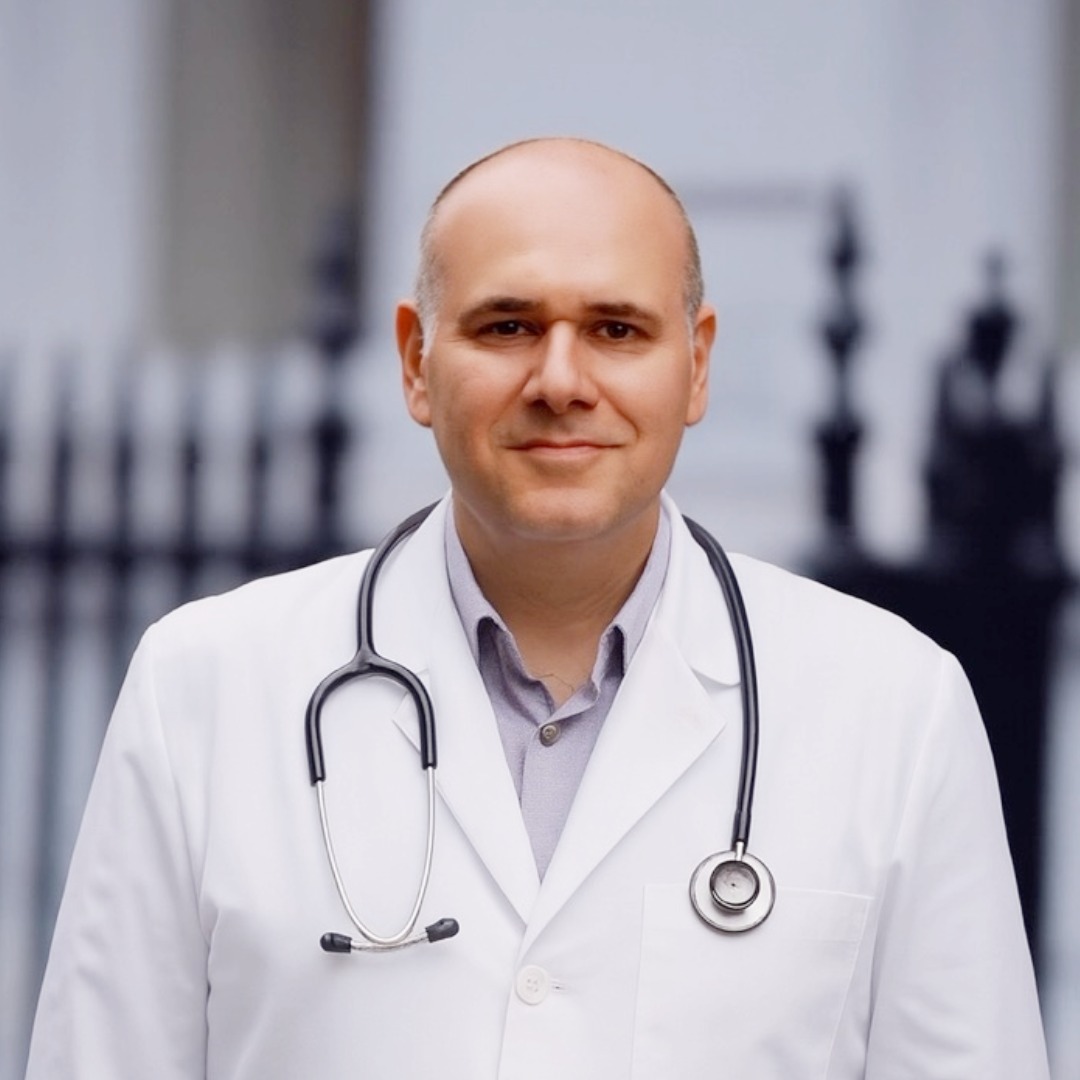
Dr Babak Soleimanpour, Medical Director and GP at London Private Ultrasound

Dr Babak Soleimanpour

Medical Director & GP

MD · MRCGP · DRCOG · Overall clinical governance responsibility

Mrs Hosna Rashidi, Consultant Sonographer at London Private Ultrasound

Mrs Hosna Rashidi

Consultant Sonographer

General, urological and male-health ultrasound assessment

Mr Pedram Aghaei, Co-founder and Ultrasound Consultant at London Private Ultrasound

Mr Pedram Aghaei

Co-founder & Ultrasound Consultant

Co-founder of London Private Ultrasound

Mrs Fatemeh Selahi, Co-founder and CQC Champion at London Private Ultrasound

Mrs Fatemeh Selahi

Co-founder & CQC Champion

Co-founder of London Private Ultrasound · CQC Champion supporting clinic standards and patient experience

Book online

Book Your Private Men’s STI Screening

£559 for the Standard screening, £829 for the Advanced, with the samples, the ultrasound, the GP appointment and the medication review in one visit. Call 020 7101 3377 if you would like to talk it through first, or if you are not sure which package fits.

Choose your package, clinic and appointment Secure online booking · 7 days a week

Secure online booking

Book your scan

Choose a time that suits you — we search every eligible specialist and confirm your appointment instantly.

Google4.8 / 5 Doctify4.89 / 5 1,200+ patient reviews Regulated by the Care Quality Commission (CQC) Payments secured by Stripe
  1. 1Appointment
  2. 2Your details
  3. 3Payment
  4. 4Confirmed
Questions

Men’s STI Screening: Frequently Asked Questions

The questions our team is asked most often, answered plainly and without hedging.

How much does a men’s STI screening cost in London?

The Standard screening is £559 and the Advanced screening is £829, both all-inclusive. That covers the samples, the laboratory work, the ultrasound, the GP appointment, the medication review and your written report.

Private STI test prices in London range from around £100 to several hundred, and the spread reflects what is bundled in. Lower prices generally cover the laboratory panel alone, without imaging or a doctor. Comparing the inclusions gives a more useful picture than comparing headline figures.

What is the difference between an STI test and an STD test?

In practice they describe the same infections and the same laboratory tests. STI is the term now generally preferred, because an infection can be present without ever causing disease or symptoms.

Whether you searched for an STI test, an STD test, a sexual health check or a GUM clinic, this is the service you are looking for.

Should I choose the Standard or the Advanced screening?

Symptoms determine the choice. Standard covers men without symptoms who want routine or precautionary screening: the four infections that make up standard UK screening, plus the testicular ultrasound and the GP appointment.

Advanced is designed for men who do have symptoms, such as discharge, pain on passing urine, urethral irritation, a sore, or testicular pain or swelling. It widens the panel to eleven organisms, adds urinary tract imaging, and includes a free phone consultation before you book so you are not guessing. If you are unsure which applies, call 020 7101 3377 and the team will help you decide.

What does the Standard screening test for?

HIV 1 and 2 with p24 antigen, and syphilis IgG and IgM, both from a blood sample. Chlamydia trachomatis and Neisseria gonorrhoeae from a urine sample. These four are what UK sexual health services screen for as standard in men without symptoms.

The Standard screening also includes a testicular ultrasound, a GP appointment and a medication review, which is what separates it from a laboratory-only STI panel.

What does the Advanced screening test for?

Everything in the Standard screening, plus hepatitis B surface antigen and hepatitis C antibodies and antigen from blood, and mycoplasma genitalium, ureaplasma urealyticum and parvum, trichomonas vaginalis, gardnerella vaginalis and herpes simplex I and II from urine.

It also upgrades the imaging to a Testes, kidney and urinary tract ultrasound, and includes a free phone consultation before booking. Turnaround for the Advanced laboratory panel is 4 working days.

Where do I get same-day STI testing in London?

Both of our clinics offer same-day STI testing appointments. Our Central London clinic is at 27 Welbeck Street, W1G 8EN, in the Harley Street Medical District, and our St Albans clinic is at 54–56 Victoria Street, AL1 3HZ. Both are open seven days a week from 9am to 7pm, and same-day and next-day appointments are frequently available. Call 020 7101 3377 to check what is free today, or book online.

A same-day appointment covers everything done in the clinic: the blood sample, the urine sample, the testicular ultrasound and the GP consultation. Ultrasound findings are explained before you leave. Laboratory results follow separately, with the Advanced panel taking 4 working days and the Standard panel taking 1–3 working days.

How long do the results take?

Ultrasound findings are explained on the day, in the appointment. The Advanced laboratory panel takes 4 working days. The Standard panel is a smaller set of tests and comes back in 1–3 working days.

Your written report sets out the findings and the recommended next step, and a referral letter is included if one is needed.

How long after sex should I wait before testing?

It depends on the infection, and this is the single most common reason a screening result is misleading. Chlamydia and gonorrhoea can be tested from about two weeks after exposure. Most HIV infections are picked up by four weeks on a fourth-generation test, with a negative result at 45 days taken as conclusive. Syphilis is often detectable from three to four weeks but needs a repeat at twelve weeks to be excluded properly. Hepatitis B and C can take up to three months.

If you have symptoms now, attend sooner rather than waiting for a window period to pass, because symptoms change what needs testing. And if you may have been exposed to HIV in the last 72 hours, this is not the right service: post-exposure prophylaxis is time-critical and you should go to A&E or an NHS sexual health clinic immediately.

How do I prepare for the appointment?

Try not to pass urine for at least an hour before your appointment, and ideally two, because the urine tests work best on a first-void sample. No fasting is needed. Bring a list of your current medication and supplements, including anything bought over the counter.

If you have a visible sore, blister, rash or discharge, point it out rather than waiting to be asked. It often changes which sample is most useful.

Why is a testicular ultrasound part of an STI screening?

Because in men, the things that prompt an STI test and the things that prompt a scrotal scan overlap constantly. Chlamydia and gonorrhoea can ascend to cause epididymo-orchitis, which presents as testicular pain and swelling. A lump that turns out to be a cyst, a varicocele or a hydrocele is common and reassuring to identify. Occasionally a swelling attributed to infection turns out to be something that needs urgent attention.

A laboratory panel cannot tell you any of that. Including the scan means one visit answers both questions rather than sending you somewhere else with a negative swab and an unexplained lump.

Do I need a GP referral?

No. You can book directly, without a referral from your NHS GP. If you have recent results, a clinic letter or a list of current medication, bring them, as they give useful clinical context.

Is the screening confidential?

Yes. The appointment, the samples, the discussion and your results are handled with strict medical confidentiality, in a private room. Nothing is shared with your NHS GP, your employer or anyone else without your consent.

One honest qualification: a small number of infections carry statutory public health reporting duties in England, handled by the laboratory and clinician in the usual way. If that applies to your result, your GP will explain exactly what it means before anything happens.

Can I be tested anonymously?

Testing is confidential, and it requires identification. We need your name and date of birth so that results, any treatment and any referral attach to the correct patient record. Identity checks are standard practice across UK sexual health services for this reason.

What happens if a result is positive?

Your GP contacts you, explains what the result means and sets out the next step. Some infections can be managed straightforwardly in primary care. Others, including HIV, syphilis, gonorrhoea and hepatitis B or C, are managed by specialist NHS sexual health services, both because that is where the expertise sits and because of antibiotic resistance monitoring and follow-up testing.

Where a specialist service is the right route, you are referred there with confirmed laboratory results, which makes that appointment considerably more productive than arriving with a question. Your GP will also talk through partner notification, which matters and is more manageable than most people expect.

Can you treat an infection you find?

Some of them, yes, and your GP will tell you clearly which category your result falls into rather than leaving it vague. Treatment and any medication are not included in the screening price.

For the infections that belong in specialist care, referral is the standard clinical route, and you are referred with confirmed laboratory results. Partner notification, test of cure and antibiotic resistance monitoring are all part of managing those infections properly.

Do you test the throat and rectum as well?

A urine sample tests the urethra. It does not test the throat or the rectum, and a negative urine result does not exclude an infection at either site. If you have had oral or anal sex, those sites need their own swabs to be covered.

Tell the team when you book so this can be arranged or you can be directed to the right service. Site-specific testing is a standard part of sexual health assessment and is worth raising before your appointment.

Are NHS sexual health clinics free?

Yes. NHS sexual health services in London provide STI testing and treatment free of charge, and free postal self-sampling kits are available through them. They also offer throat and rectal swabs routinely, and full partner notification services including anonymous routes.

A private men’s STI screening covers different ground: an appointment at short notice, a testicular ultrasound in the same visit, a GP consultation and examination included, and an extended eleven-organism panel where symptoms need investigating.

Are home STI test kits as good as clinic testing?

For a man with no symptoms who takes the samples correctly, a home kit tests for much the same infections and is a reasonable option. The limitations are the ones you would expect: nobody examines you, nothing is imaged, sampling errors are invisible, and a positive result arrives without a clinician attached to it.

Where symptoms are present, clinical assessment adds what a kit cannot: examination, imaging where the scrotum or urinary tract is involved, and a wider panel selected around what you describe.

I have no symptoms. Is screening still worth doing?

Yes, and this is the main argument for it. Chlamydia in particular is frequently symptomless in men, and HIV, syphilis and hepatitis can all be carried for long periods without anything noticeable.

Routine screening after a change of partner, after unprotected sex, or before stopping barrier protection with a new partner is standard practice and is recommended by UK sexual health services.

Does this cover HPV, genital warts or lumps on the skin?

There is no routine HPV screening test for men, so HPV is not included in either panel. Warts and most skin lesions are diagnosed by looking at them rather than by a laboratory test, which is one more reason the GP appointment is part of the package.

If you have noticed a lump, a growth or a change in the skin, mention it at the appointment and it can be examined.

What is not included?

Treatment and any medication that follows from your results are priced separately. Throat and rectal swabs are not part of the standard panels and need to be arranged. HPV testing, semen analysis and fertility testing are not included.

Hormone testing is not part of this screening. Where the concern is erectile function, testosterone or libido, our erectile dysfunction assessment covers that pathway instead.

When should I seek urgent care instead of booking a screening?

Go to A&E now, rather than booking, if you have sudden severe testicular pain, which can indicate testicular torsion and is time-critical; a painful, swollen scrotum with fever or feeling generally unwell; or an inability to pass urine.

Also go straight to A&E or an NHS sexual health clinic, without waiting for a test, if you think you may have been exposed to HIV within the last 72 hours. Post-exposure prophylaxis only works inside that window and a screening test will not help you in time.

Where can I get a men’s STI screening near me in London?

London Private Ultrasound has two clinics. Central London is at 27 Welbeck Street, W1G 8EN, in the Harley Street Medical District, a short walk from Bond Street, Oxford Circus and Marylebone. St Albans is at 54–56 Victoria Street, AL1 3HZ.

Both are open seven days a week, 9am to 7pm, with same-day appointments frequently available.

Related services

Choose a focused scan, a broader health check or a specialist pathway if your concern extends beyond infection screening.

Private Sexual Health Clinic

Confidential GP-led support for STI testing, symptoms, exposure concerns, PrEP or PEP guidance, treatment planning and follow-up.

Testicular Ultrasound Scan

A focused ultrasound for testicular pain, swelling, lumps, cysts, varicocele, hydrocele or other scrotal concerns.

Testes Health Check

Testicular ultrasound combined with infection screening, GP review and pharmacist input for a broader same-day assessment.

Erectile Dysfunction Test

A structured assessment for erectile function, libido, hormones and wider physical contributors rather than infection alone.

Men’s Hormone Profile

A detailed hormone assessment for testosterone, libido, energy, fertility concerns and related endocrine patterns.

Male Fertility Test

Semen analysis, testicular ultrasound and clinical review, with an advanced option that adds a full male hormone profile.

Medical disclaimer. This page is general information and does not replace individual medical advice. No STI screening can exclude every infection: results depend on the window period since exposure, on which sites of the body are sampled, and on the tests selected, and a negative result from a urine sample does not exclude infection of the throat or rectum. Testing does not replace treatment, and some infections require specialist NHS sexual health care. Seek urgent medical attention rather than booking a routine appointment if you have sudden severe testicular pain, a painful swollen scrotum with fever, or an inability to pass urine. If you may have been exposed to HIV within the last 72 hours, attend A&E or an NHS sexual health clinic immediately, as post-exposure prophylaxis is time-critical.

Scroll to Top