Harley Street, Central London & St Albans · 7 days a week

Private Prostate and Bladder Ultrasound Scan in London

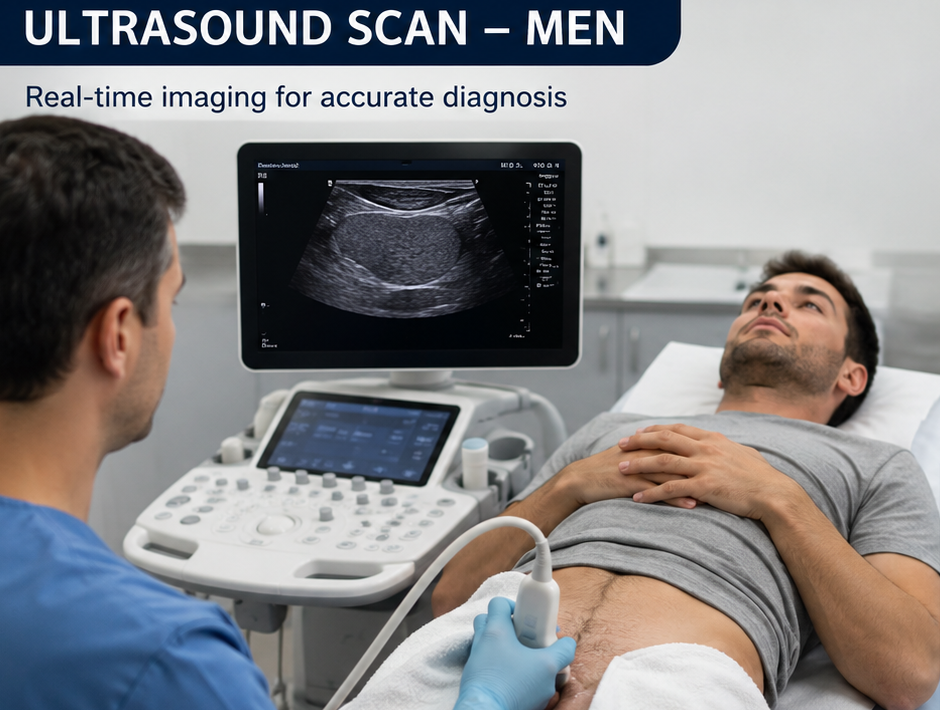
A prostate and bladder ultrasound is a painless scan that measures prostate size and volume, checks the bladder wall and shows how much urine is left after you empty.

It is used for a weak stream, getting up at night, an enlarged prostate or a raised PSA.

It costs £219 with no GP referral, and your report follows within 24 hours.

  • £219 all-inclusive
  • No GP referral
  • Nothing inserted
  • Report in 24 hours
  • Volume & residual urine
  • Open 7 days
Want PSA and a GP review too?

The Prostate Health Check adds a PSA test, urine and blood tests and a GP results appointment for £599. Compare both options.

Quick facts

Prostate and Bladder Ultrasound at a Glance

Prostate and bladder ultrasound quick facts
Price£219 all-inclusive · Prostate Health Check with PSA, bloods and GP review £599
What it checksProstate size and volume · bladder wall and contents · post-void residual urine · bladder stones · median lobe
Scan typeTransabdominal, over the lower abdomen. Nothing is inserted and it is not a transrectal (TRUS) scan.
TimeScan 10–15 minutes · allow 20–30 minutes for the appointment
PreparationDrink 2–4 glasses of water about an hour before and arrive with a comfortably full bladder. No fasting.
ResultsExplained on the day · written report with images within 24 hours
ReferralNo GP referral needed
Where & when27 Welbeck Street, W1G 8EN · 54–56 Victoria Street, St Albans AL1 3HZ · 7 days, 9am–7pm
Choose your appointment

Prostate Scan or Full Prostate Health Check?

The scan shows how big your prostate is and how well your bladder empties. If you also want a PSA result and a doctor to read everything together, the Prostate Health Check combines tests with a follow-up GP results appointment.

Prostate & Bladder Ultrasound

The measurements, without the blood tests

£219

Scan only, all-inclusive. PSA and blood tests are not part of this option.

  • Prostate size and volume in mL
  • Bladder wall checked and residual urine measured
  • Nothing inserted and no needles
  • Findings explained on the day, report in 24 hours
Book prostate scan · £219
More comprehensive

Prostate Health Check

Tests with a follow-up GP review

£599

Scan, PSA, urine and bloods, all reviewed by a GP. A GP reviews the results at a follow-up appointment.

  • Prostate, kidney and bladder ultrasound
  • PSA blood test and urine analysis
  • Blood profile of about 25 markers
  • 30-minute GP results appointment
  • Pharmacist medication review
Book Prostate Health Check · £599
Book online

Book Your Prostate Ultrasound in London

Choose Central London or St Albans and a time that suits you. Select a clinic to check current appointment availability.

Choose your appointmentSecure booking · patients aged 18 and over
Book prostate and bladder ultrasound · £219 Book Prostate Health Check · £599

Check live dates and clinic availability on the booking page. Need help choosing? Call 020 7101 3377 or message us on WhatsApp.

What is included

What a Prostate and Bladder Ultrasound Scan Actually Examines

Most men book this expecting a look at the prostate alone. The same appointment also assesses the bladder and how completely it empties, because urinary symptoms usually come from the two working against each other.

Prostate size and volume

Length, width and height are measured and volume is calculated in mL, the figure your GP or urologist needs.

Bladder wall

Wall thickening, trabeculation from long-term strain and diverticula are easiest to see when the bladder is full.

Post-void residual urine

Bladder volume before and after you empty, the single most useful number for judging whether it empties properly.

Median lobe and bladder neck

A median lobe pushing into the bladder often explains obstructive symptoms better than prostate volume alone.

Bladder stones and debris

Stones and sediment are common in men who do not empty fully, and are readily seen on ultrasound.

Lower urinary tract

Anything else in view is described in your report, so nothing obvious is missed, with referral advice where needed.

Before your appointment

How to Prepare for Your Prostate Ultrasound Scan

Twenty to thirty minutes from arrival to leaving. Nothing is inserted, there are no needles, and you stay dressed apart from lowering your waistband.

1 hrBefore

Drink 2 to 4 glasses of water

Then hold on. A full bladder pushes the bowel out of the way and gives a clear window onto the prostate. Do not increase fluids if a clinician has told you to restrict them.

BringWith you

Previous PSA results and scan reports

Your sonographer reviews your symptoms, medication and any earlier results, which makes your report more useful.

WearOn the day

Clothing you can lower at the waistband

No fasting, no medication changes, no bowel preparation and no enema.

Tell usOn arrival

If your bladder is uncomfortably full

Let the team know and we will bring you in sooner. After the scan you can eat, drive and work as normal straight away.

Find us

Prostate Ultrasound Near Me: Central London and St Albans

Prostate and bladder ultrasound at both clinics, 7 days a week from 9am to 7pm, subject to availability.

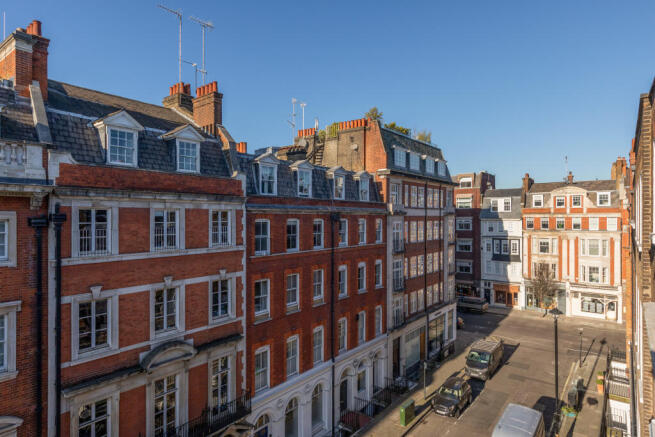
London Private Ultrasound clinic at 27 Welbeck Street, Harley Street Medical District

Central London: Harley Street Medical District

27 Welbeck Street, London W1G 8EN

Two minutes from Bond Street (Elizabeth, Central and Jubilee lines), five from Oxford Circus and eight from Marylebone.

020 7101 3377 · Get directions

London Private Ultrasound clinic, Victoria Street, St Albans

St Albans: Hertfordshire

54–56 Victoria Street, St Albans AL1 3HZ

A short walk from St Albans City station, with parking nearby. Serving Hertfordshire and North London.

020 7101 3377 · Get directions

Accredited · Regulated · Trusted

Registered & Regulated

Your scan sits within a CQC-registered service, delivered and reviewed by clinicians on the UK’s professional registers.

Care Quality Commission

Independent regulator of health and social care in England.

General Medical Council

Register for doctors, including the GP who reviews your results.

General Pharmaceutical Council

Regulator for pharmacists, including our pharmacist prescriber.

Royal College of General Practitioners

Professional body setting standards for general practice.

British Medical Ultrasound Society

Professional standards for medical ultrasound in the UK.

Who you will see

Meet Your Prostate Health Team

Dr Babak Soleimanpour, Medical Director & GP at London Private Ultrasound

Dr Babak Soleimanpour

Medical Director & GP

MD · MRCGP · DRCOG · GMC 6060555 · leads the 30-minute GP results appointment in the Prostate Health Check

Mr Ali Aghaei, Pharmacist Prescriber at London Private Ultrasound

Mr Ali Aghaei

Pharmacist Prescriber

MPharm · carries out the medication review in the Prostate Health Check, including medicines that affect the bladder, kidneys and PSA

Mr Pedram Aghaei, Co-founder & Medical Writer at London Private Ultrasound

Mr Pedram Aghaei

Co-founder & Medical Writer

BMUS · SVT · SoR · patient information and content governance

Questions

Prostate Ultrasound Scan: Frequently Asked Questions

How much does a private prostate ultrasound scan cost in London?

A private prostate and bladder ultrasound scan at London Private Ultrasound is £219, all-inclusive, at both our Central London and St Albans clinics. That covers the appointment, every measurement (prostate volume, bladder assessment and post-void residual), your findings explained on the day, a written report with images within 24 hours and a referral letter to your GP or a urologist if a finding needs investigating.

Across the UK, private prostate ultrasound generally runs from around £150 to £400 at self-pay clinics, and from about £450 for consultant-led scans in the Harley Street area. When you compare prices, check whether bladder assessment, post-void residual measurement and a written report are included. Adding PSA, urine testing and a GP review takes it to £599 as the Prostate Health Check.

On the NHS the scan has no direct cost once your GP has referred you, but routine imaging waiting times vary by area. Booking privately buys the appointment time and the turnaround, not a different scan.


Why would a doctor order a prostate ultrasound?

Most often for lower urinary tract symptoms. These are common from the mid-forties onward and are usually caused by benign prostate enlargement (BPH) rather than anything sinister. The scan provides measurements your clinician can interpret alongside your symptoms and other tests; it cannot determine the cause on its own.

Typical reasons are a weak or slow stream, getting up at night to pass urine, frequency and urgency, a feeling that you are not emptying fully, a raised or borderline PSA, and monitoring known BPH over time or before and after starting medication such as an alpha blocker or finasteride.

A large prostate can raise PSA on its own, so the measured volume lets your clinician calculate PSA density and put a borderline result in context. If your kidneys also need checking, for example because of suspected stones or reduced kidney function, the kidney, bladder and urinary tract scan covers the prostate plus both kidneys and the ureters in one appointment.

How is an ultrasound of the prostate performed?

You lie on your back with a comfortably full bladder. Warm gel is applied to the lower abdomen and a handheld probe is moved over the skin above the pubic bone to image the prostate and bladder. Your sonographer records prostate dimensions, bladder volume and bladder wall appearance.

You then empty your bladder and return for a brief re-scan so the remaining volume can be measured. Nothing is inserted at any point and the whole appointment takes 20 to 30 minutes.

How painful is a prostate ultrasound?

A transabdominal prostate ultrasound is not painful. The gel is warmed and the probe rests lightly on the skin above the pubic bone. There are no needles and nothing is inserted.

The only discomfort most men report is holding a full bladder for the first part of the scan, which is over within about ten minutes. If you are struggling, tell your sonographer and they will prioritise the measurements that need a full bladder.

Is this a transrectal ultrasound?

No. This is a transabdominal scan, performed entirely from the outside over the lower abdomen. Nothing is inserted and no bowel preparation is needed.

Transrectal ultrasound (TRUS) places a slim probe in the rectum for a closer view of the prostate zones and for real-time needle guidance. It is mainly used to guide a prostate biopsy under urology care, and UK guidance now favours MRI before biopsy, so TRUS is used more selectively than it once was.

A transabdominal scan is the usual first-line test for urinary symptoms and suspected prostate enlargement, which is why it is the £219 scan on this page. If your results suggest further investigation is needed, your report contains the measurements and findings a urologist would want.

Do I need a GP referral for a private prostate scan?

No. You can self-refer and book directly online or by calling 020 7101 3377. If you already have a GP referral letter, previous PSA results or earlier scan reports, bring them, as they give your sonographer useful clinical context and make the report more valuable.

What is a normal prostate volume on ultrasound?

In younger adult men the prostate is generally around 20 to 30 mL. Volumes above roughly 30 mL are usually described as enlarged. Enlargement is extremely common with age and is not in itself a sign of cancer.

Thresholds vary between guidelines, and volume only means something alongside your symptoms, examination and PSA. Your report gives your measured figure and your GP or urologist interprets it in context.

What counts as a normal post-void residual?

Small residual volumes are normal, and figures under about 50 mL are generally considered insignificant. Persistently higher residuals suggest the bladder is not emptying completely and are usually a trigger for urology review.

A single measurement can be affected by how full your bladder was and how relaxed you felt, so a borderline result is often repeated rather than acted on immediately.

Can ultrasound detect prostate cancer?

Not reliably, and it cannot rule it out. Ultrasound measures size and shows visible structural change, but diagnosing prostate cancer requires PSA testing, clinical assessment, multiparametric MRI and usually a biopsy.

This scan is a urinary function and structure test, not a cancer screening test. If your history or measurements raise concern, that is stated in your report along with advice on onward referral.

How does prostate volume relate to my PSA?

A larger prostate produces more PSA, so a big gland can push PSA above the usual reference range without anything sinister going on. Dividing PSA by prostate volume gives PSA density, which helps your clinician judge whether a borderline PSA is explained by size or warrants investigating further.

That calculation needs both numbers, which is why many men book this scan and a PSA test together, or choose the Prostate Health Check.

What is the difference between a prostate ultrasound, a PSA test and an MRI?

They answer different questions. Ultrasound answers “how big is the prostate and is my bladder coping”. A PSA blood test measures a chemical marker made by prostate tissue, which rises with enlargement, inflammation, infection and cancer alike, and is most informative alongside prostate volume. Multiparametric MRI detects and localises suspicious areas within the prostate and is used when prostate cancer is suspected, normally after PSA and clinical assessment.

Most men with urinary symptoms start with ultrasound and PSA. MRI is done in a hospital imaging department and is not part of this scan. PSA is available as a private blood test.

Does the scan involve radiation?

No. Ultrasound uses sound waves. There is no ionising radiation, no injection and no contrast dye, so the scan is safe to repeat as often as clinically needed, which makes it well suited to monitoring prostate volume and residual urine over time.

How long does a prostate ultrasound take and when do I get results?

The scanning itself takes about 10 to 15 minutes, and you should allow 20 to 30 minutes for the full appointment including your history, the post-void re-scan and the discussion of findings.

Your sonographer explains the main findings before you leave, and a written report with key images is emailed within 24 hours, together with a referral letter if anything needs onward investigation.

Do I need a full bladder for a prostate ultrasound?

Yes, for the first part of the scan. Drink 2 to 4 glasses of water about an hour beforehand and arrive with a comfortably full bladder. A full bladder pushes the bowel out of the way and gives a clear window onto the prostate. Do not increase fluids if a clinician has told you to restrict them.

You then empty your bladder and return for a short re-scan. If your bladder becomes uncomfortably full before your appointment, tell the team and we will bring you in sooner. No fasting, medication changes or bowel preparation are needed.

When should I seek urgent help instead of booking a prostate scan?

Do not book a routine scan if you have visible blood in your urine, even once, complete inability to pass urine, painful retention, fever with flank pain, severe lower abdominal pain, new leg weakness or numbness, loss of bladder or bowel control, or unexplained weight loss with persistent bone or back pain.

These need same-day assessment through your GP, NHS 111 or A&E.

Where can I get a prostate ultrasound scan near me in London?

London Private Ultrasound has two clinics. Central London is at 27 Welbeck Street, W1G 8EN, in the Harley Street Medical District, a short walk from Bond Street, Oxford Circus and Marylebone. St Albans is at 54 to 56 Victoria Street, AL1 3HZ.

Both offer the prostate and bladder ultrasound seven days a week, 9am to 7pm, subject to availability.

Medical disclaimer. This page is general information and does not replace individual medical advice. A prostate and bladder ultrasound is a diagnostic imaging test and cannot on its own confirm or exclude prostate cancer. Reference figures quoted are typical adult guides, not a diagnosis. Seek urgent medical attention (your GP, NHS 111 or A&E) rather than booking a routine scan if you have visible blood in your urine, cannot pass urine, or have fever with flank pain or severe lower abdominal pain.

Written byMr Pedram Aghaei, Co-founder & Medical Writer
Clinically reviewed byDr Babak Soleimanpour, Medical Director, GMC 6060555
Scroll to Top