Medical Conditions
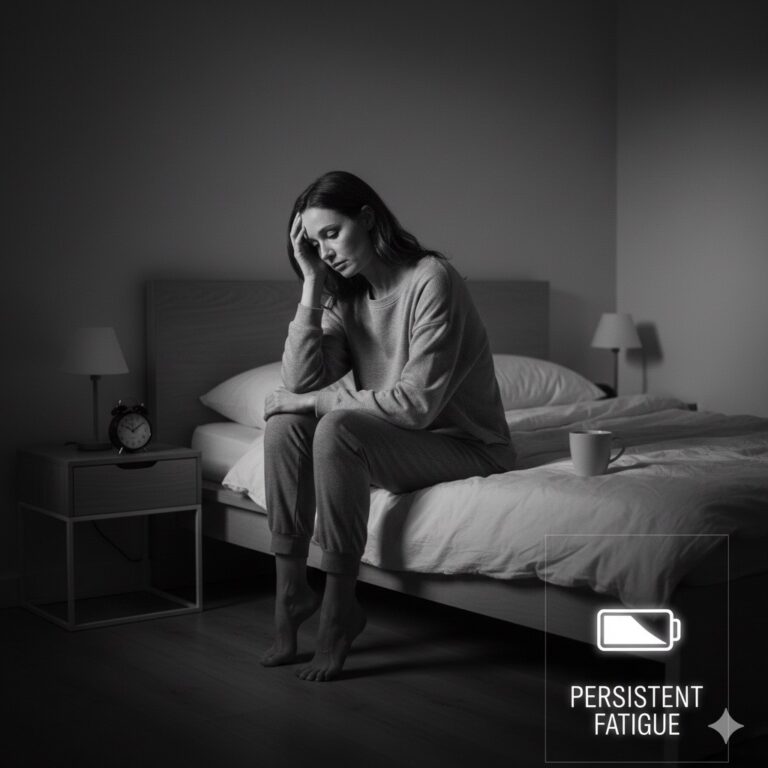
Persistent fatigue
Private GP assessment with fast access to expert medical advice.
Persistent fatigue is ongoing tiredness or lack of energy that does not improve with rest. It can affect concentration, motivation, physical performance, and day-to-day life.
A private GP assessment helps identify possible underlying causes and provides clear guidance on the most appropriate next steps.
What is persistent fatigue?
Persistent fatigue describes a prolonged feeling of physical or mental exhaustion that interferes with daily life and does not resolve with sleep or rest. It often develops gradually and can affect memory, focus, motivation, and physical stamina.
Rather than being a condition in itself, persistent fatigue is usually a signal that the body is under strain. It may be linked to underlying medical issues, hormonal imbalance, nutritional deficiencies, chronic stress, or recovery from illness. In many cases, multiple factors contribute at the same time.
Because symptoms can be subtle and overlap with other conditions, identifying the cause often requires a structured medical assessment rather than assumptions or self-treatment.
Why persistent fatigue should be medically assessed?
Ongoing fatigue can have multiple overlapping causes, many of which present with similar symptoms. Without clinical assessment, it is easy to overlook treatable or important underlying conditions.
A private GP assessment helps to:
-
Identify potential medical or hormonal causes
-
Exclude more serious underlying conditions
-
Avoid unnecessary or inappropriate testing
-
Provide clarity and reassurance
-
Create a clear plan for next steps
Early assessment often leads to faster resolution or reassurance.
Why see a private GP for persistent fatigue?
Seeing a private GP allows you to be assessed promptly, without NHS waiting times or referral requirements.
A private GP appointment provides:
-
Face-to-face consultation with an experienced doctor
-
Time to discuss symptoms in detail
-
Full clinical assessment rather than symptom-based advice
-
Clear explanation of findings and options
This ensures your care is personalised, structured, and clinically appropriate.
What happens during your GP appointment?
Your consultation focuses on understanding the whole picture, not just one symptom.
During your appointment, your GP will:
-
Take a detailed medical, lifestyle, and symptom history
-
Explore sleep, stress, nutrition, and energy patterns
-
Assess possible physical or systemic contributors
-
Decide whether investigations, monitoring, or referral are needed
Where appropriate, your GP can arrange blood tests, health checks, follow-up appointments, or specialist referrals.
When to book a GP appointment for fatigue?
You should consider booking a private GP appointment if fatigue:
-
Has lasted several weeks or longer
-
Is unexplained or worsening
-
Is affecting work, daily life, or concentration
-
Is associated with weight change, dizziness, low mood, or poor sleep
A GP consultation is the safest and most efficient first step.
When to book a GP appointment for fatigue?
You should consider booking a private GP appointment if fatigue:
-
Has lasted several weeks or longer
-
Is unexplained or worsening
-
Is affecting work, daily life, or concentration
-
Is associated with weight change, dizziness, low mood, or poor sleep
A GP consultation is the safest and most efficient first step.
Book a private GP appointment
If you are experiencing persistent fatigue and want clarity, a private GP appointment provides fast access to expert medical advice and a clear plan.
Appointments are available in Central London and St Albans.
No referral is required.
Book your GP appointment using the calendar below or contact our team for advice.
Book Online using the calendar below
If you are unable to make a payment online, please call our office to book your appointment tel: 020 7101 3377. We’re here to assist you 7 days a week, 9am - 7pm.
*Please select time to proceed with the booking*
Health checks for ongoing or unexplained symptoms
For patients with ongoing or unexplained symptoms such as fatigue, a health check may be recommended as part of a broader assessment.
Health checks can help to:
-
Assess overall health and risk factors
-
Identify early signs of underlying conditions
-
Provide reassurance where results are normal
-
Support preventative and long-term health planning
Your GP will advise whether a health check is appropriate and which assessments are most relevant based on your symptoms and medical history.
Not sure where to start?
If you are unsure whether you need a GP appointment or a health check, start with a private GP consultation. Your doctor will guide you on the most appropriate next step.
Common symptoms assessed during a private GP appointment
Many symptoms do not immediately point to a single diagnosis.
A private GP appointment allows a doctor to assess your symptoms, medical history, and overall health, then decide whether further investigation, monitoring, or referral is needed.
This page highlights common symptoms and conditions frequently assessed during a private GP consultation.
If you are unsure what is causing your symptoms, booking a GP appointment is the most appropriate first step.
Chest infection
Infection affecting the lungs or airways, often causing cough, breathlessness, chest discomfort, and fever.
Colds and coughs
Common viral infections causing runny nose, sore throat, coughing, and general malaise.
Asthma
A long-term condition causing wheezing, shortness of breath, chest tightness, and coughing.
Back pain
Pain or stiffness affecting the upper or lower back, ranging from mild to severe.
We’re at your service
Health checks and blood tests with GP-led review and clear next steps.
Private health checks with GP-led review and clear clinical guidance.
A complete range of private blood tests, selected and reviewed by a GP to support accurate diagnosis and next steps.
Appointment by filling The form online
Tosser cheesed off tinkety tonk old fruit arse over tit give us.