
Endometrial Wall Thickness: What’s Normal and What’s Not?
The endometrial wall thickness, or endometrial lining, plays a crucial role in reproductive health. The thickness of this lining varies throughout the menstrual cycle and changes based on factors like age, hormonal levels, pregnancy, and menopause. Monitoring normal endometrial thickness is essential for diagnosing conditions such as infertility, abnormal bleeding, endometrial hyperplasia, and cancer.
This guide will explain what normal endometrial thickness is, how it is measured, and what abnormalities may indicate.
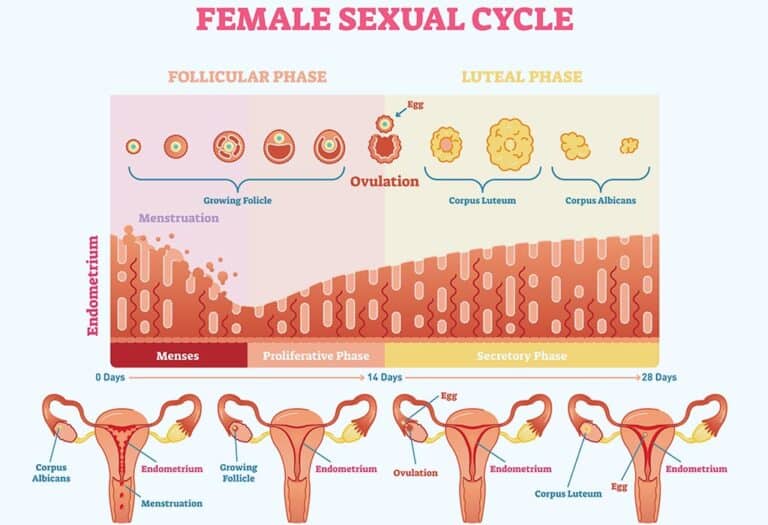
What is Endometrial Thickness?
The endometrial lining is the inner layer of the uterus that thickens and sheds each month during the menstrual cycle. It is measured in millimeters (mm) via transvaginal ultrasound.
A normal endometrial thickness depends on:
✅ Menstrual cycle phase (pre-ovulation vs. post-ovulation).
✅ Age (premenopausal vs. postmenopausal).
✅ Pregnancy status (implantation vs. miscarriage risk).
Normal Endometrial Thickness by Menstrual Cycle Phase
| Menstrual Phase | Endometrial Thickness (mm) | Description |
|---|---|---|
| Menstrual (Days 1–5) | 1–4 mm | The endometrium is thin as the lining is shedding. |
| Early Proliferative (Days 6–10) | 5–7 mm | The lining begins to rebuild under estrogen influence. |
| Late Proliferative / Pre-Ovulatory (Days 11–14) | 8–11 mm | The lining thickens in preparation for implantation. |
| Secretory / Luteal (Days 15–28) | 7–16 mm | The endometrium reaches its thickest state, ready for potential pregnancy. |
👉 Normal range for reproductive-aged women: 2–16 mm, depending on the cycle phase.
Endometrial Thickness in Postmenopausal Women
After menopause, estrogen levels decline, leading to a thinner endometrial lining.
| Postmenopausal Status | Normal Endometrial Thickness |
|---|---|
| No bleeding (asymptomatic) | ≤ 4–5 mm |
| Postmenopausal bleeding present | > 5 mm requires further evaluation |
🔴 Thickened endometrium (>5 mm in postmenopausal women) may indicate hyperplasia or endometrial cancer and requires further testing (e.g., biopsy, hysteroscopy).
Normal Endometrial Thickness During Pregnancy
In early pregnancy, the endometrial lining is essential for embryo implantation and fetal support.
| Pregnancy Stage | Expected Endometrial Thickness |
|---|---|
| Early pregnancy (4–5 weeks) | 8–13 mm |
| First trimester | > 10 mm |
| Miscarriage risk | < 7 mm may indicate a non-viable pregnancy |
📌 A thick endometrium without a visible embryo may suggest early pregnancy, ectopic pregnancy, or gestational trophoblastic disease.
What is Considered an Abnormal Endometrial Thickness?
1. Thin Endometrial Lining (< 7 mm)
✅ Possible Causes:
- Low estrogen levels
- Asherman’s Syndrome (uterine scarring)
- Chronic inflammation (endometritis)
- Poor blood flow to the uterus
🚨 Effects on Fertility:
A thin endometrial lining (<7 mm) may reduce implantation success and increase the risk of miscarriage.
💡 Treatment Options:
- Estrogen therapy (HRT, estradiol patches)
- Platelet-rich plasma (PRP) injections
- L-Arginine & Vitamin E to improve blood flow
2. Thickened Endometrium (> 16 mm in reproductive-age women, > 5 mm in postmenopausal women)
✅ Possible Causes:
- Endometrial hyperplasia (thickening due to excess estrogen)
- Polycystic ovary syndrome (PCOS)
- Hormone therapy (HRT)
- Endometrial cancer (especially if postmenopausal bleeding occurs)
🚨 Symptoms of Endometrial Thickening:
- Heavy or irregular menstrual bleeding
- Postmenopausal bleeding
- Pelvic pain or discomfort
💡 Next Steps:
- Endometrial biopsy to rule out hyperplasia/cancer
- Hysteroscopy (uterine examination with a camera)
- Progesterone therapy to balance estrogen levels
How is Endometrial Thickness Measured?
A transvaginal ultrasound (TVS) is the most accurate method for measuring endometrial thickness.
Procedure
1️⃣ A thin ultrasound probe is inserted into the vagina.
2️⃣ The uterus and endometrium are displayed on a monitor.
3️⃣ The thickness is measured from the basal layer to basal layer.
📌 Time Required: 10–15 minutes
📌 Best Time to Measure: Days 10–14 of the cycle (pre-ovulation phase)
FAQs About Endometrial Thickness
1. What is the normal endometrial thickness for fertility?
For successful implantation, 7–16 mm is ideal. A lining <7 mm may reduce pregnancy chances.
2. What if my endometrial lining is too thick?
Thickening >16 mm in reproductive women or >5 mm in postmenopausal women requires further evaluation. Possible causes include hyperplasia, PCOS, or endometrial cancer.
3. Can I get pregnant with a thin endometrial lining?
Yes, but implantation success is lower. Treatments like estrogen therapy, PRP injections, or supplements can help improve thickness.
4. Does HRT affect endometrial thickness?
Yes, hormone replacement therapy (HRT) can cause mild thickening, but excessive growth may increase cancer risk.
5. Is an endometrial thickness of 4 mm normal after menopause?
Yes, a thin endometrial lining (<5 mm) is normal in postmenopausal women without bleeding.
6. How can I naturally improve my endometrial thickness?
- Increase blood flow: Exercise, acupuncture
- Eat nutrient-rich foods: Omega-3s, leafy greens
- Try supplements: Vitamin E, L-Arginine
7. When should I see a doctor about my endometrial thickness?
- If you experience abnormal bleeding.
- If you have postmenopausal bleeding.
- If your fertility specialist recommends monitoring during IVF or pregnancy planning.
Conclusion
Understanding endometrial thickness is crucial for fertility, menstrual health, and early detection of gynecological conditions. While thickness naturally varies throughout the menstrual cycle, abnormalities such as a persistently thin or thickened endometrium may require medical evaluation.
If you’re concerned about your endometrial lining measurement, consult a gynecologist or book a transvaginal ultrasound for a detailed assessment. Early detection and treatment can help maintain optimal reproductive health and improve fertility outcomes.
🔎 Need an Endometrial Thickness Scan?
To book online select the date and time that suits you best – alternatively, please contact us with any questions via the chat, call or email links provided.
Telephone: 020 7101 3377