
Echocardiogram: What Is It, Types, Preparation, and More
An echocardiogram, commonly known as an echo, is a non-invasive diagnostic test that uses ultrasound waves to create images of the heart. This test provides detailed information about the heart’s structure and function, making it essential for diagnosing and monitoring various cardiac conditions. Here’s a comprehensive guide on what an echocardiogram entails, its types, preparation, and other key aspects.
What Is an Echocardiogram?
An echocardiogram is an imaging test that uses high-frequency sound waves (ultrasound) to produce detailed images of the heart. These images allow healthcare providers to observe the heart’s size, shape, and movement, as well as the functioning of its chambers and valves.
Purposes of an Echocardiogram
- Assessing the overall function of the heart
- Evaluating the heart valves and chambers
- Detecting congenital heart defects
- Monitoring the progression of heart diseases
- Guiding treatment decisions
Types of Echocardiograms
1. Transthoracic Echocardiogram (TTE)
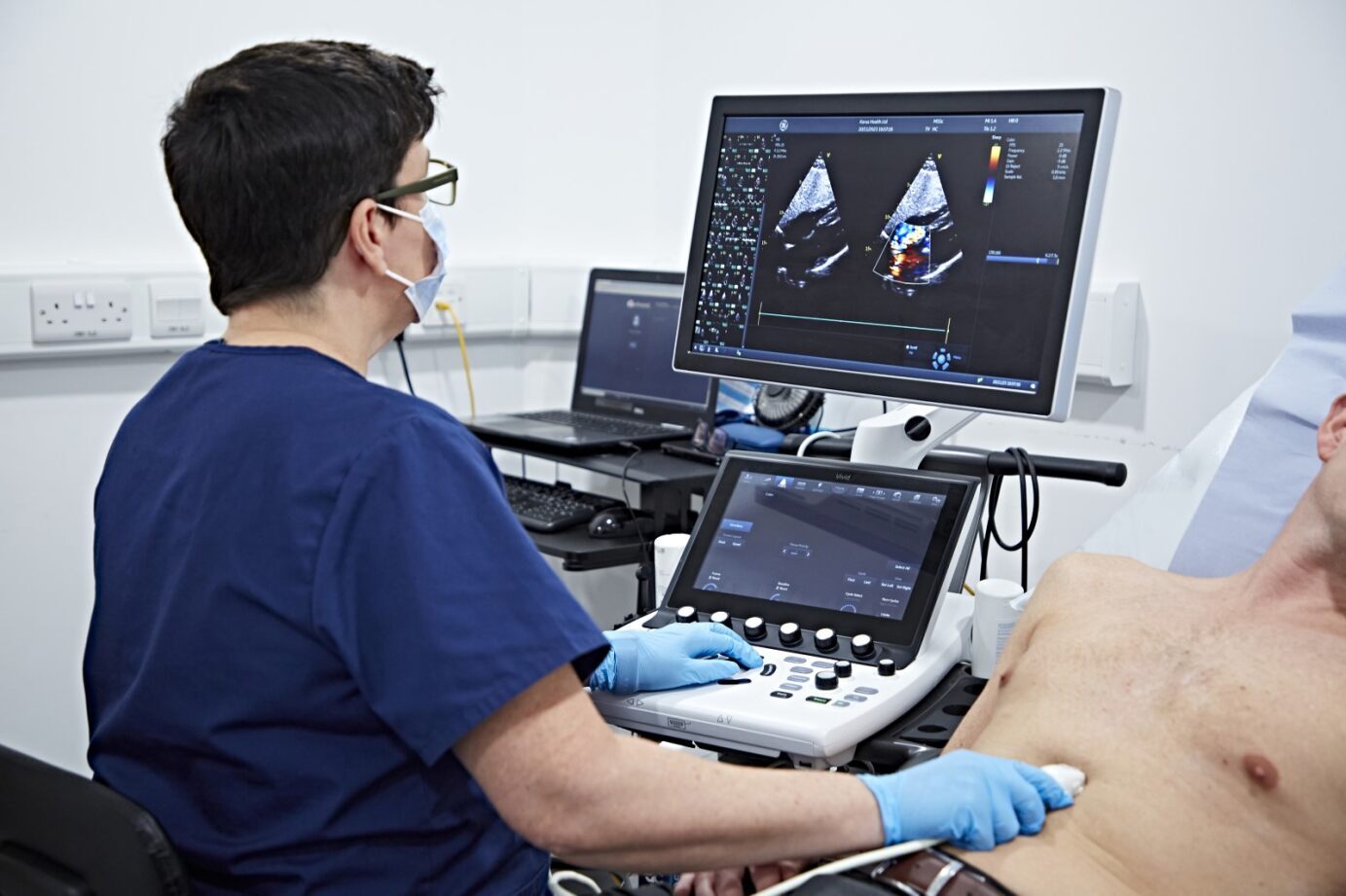
The most common type of echocardiogram, TTE, involves placing a transducer on the chest wall. The transducer emits sound waves that bounce off the heart structures, creating images on a monitor.
2. Transesophageal Echocardiogram (TEE)
In TEE, a specialized transducer is inserted into the esophagus, providing closer and clearer images of the heart. This method is particularly useful for detailed views of the heart’s valves and chambers.
3. Stress Echocardiogram
This type of echocardiogram assesses how the heart functions under stress, either induced by exercise or medication. It helps identify issues that might not be visible when the heart is at rest.
4. Doppler Echocardiogram
Doppler echocardiography measures the speed and direction of blood flow within the heart. It is used to evaluate blood flow patterns, detect abnormalities, and measure pressures within the heart chambers.
5. 3D Echocardiogram
A 3D echocardiogram provides three-dimensional images of the heart, offering a more detailed and accurate view of its structure and function. It is particularly useful for planning complex heart surgeries.
Preparation for an Echocardiogram
General Preparation
- Clothing: Wear comfortable, loose-fitting clothes. You may be asked to change into a hospital gown.
- Diet: No specific dietary restrictions are usually required for a standard echocardiogram. However, if you are scheduled for a transesophageal echocardiogram (TEE), you may need to fast for a few hours before the test.
- Medications: Continue taking your usual medications unless instructed otherwise by your doctor. Inform your healthcare provider of all medications and supplements you are taking.
Specific Instructions for TEE
- Fasting: Avoid eating or drinking for at least 6 hours before the procedure.
- Sedation: You will be sedated during a TEE, so arrange for someone to drive you home afterward.
What to Expect During an Echocardiogram
Transthoracic Echocardiogram (TTE)
- Positioning: You will lie on your left side on an examination table.
- Electrodes: Small electrodes will be attached to your chest to monitor your heart’s electrical activity.
- Gel Application: A special gel will be applied to your chest to help conduct the sound waves.
- Transducer: The technician will move the transducer across your chest, capturing images of your heart.
- Imaging: You may need to change positions or hold your breath briefly for clearer images.
Transesophageal Echocardiogram (TEE)
- Sedation: You will be given a sedative to help you relax, and your throat will be numbed.
- Transducer Insertion: A flexible tube with a transducer will be gently guided down your throat into the esophagus.
- Imaging: Detailed images of the heart will be captured. The procedure typically takes about 20-40 minutes.
After the Echocardiogram
Immediate Aftercare
- Removal of Electrodes and Gel: The electrodes and gel will be removed from your chest.
- Monitoring: If you had a TEE, you will be monitored until the sedative effects wear off.
Results
- Initial Feedback: The technician may provide initial feedback immediately after the test.
- Detailed Report: A cardiologist will review the images and data to provide a detailed report, usually within a few days.
- Follow-Up: Your doctor will discuss the results with you during a follow-up appointment.
Risks and Limitations
Risks
Echocardiograms are generally safe and non-invasive, with minimal risks. However, for TEE, there may be a slight risk of throat discomfort or reaction to the sedative.
Limitations
- Image Quality: Obesity or lung disease can affect image quality.
- Inaccessible Areas: Some parts of the heart may be difficult to visualize, requiring alternative imaging methods.
Conclusion
An echocardiogram is a crucial tool for diagnosing and monitoring heart conditions. Understanding the different types, preparation, and what to expect can help you feel more comfortable and prepared for the test. If you have any concerns or questions about the procedure, don’t hesitate to discuss them with your healthcare provider.
For more information or to schedule an echocardiogram, please contact London Private Ultrasound. Visit our website at www.londonsono.com, call us at 02071013377, or email us at [email protected].