
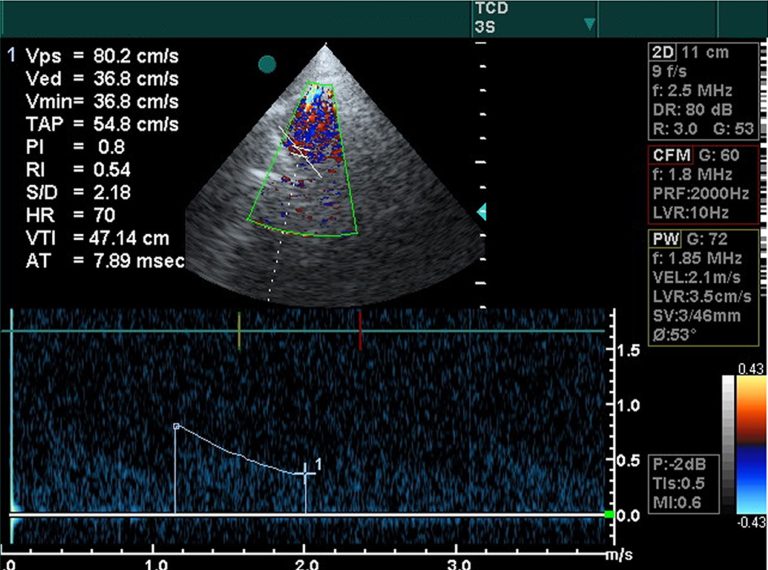
Echocardiogram: Uses, Procedure, Results, and Interpretation
What is an Echocardiogram?
An echocardiogram uses high-frequency sound waves (ultrasound) to produce images of the heart. It allows healthcare providers to see the heart beating and observe its structures in real-time. The primary components evaluated in an echocardiogram include the heart chambers, valves, walls, and blood vessels connected to the heart.
Uses of Echocardiograms
Diagnostic Purposes
- Heart Murmurs: To investigate abnormal heart sounds and determine their cause.
- Heart Failure: To assess the heart’s pumping function and evaluate the severity of heart failure.
- Valve Problems: To examine the function and structure of heart valves, identifying issues such as stenosis or regurgitation.
- Congenital Heart Defects: To detect structural heart problems present from birth.
- Cardiomyopathy: To diagnose diseases of the heart muscle, including hypertrophic and dilated cardiomyopathy.
- Pericardial Disease: To detect fluid around the heart (pericardial effusion) or thickening of the pericardium.
Monitoring and Follow-Up
- Effectiveness of Treatments: To monitor the effectiveness of treatments for heart conditions, including medications and surgical interventions.
- Progression of Heart Disease: To track the progression of known heart conditions over time.
- Post-Surgery Evaluation: To evaluate the heart’s function after cardiac surgery, such as valve replacement or coronary artery bypass grafting (CABG).
Procedure of an Echocardiogram
Preparation
- Diet and Medications: Typically, no special preparation is needed. Patients should continue taking their usual medications unless instructed otherwise by their healthcare provider.
- Clothing: Wear comfortable, loose-fitting clothes. Patients may be asked to change into a hospital gown.
During the Procedure
- Positioning: The patient lies on an examination table, usually on their left side. This position allows for optimal imaging of the heart.
- Electrodes: Small electrodes are attached to the patient’s chest to monitor the heart’s electrical activity.
- Gel Application: A special gel is applied to the chest to help conduct the sound waves.
- Transducer: The technician or doctor moves a handheld device called a transducer across the chest. The transducer emits sound waves that bounce off the heart and create images on a monitor.
- Imaging: The technician captures images from various angles to get a comprehensive view of the heart. The patient may be asked to change positions or hold their breath briefly to obtain clearer images.
- Duration: The procedure typically takes 30-60 minutes.
Types of Echocardiograms
- Transthoracic Echocardiogram (TTE): The standard type, where the transducer is placed on the chest.
- Transesophageal Echocardiogram (TEE): A more detailed type where a specialized transducer is inserted into the esophagus to get closer images of the heart. This procedure requires sedation.
- Stress Echocardiogram: Performed before and after exercise or medication that increases heart rate, to assess how well the heart functions under stress.
- Doppler Echocardiogram: Evaluates blood flow through the heart and major vessels, identifying abnormalities in blood flow patterns.
Results of an Echocardiogram
Immediate Aftercare
- Post-Procedure: The gel is wiped off, and the electrodes are removed.
- Normal Activities: Patients can typically resume normal activities immediately after the test unless sedation was used (in the case of TEE).
Interpreting Results
- Normal Findings: Normal heart size, shape, and function with no abnormalities in the heart chambers, valves, or blood flow.
- Abnormal Findings:
- Heart Chamber Size: Enlargement or shrinkage of the heart chambers.
- Heart Wall Motion: Abnormal movement indicating damage or weakened areas.
- Valve Function: Valve stenosis (narrowing) or regurgitation (leakage).
- Blood Flow: Abnormal blood flow patterns, indicating potential blockages or leaks.
- Ejection Fraction (EF): A measure of how much blood the left ventricle pumps out with each contraction. Normal EF is 55-70%. Lower values indicate heart failure.
Detailed Analysis
- Ejection Fraction (EF): Determines the percentage of blood pumped out of the left ventricle with each beat. A normal EF ranges from 55% to 70%. An EF below 40% may indicate heart failure.
- Valve Function: Assesses the operation of heart valves. Valves that do not open fully (stenosis) or do not close properly (regurgitation) can cause heart problems.
- Chamber Size: Measures the size and thickness of the heart chambers. Enlarged chambers can indicate conditions like cardiomyopathy or heart failure.
- Wall Motion: Evaluates the motion of the heart walls. Abnormal motion can indicate damage from a heart attack or other conditions.
- Blood Flow: Assesses the direction and speed of blood flow through the heart and major vessels. Abnormal flow patterns can indicate blockages or valve problems.
Follow-Up
- Consultation: The healthcare provider will review the echocardiogram results and discuss them with the patient.
- Additional Tests: If abnormalities are found, additional tests or treatments may be recommended, such as further imaging, medications, or surgical interventions.
- Ongoing Monitoring: Regular echocardiograms may be scheduled to monitor known heart conditions and the effectiveness of treatments.
An echocardiogram is a crucial tool for diagnosing and monitoring heart conditions. It provides detailed images of the heart’s structure and function, helping healthcare providers make informed decisions about patient care. Understanding the uses, procedure, results, and interpretation of echocardiograms enables patients to be better prepared and engaged in their heart health.
For more information or to schedule an echocardiogram, please contact London Private Ultrasound. Visit our website at www.londonsono.com, call us at 02071013377, or email us at [email protected]. Take proactive steps towards maintaining your heart health today.